
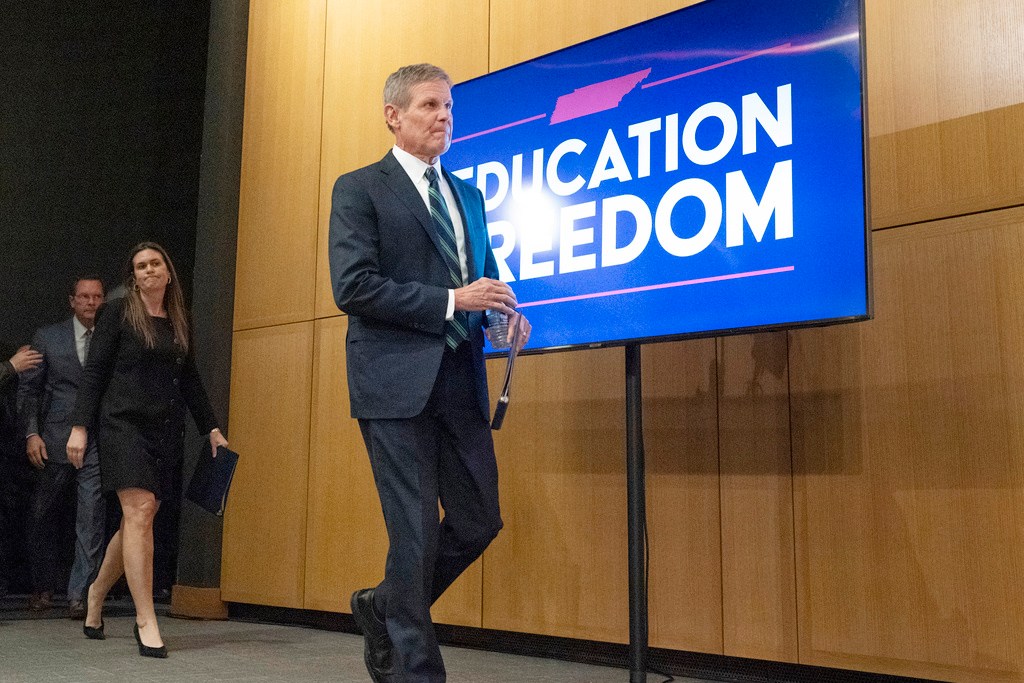
NASHVILLE — Gov. Bill Lee is rejecting what he charges is a “false narrative” promoted by critics who say his effort to expand private-school voucher programs to all 95 Tennessee counties will come at the expense of public education.
“I’ve always thought and always said and always advocated for having the best public school systems in the country,” the Republican governor said on WCLE Cleveland’s “Conversations with Steve Hartline” earlier this week. “We’ve put a billion dollars additionally for our public school systems in the last couple of years. We’ve elevated our teacher pay level to one of the top 10 states in the country. We will continue to invest in and work to make sure that our public schools are the best in the country.
“People have this false narrative that we have to either choose to give parents choices or invest in public schools,” Lee added after touting his Education Freedom Scholarship Fund. “That’s not true. We can have both. We should have the best educational trajectory for all of our kids.”
The program would start small in its first year, limiting the vouchers, each worth $7,075, to 20,000 children whose parents or guardians want to send them to private school or homeschool the child. It would cost $141.5 million.
It would be expanded statewide in the second year, and thousands more families, regardless of income level, could qualify for the money to pay for private school tuition and supplies or for schooling their child at home. Critics charge the tab could hit upwards of $800 million.