
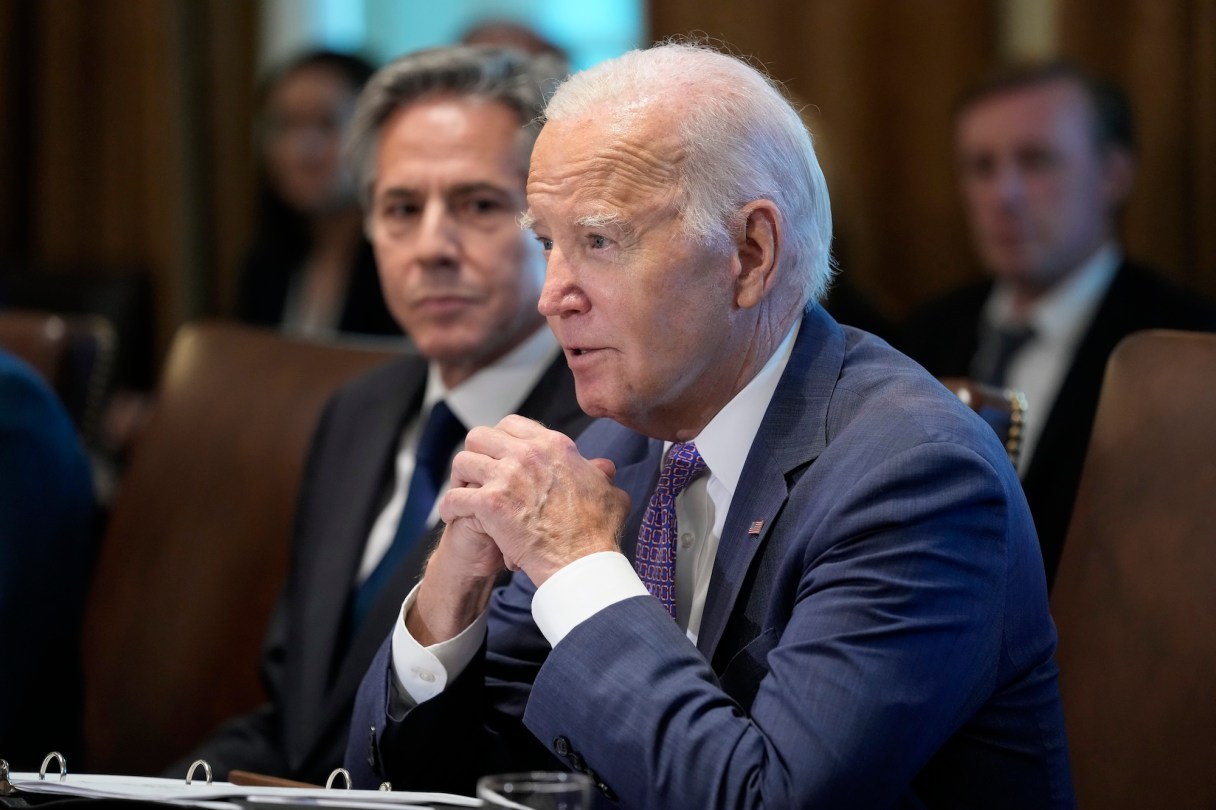
It’s early, but the Israel-Hamas war is already demonstrating what presidents can bring to foreign policy crises — and why Joe Biden is well equipped to deal with this one.
This is very much a situation in which good policy also makes for good politics, at least electorally. A relatively good outcome to this war won’t help Biden much in November 2024 — foreign affairs rarely affects voters’ choices — but any number of other scenarios, especially if they were to involve U.S. troop casualties or harm the U.S. economy, could hurt. Anything else will likely be forgotten (certainly by swing voters, who typically pay less attention to the news than most) long before the election.
So if Biden cared mainly about next year’s presidential election, he would worry less about current public reaction and more about a non-disastrous outcome in the medium and long term. In this case, that means minimizing the possibility that the war will spread beyond Israel and Hamas.
The question is how to reach that outcome. Of course, Biden has numerous experts to help him with diplomacy and intelligence and military planning. But it’s not enough to rely on expertise. Not only do experts often disagree, but when they do agree it can be a sign of groupthink.
What presidents bring to the table mix isn’t policy expertise. It’s personal experience and political acumen.