
Tuesday, November 17, 2026Nov 17

Technology built the cashless society. Advances are helping the unhoused so they’re not left behind

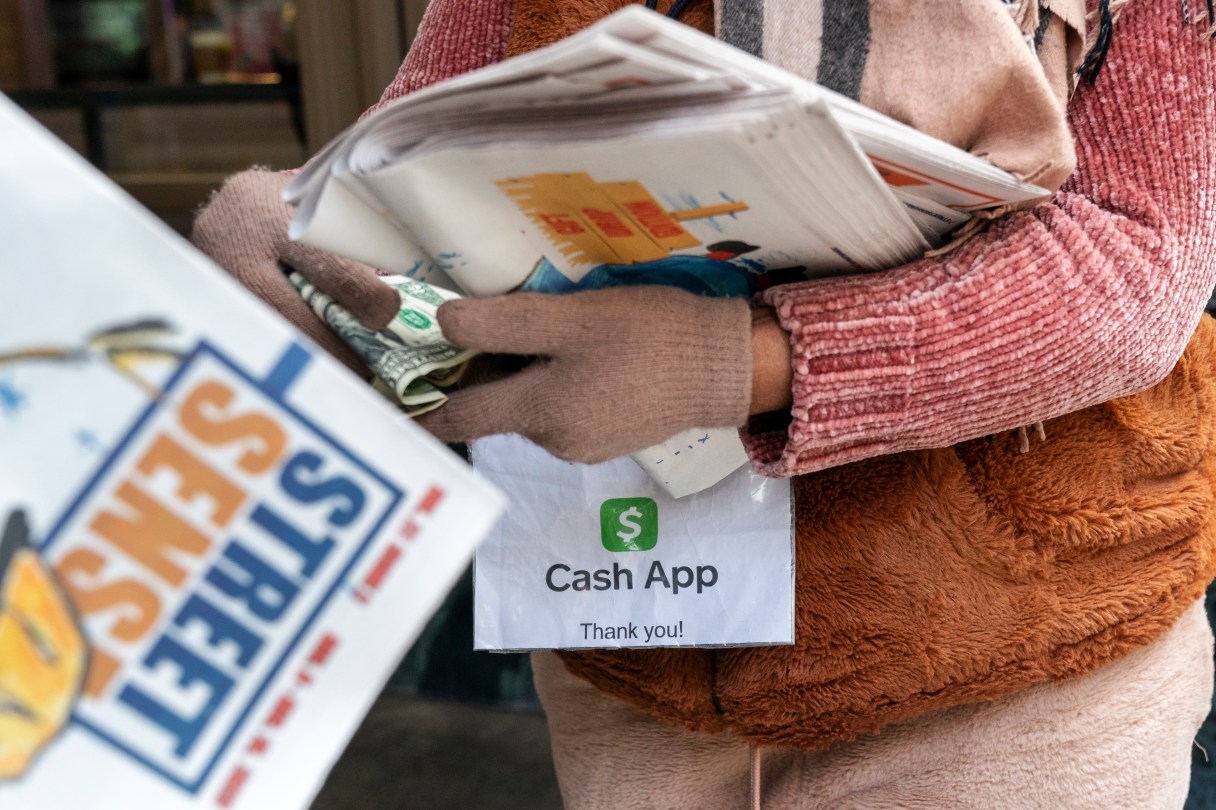
A vendor selling Street Sense, a local paper that covers issues related to the homeless and employs unhoused individuals as its vendors, takes a donation for a paper while wearing a sign saying she can accept donations from cashless apps like Venmo and CashApp, Wednesday, Dec. 6, 2023, in Washington. The transition to a cashless society has impacted street-level charitable giving – from individual donations to panhandlers to the Salvation Army donation kettles. (AP Photo/Jacquelyn Martin)

WASHINGTON (AP) — John Littlejohn remembers the days when lots of people had a couple of dollars to spare to buy a copy of Street Sense, the local paper that covers issues related to the homeless and employs unhoused individuals as its vendors.

Today, he’s finding fewer people are walking around with spare change. Even well-meaning individuals who want to help are likely to pat their pockets and apologize, he said.

“I would be out here for six or seven hours and wouldn’t get more than $12 to $15,” said Littlejohn, 62, who was homeless for 13 years. “People are like, ‘I don’t leave the house with cash.’”

But just as technological shifts helped create the problem, further advances are now helping charitable groups and advocates for the unhoused reach those most in danger of being left behind in a cashless society.

A special Street Sense phone app allows people to buy a copy electronically and have the profits go straight to him. Thanks to Social Security and his income from Street Sense and other side gigs, Littlejohn now has his own apartment.