
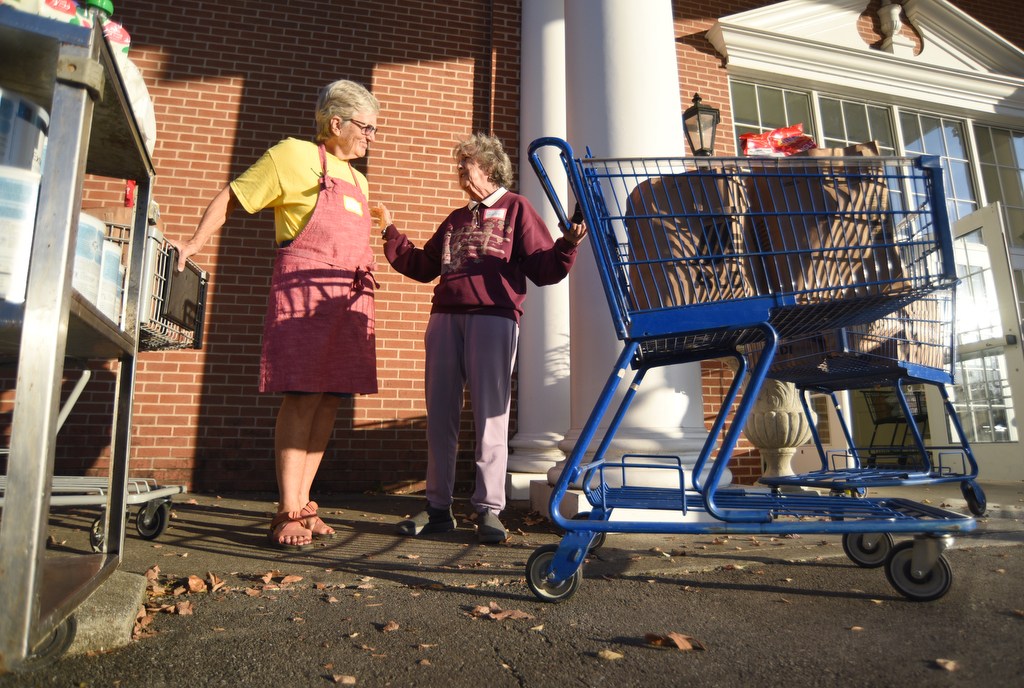
With low unemployment, inflation improving and gas prices falling, people might assume most Chattanooga-area residents are better off today than at the height of the COVID-19 pandemic. But when it comes to those struggling to put food on the table, the crisis not only persists but continues to affect a growing number of families.
An estimated 40,000 more residents, including an additional 12,000 children, have experienced deepened levels of food insecurity in the past year, according to Melissa Blevins, CEO of the Chattanooga Area Food Bank, which sources and distributes food to hundreds of partner nonprofits who work to combat hunger in the region.
That means 170,000 people in the region may not know where their next meal is coming from, Blevins said. The food bank serves 20 counties in Southeast Tennessee and North Georgia and operates its own pantry on Wilcox Boulevard that’s open to the public Monday through Friday.
“This is hands down the hardest position the Chattanooga Area Food Bank’s been in from a demand perspective,” Blevins said, adding that the issue of worsening food insecurity isn’t new. “We’ve been seeing this trend happen for the last 12 to 15 months, and the last four months, we saw the demand even creep higher.”