
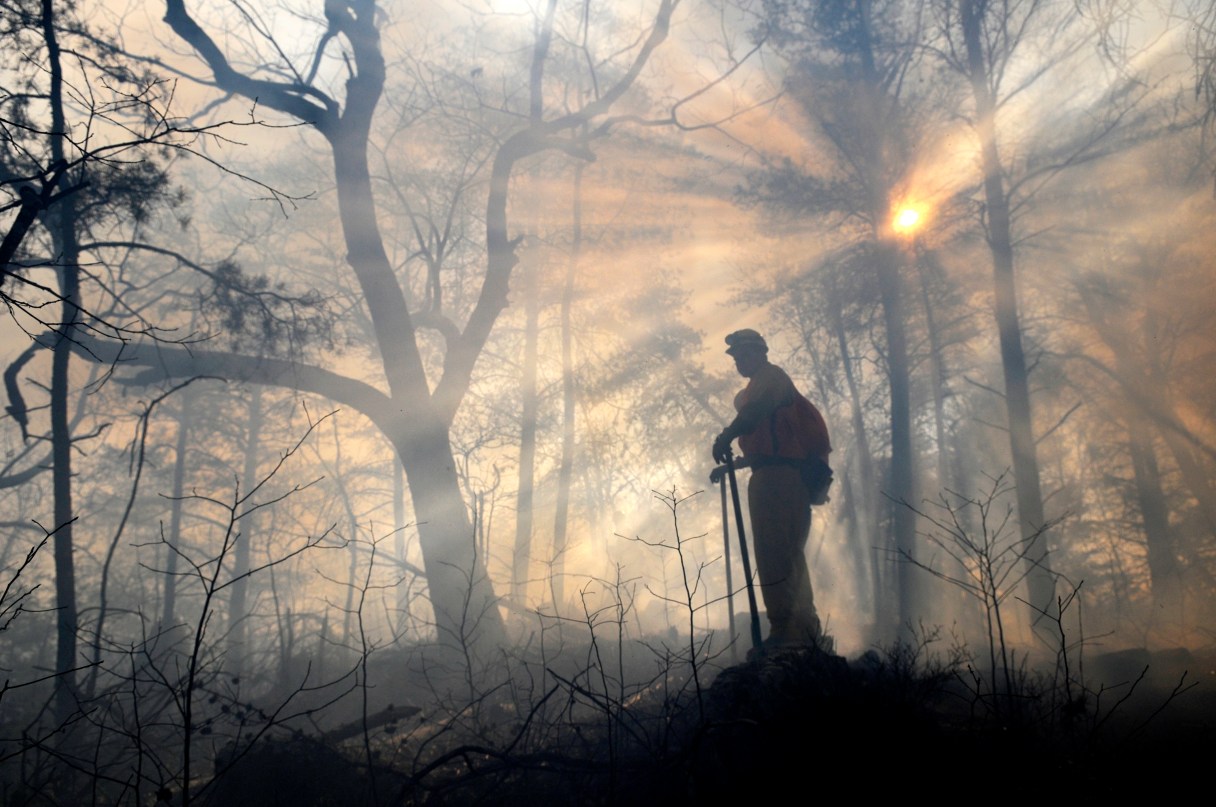
WEST END, N.C. (AP) — Jesse Wimberley burns the woods with neighbors.
Using new tools to revive an old communal tradition, they set fire to wiregrasses and forest debris with a drip torch, corralling embers with leaf blowers.
Wimberley, 65, gathers groups across eight North Carolina counties to starve future wildfires by lighting leaf litter ablaze. The burns clear space for longleaf pine, a tree species whose seeds won’t sprout on undergrowth blocking bare soil. Since 2016, the fourth-generation burner has fueled a burgeoning movement to formalize these volunteer ranks.
Prescribed burn associations are proving key to conservationists’ efforts to restore a longleaf pine range forming the backbone of forest ecology in the American Southeast. Volunteer teams, many working private land where participants reside or make a living, are filling service and knowledge gaps one blaze at a time.
Prescribed fire, the intentional burning replicating natural fires crucial for forest health, requires more hands than experts can supply. In North Carolina, the practice sometimes ends with a barbecue.