
SHERWOOD, Ore. (AP) — Deep inside a forest in Oregon’s Willamette Valley stands a dead “Tree of Life.”
Its foliage, normally soft and green, is tough and brown or missing altogether. Nonetheless, the tree’s reddish bark, swooping branches and thick, conical base identify it as the Pacific Northwest’s iconic western red cedar.
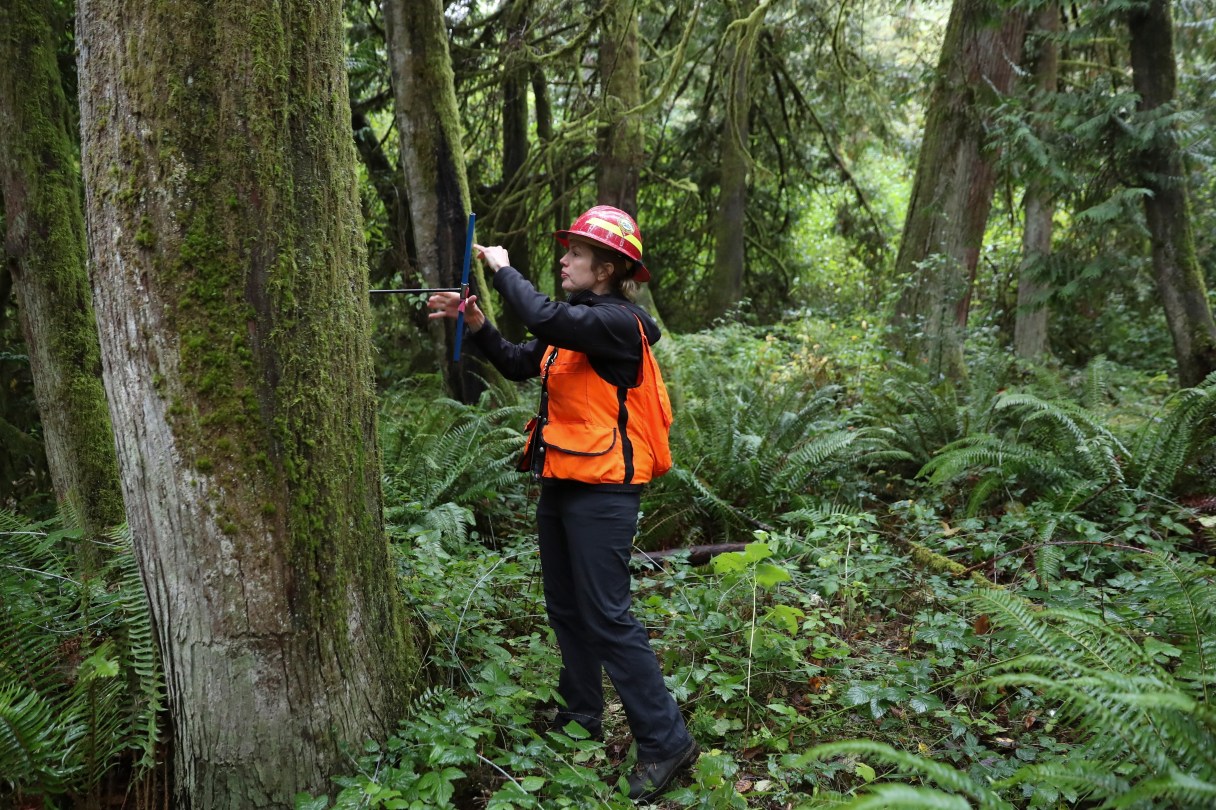
Christine Buhl, a forest health specialist for the Oregon Department of Forestry, plunges a tool called an increment borer into the dead tree’s trunk. Twisting the handle of the corkscrew-like borer, Buhl extracts a long, thin sample of the tree’s inner growth rings.
The rings become thinner over time, indicating the tree’s growth slowed before the tree finally died, a sign that this red cedar, like thousands of others in Oregon and Washington, died from drought.
“That’s why it’s the canary,” says Buhl. “Any tree that’s less drought tolerant is going to be the canary in the coal mine. They’re going to start bailing (out).”