
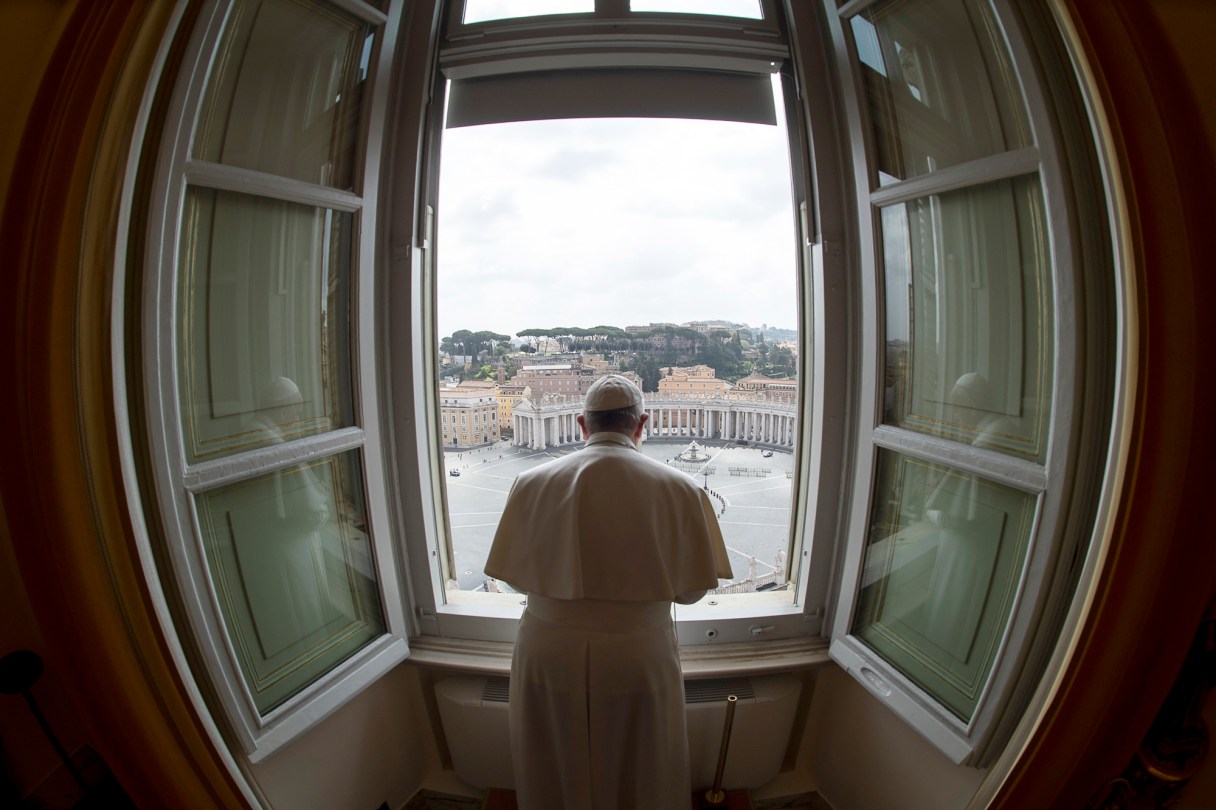
Among the other disruptions caused by the COVID-19 pandemic has been the closing of houses of worship and the cancellation of religious gatherings. The arrival of what could be called spiritual distancing was powerfully symbolized recently by images of Pope Francis offering a blessing to an empty St. Peter’s Square. Christians around the world in the coming weeks will “attend” Easter services via YouTube and Jews will participate in Passover Seders on Zoom.
The alacrity with which mainstream religious groups have responded to the pandemic is admirable, but the idea of suspending public worship also has provoked dissent. We’re referring not only to a handful of religious leaders who have behaved recklessly in holding services in defiance of social distancing norms or government decrees, but also to those clergy members and commentators who, without advocating violation of the law, have questioned the idea.
For example, Cardinal Raymond Burke, the former archbishop of St. Louis and onetime Vatican official who is a hero of conservative Catholics, has criticized the closing of churches for worship – undertaken in some cases even before civil authorities acted to shut down public meetings.
“Even as we have found a way to provide for food and medicine and other necessities of life during a time of contagion, without irresponsibly risking the spread of the contagion, so, in a similar way, we can find a way to provide for the necessities of our spiritual life,” Burke wrote on his blog on March 21. He suggested that worshipers could gather in large churches “without violating the requirements of social distance,” a debatable proposition at best.
A similar argument was proposed in a March 13 article in Foreign Policy magazine by Lyman Stone, a research fellow at the Institute for Family Studies and a Lutheran. Stone suggested that the lesson of Christian responses to plagues over the years is: “We don’t cancel church.”