
DEVILS LAKE, N.D. — When he reflected on his time as a Navy SEAL serving in Afghanistan a decade ago, Brandon Tseng wondered why he and his team did not have any way to see inside buildings they were about to raid and reduce the chances of walking into a deadly trap.
He brought that question to his brother Ryan, a tech whiz who had invented a type of wireless cellphone charger when he was in college. After Brandon Tseng left the military, he joined with his brother to find ways to apply technology to national security challenges and quickly had what he remembers as his “aha” moment.
The rapidly emerging field of artificial intelligence, he believed, could be applied to fast-evolving hardware such as drones to transform how they are used in war, such as sending a tiny, self-piloted vehicle to do reconnaissance inside a structure that troops were about to enter. Even fighter jets could perhaps be turned into AI-controlled robot drones.
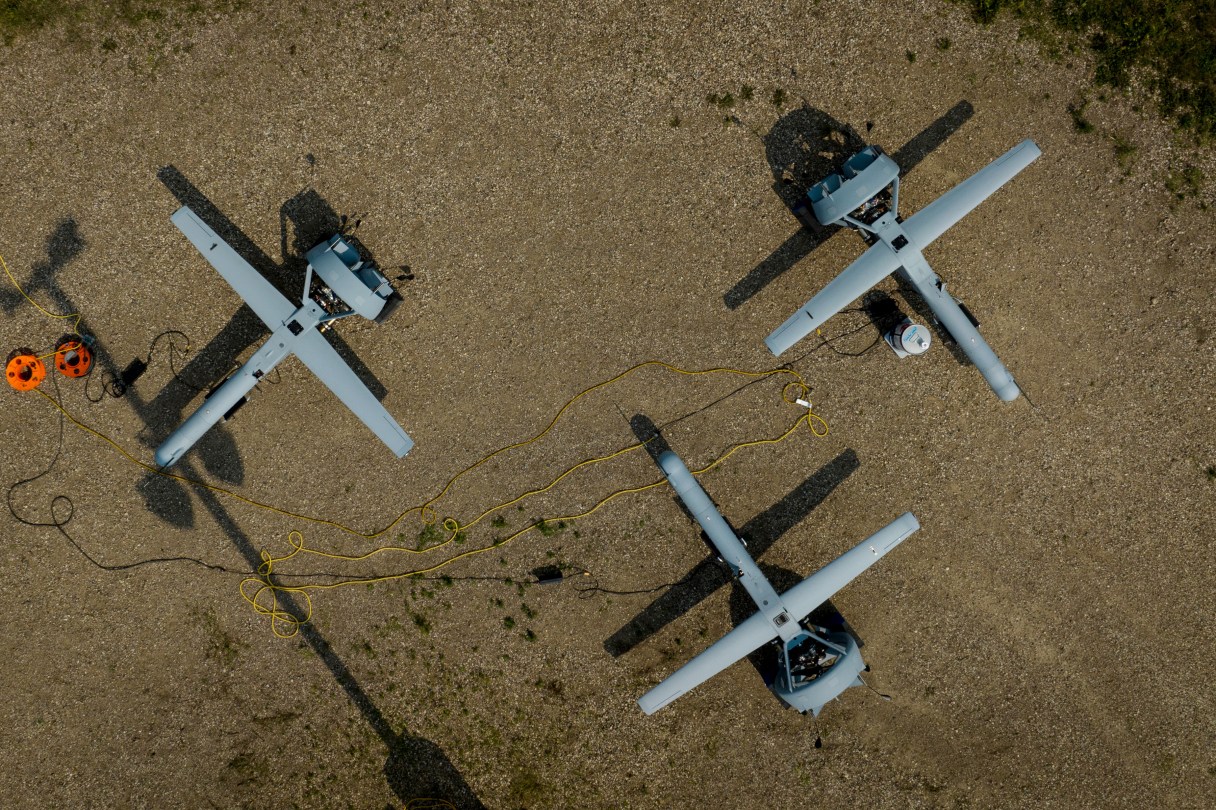
The company the Tseng brothers created in 2015, named Shield AI, is now valued by venture capital investors at $2.7 billion. The firm has 625 employees in Texas, California, Virginia and Abu Dhabi, United Arab Emirates. And the Tsengs’ work is starting to show real-world results, with one of their early products having been deployed by the Israeli military in the immediate aftermath of the coordinated attacks last month by Hamas.
Israeli forces used a small Shield AI drone last month, the company said, to search for barricaded shooters and civilian victims in buildings that had been targeted by Hamas fighters. The drone, called the Nova 2, can autonomously conduct surveillance inside multistory buildings or even underground complexes without GPS or a human pilot.