
Monday, November 16, 2026Nov 16

The Air Force asks Congress to protect its nuclear launch sites from encroaching wind turbines

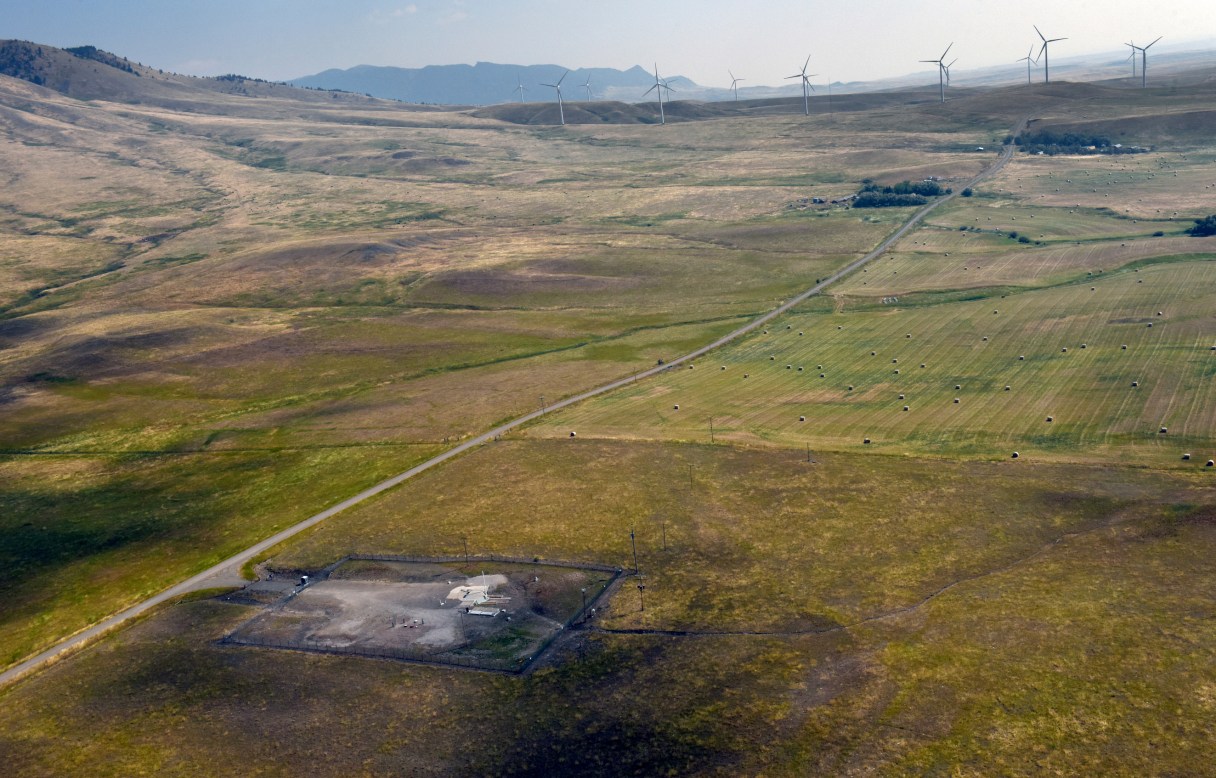
In this image provided by the U.S. Air Force, wind turbines spin near the Malmstrom Air Force Base missile launch site Alpha-03 in Geyser, Mont., in August 2023. As the nation's energy needs have increased, turbines have grown in size and number, and are being placed closer to the underground silos where Minuteman III intercontinental ballistic missiles are kept ready to fire. The Air Force is concerned that the turbines are making it dangerous for their helicopter crews to fly out to the sites, often flying low and fast, when responding to an alarm at one of the silos. The service is seeking a two nautical mile buffer zone around the sites. (John Turner/U.S. Air Force via AP)


WASHINGTON (AP) — The Air Force’s vast fields of underground nuclear missile silos are rarely disturbed by more than the occasional wandering cow or floating spy balloon. But the service is now asking Congress to help with another unexpected danger: towering wind turbines, which are growing in number and size and are edging closer to the sites each year.

The silos share space on vast private farmlands with the turbines. Whereas the nuclear launch sites are almost undetectable — just small, rectangular plots of land marked only by antennae, a chain-link fence and a flat 110,000-ton (100,000-metric tonne) concrete silo blast door — the turbines are hundreds of feet high, with long, sweeping blades that have parts so large and long they dwarf the 18-wheeler flatbed trucks that transport them to new sites.

As nearby populations have grown, so have energy needs, and so have the number and size of the turbines. It’s a boon for farmers and landowners, who can lease space on their lands to support both the military needs and wind power companies.

But the growth is making it dangerous for military helicopter crews. When an alarm triggers at a site, the UH-1 Huey crews fly in low and fast, often with security teams on board.