
Monday, November 16, 2026Nov 16

Will the eruption of the volcano in Iceland affect flights and how serious is it?

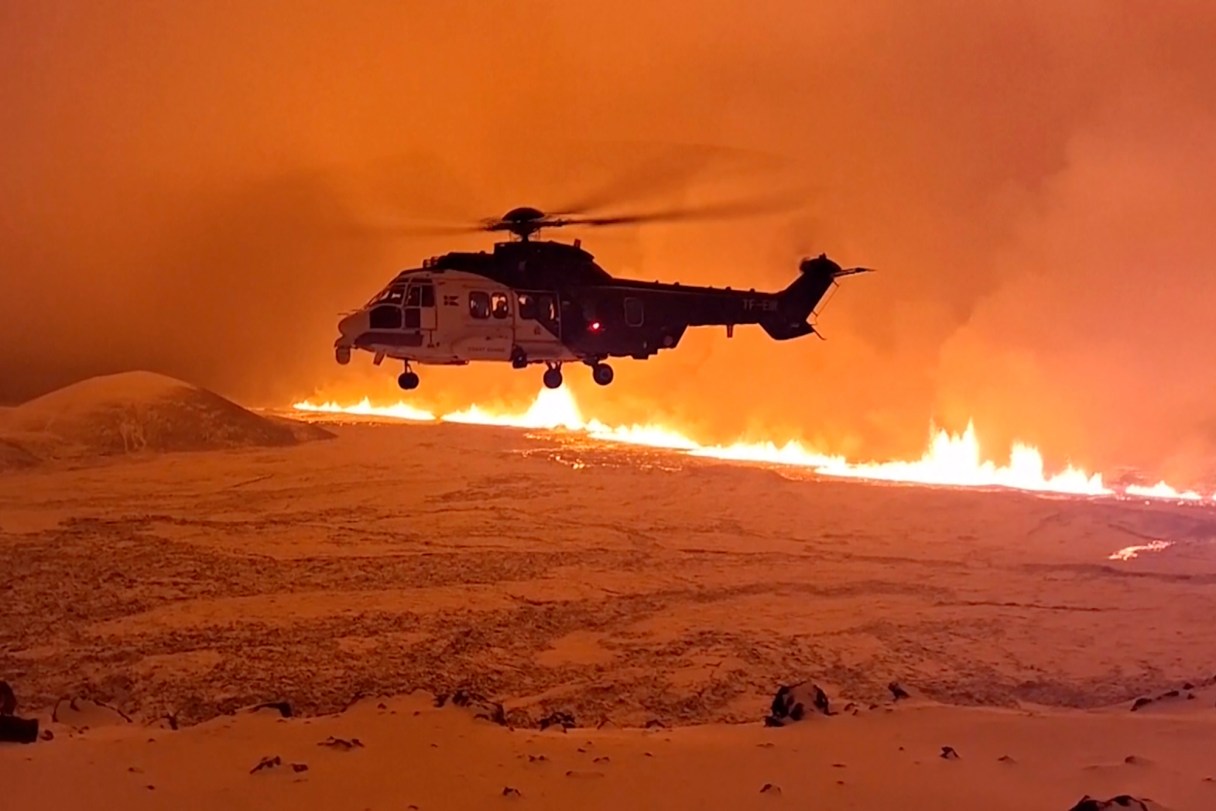
This image made from video provided by the Icelandic Coast Guard shows its helicopter flying near magma running on a hill near Grindavik on Iceland's Reykjanes Peninsula sometime around late Monday, Dec. 18, or early Tuesday, Dec. 19, 2023. A volcanic eruption started Monday night on Iceland's Reykjanes Peninsula, turning the sky orange and prompting the country’s civil defense to be on high alert. (Icelandic coast guard via AP)


LONDON (AP) — Scientists anticipated the eruption of a volcano in southwestern Iceland for weeks, so when it happened on Monday night, it was no surprise. The region had been active for more than two years and thousands of small earthquakes rattled the area in recent weeks.

Here is a look at what happened and what may be ahead:

HOW THE ERUPTION UNFOLDED

It started at about 10:20 p.m. local time on Monday north of Grindavik, a fishing town of 3,400 people on the Reykjanes Peninsula. The town is about 50 kilometers (31 miles) southwest of Iceland’s capital, Reykjavik, in an area known broadly as Fagradalsfjall volcano.