
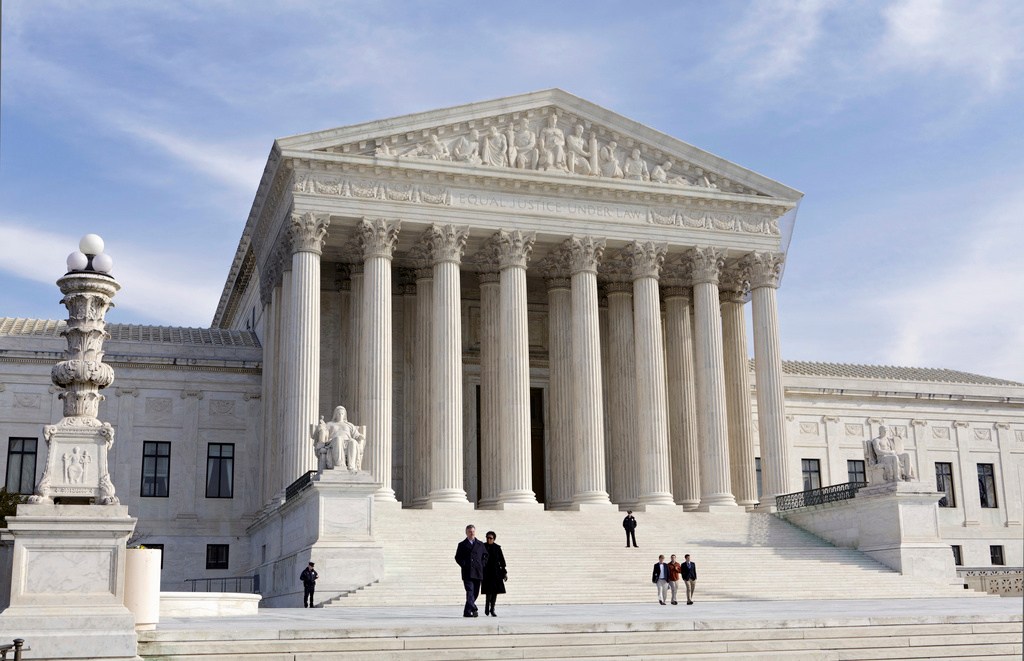
In a remarkable plot twist, the Colorado Supreme Court has found that former President Donald Trump must be excluded from the state’s primary ballot because he engaged in insurrection on Jan. 6, 2021. Now the pressure is on the U.S. Supreme Court to decide whether Section 3 of the 14th Amendment, on which the Colorado court relied, truly does block Trump from the ballot.
This would be a historic case, to say the least. If the justices rule directly on whether Trump is disqualified under the Constitution, their ruling would apply in every state, not only Colorado.
Given the unprecedented nature of the case and the court’s composition, it’s likely that the justices will overturn the Colorado decision.
The high court has several means at its disposal to overturn the Colorado ruling, none of which are ideal from the standpoint of the conservative majority. To see the justices’ options, here’s a short tour through the main points of the Colorado decision.
First, the state court claimed the authority to consider whether the federal Constitution does indeed bar Trump from the state primary ballot. To do so, it relied on an opinion by Justice Neil Gorsuch upholding a 2012 decision by the Colorado secretary of state to keep a naturalized citizen off the presidential ballot. The Supreme Court could distinguish or reject that part of the opinion, saying the state court doesn’t have the authority to rule on those matters, but only at the cost of some apparent inconsistency.