
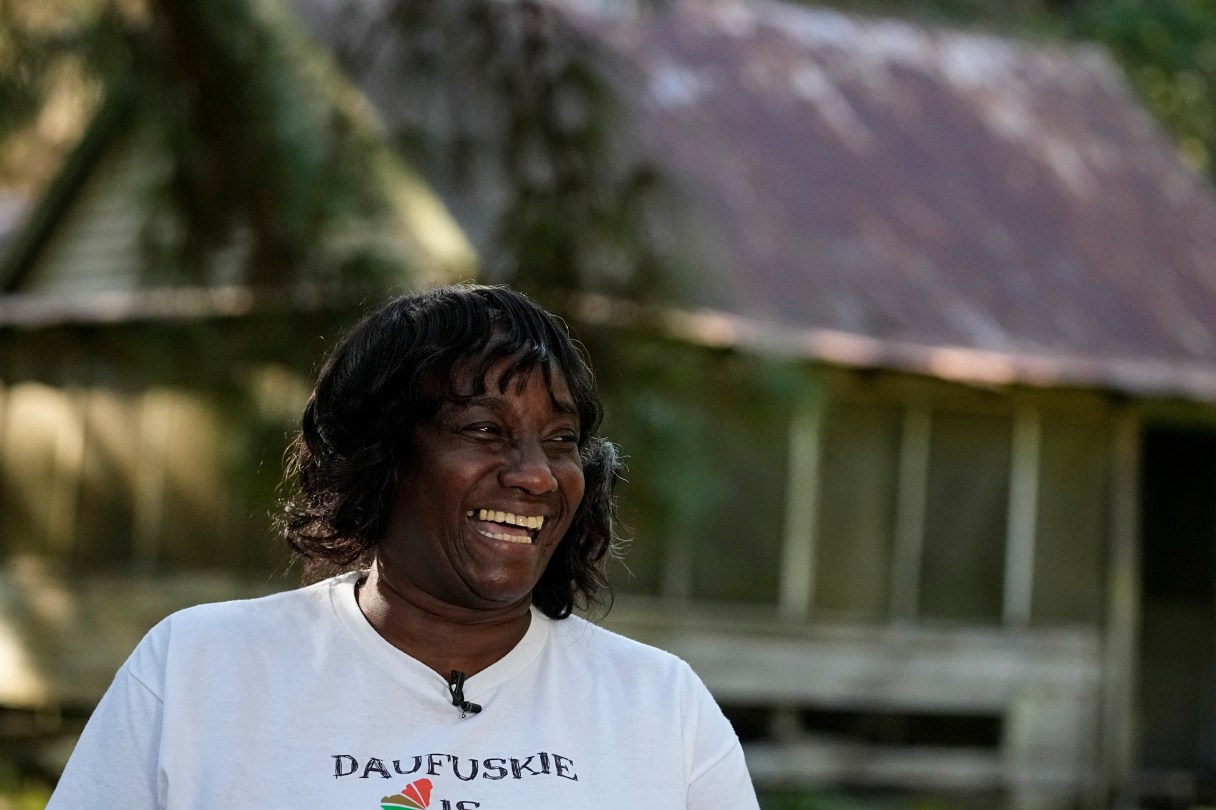
DAUFUSKIE ISLAND, S.C. (AP) — Sallie Ann Robinson proudly stands in the front yard of her grandmother’s South Carolina home. The sixth-generation native of Daufuskie Island, a once-thriving Gullah community, remembers relatives hosting meals and imparting life lessons on the next generation.
“I was born in this very house, as many generations of family have been as well,” said Robinson, a chef and tour guide. “I was raised here. These woods was our playgrounds.”
Long dirt roads were once occupied by a bustling community that had its own bartering system and a lucrative oyster industry.
“There were at one point over a thousand people living on this island,” Robinson said. Now, she and several cousins are the only ones of Gullah descent who remain.
Historic Black communities like Daufuskie Island are dying, and descendants like Robinson are attempting to salvage what’s left of a quickly fading history.