
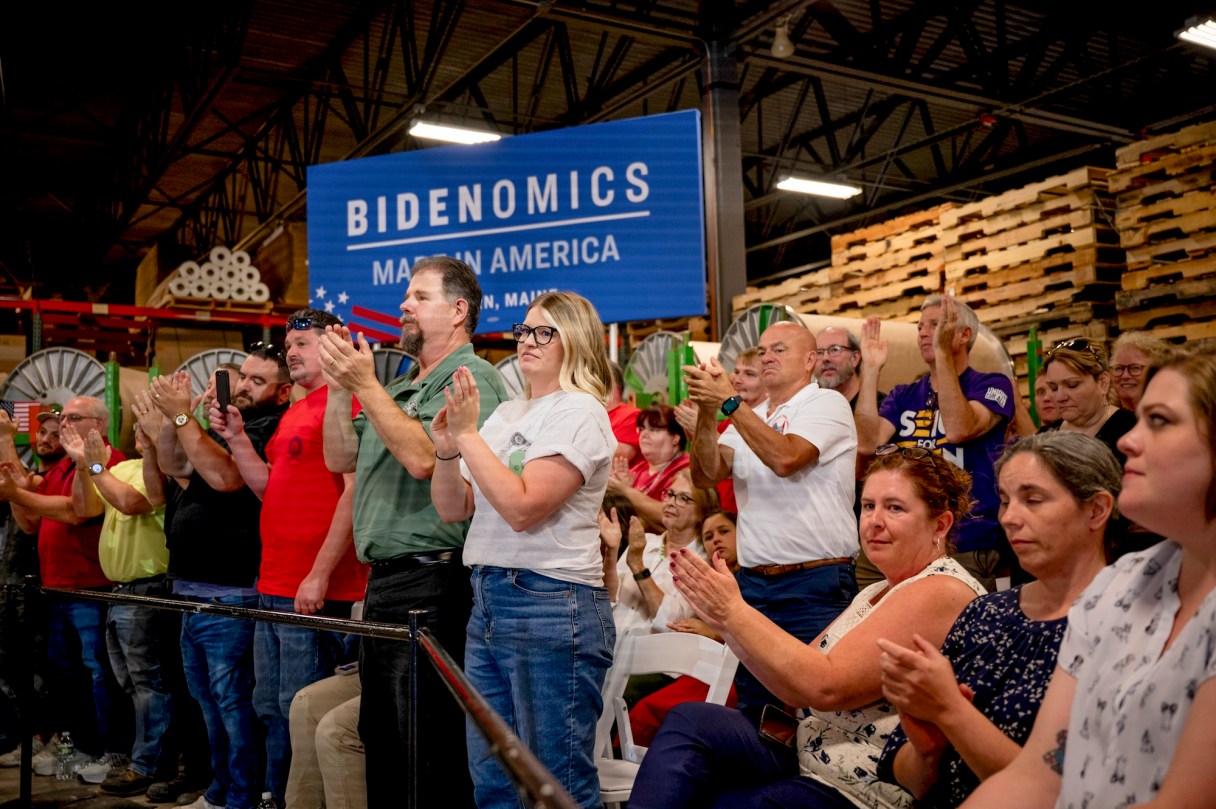
It seems increasingly likely that, for a third consecutive term, we’ll have a president who strongly identifies with American manufacturing while believing it needs his help to thrive. Since President Donald Trump’s 2016 arrival and continuing through the Biden administration, we’ve been reminded again and again that America has lost its industrial muscle, that their efforts can recover this might, and that tariffs and subsidies will help “build back better” or “make America great again.”
Let’s have a little perspective during this next election cycle. Not only is the downfall of American manufacturing mostly a myth, but it’s a harmful one.
Trump and Biden have systematically imposed taxes or tariffs on American citizens for broad categories of imported goods and borrowed billions in world credit markets to subsidize the domestic manufacture of such things as computer chips, electric vehicles and batteries. They never tell us what these policies will do to America’s real GDP growth, which over the long term ensures a widely shared standard of living.
Where’s the recognition that Americans benefit when people elsewhere provide us with goods and services in exchange for the green pieces of paper that we print? Perhaps these politicians should be reminded that, thanks partly to their deficit spending, we the people consume more than we produce. This means we have to import goods, mostly from countries which consume less than they produce.
Let’s say we did want to close that trade imbalance, which Trump — who has happily labeled himself a “tariff man” — pledged to do in 2016. Since then, the U.S. current-account deficit has enlarged from $99 billion to $110 billion in 2019 and $242 billion in 2022. What was erroneously supposed to make us better off ended up making the trade deficit great again.