
Monday, November 16, 2026Nov 16

Productivity surge helps explain US economy’s surprising resilience

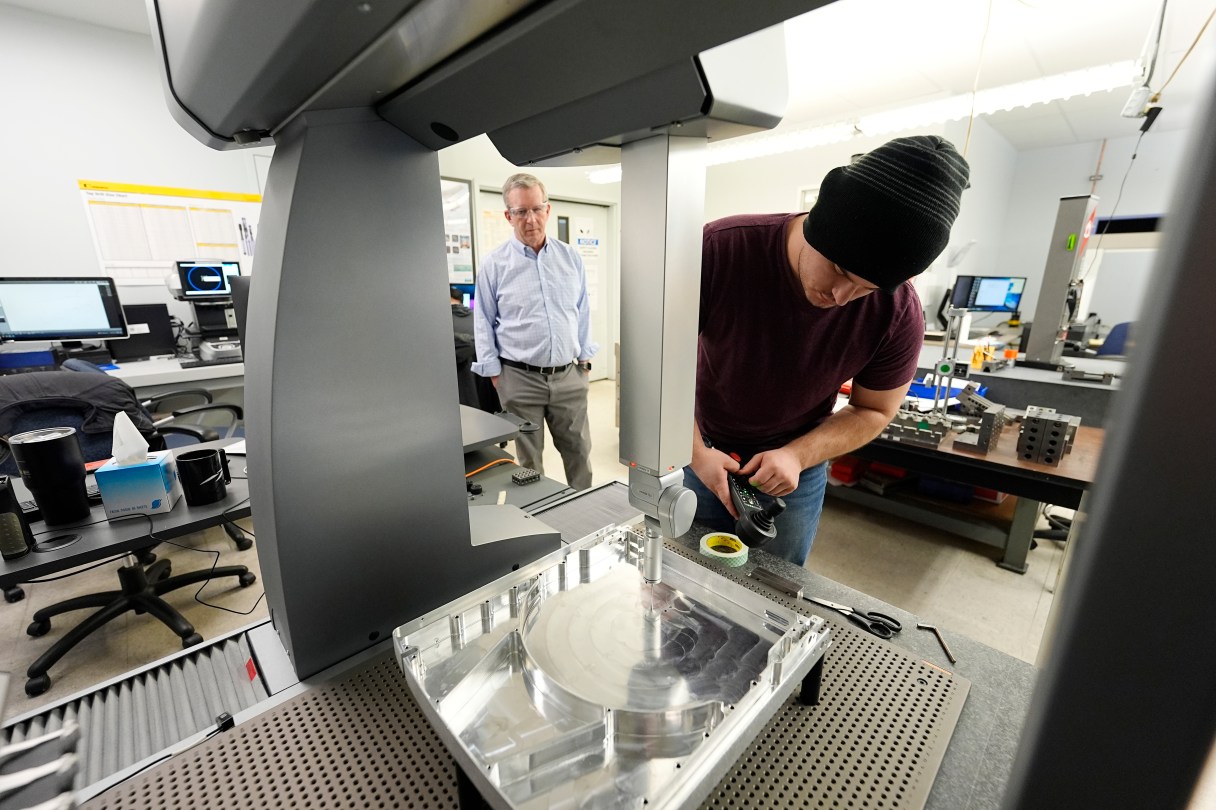
As Reata Engineering and Machine Works CEO Grady Cope looks on, a worker prepares a Hexagon machine to confirm that parts meet customers' standards, Thursday, Feb. 15, 2024, in Englewood, Colo. At Reata, which makes parts for aircraft and medical device manufacturers, "efficiency was kind of forced on us,'' Cope said. (AP Photo/David Zalubowski)

WASHINGTON (AP) — Trying to keep up with customer demand, Batesville Tool & Die began seeking 70 people to hire last year. It wasn’t easy. Attracting factory workers to a community of 7,300 in the Indiana countryside was a tough sell, especially having to compete with big-name manufacturers nearby like Honda and Cummins Engine.

Job seekers were scarce.

“You could count on one hand how many people in the town were unemployed,” said Jody Fledderman, the CEO. “It was just crazy.’’

Batesville Tool & Die managed to fill just 40 of its vacancies.

Enter the robots. The company invested in machines that could mimic human workers and in vision systems, which helped its robots “see” what they were doing.