
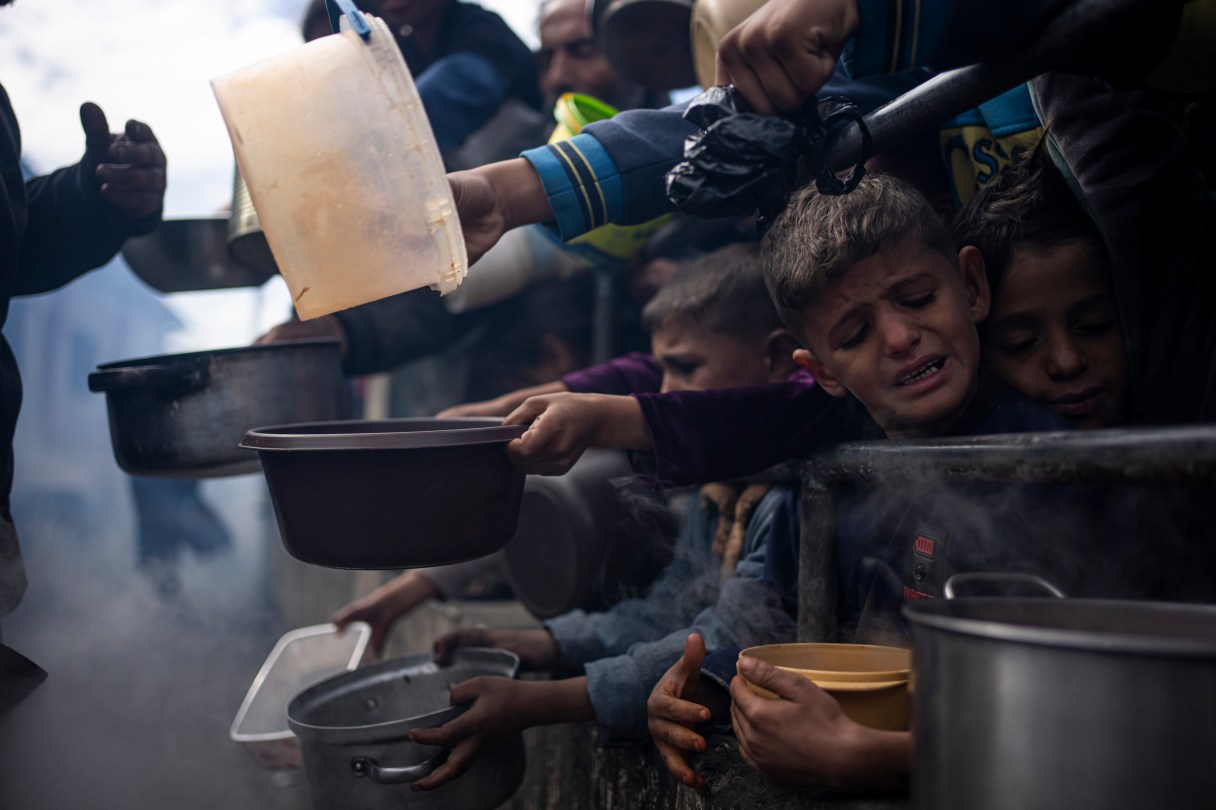
From the earliest days of the Israel-Hamas war, the United States and much of the international community have pressed Israel to allow more humanitarian aid into the Gaza Strip. But as the fighting rages on with no end in sight, the humanitarian catastrophe there has only worsened.
United Nations agencies and aid groups say the ongoing hostilities, the Israeli military’s refusal to facilitate deliveries and the breakdown of order inside Gaza make it increasingly difficult to bring vital aid to much of the coastal enclave.
The World Food Program said Tuesday it has paused food deliveries to isolated northern Gaza, where the U.N. children’s agency says one in six children are acutely malnourished. A U.N. report in December found that a quarter of Gaza’s 2.3 million people are starving.
“You find that there are people who have missed meals for a day or two days or three days — they have severe hunger,” Matthew Hollingworth, country director for WFP, said Wednesday. “But you also have people who have acute hunger, that is, they are not eating for a week.”
Hollingworth described the halt as a “temporary pause” and said the WFP was talking to “all the parties” to resume aid shipments. “We have to flood the area with assistance, if we’re going to mitigate and stop a famine,” he said.