
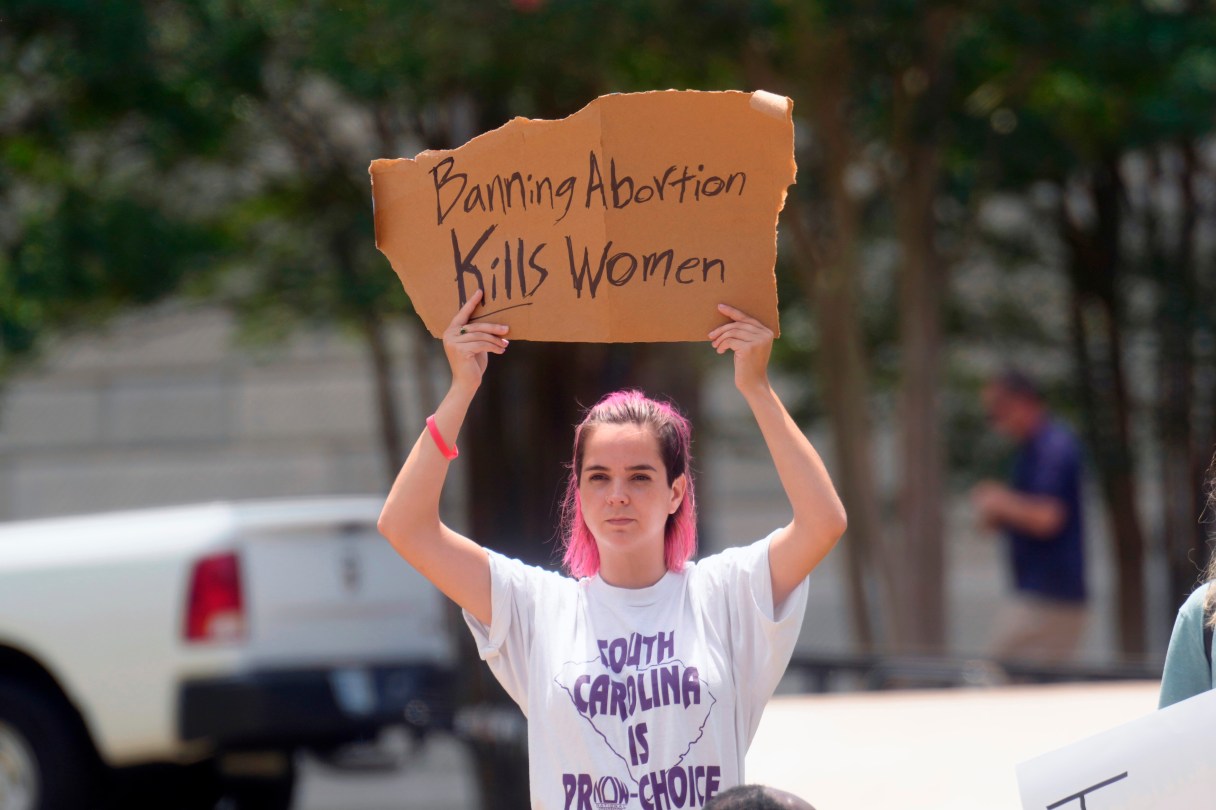
COLUMBIA, S.C. (AP) — A South Carolina woman who traveled elsewhere for an abortion just days after reaching six weeks of pregnancy wants a court to affirm that the state’s ban on the procedure — when a “fetal heartbeat” can be detected — should not take effect until later in a pregnancy.
In a lawsuit filed in state circuit court Monday, Taylor Shelton and Planned Parenthood South Atlantic’s chief medical officer Dr. Katherine Farris argued that the Republican-led state Legislature provided two different definitions of “fetal heartbeat” in its law restricting abortions. They said the correct interpretation is that the ban begins around nine weeks, and not six weeks as currently practiced.
The complaint marks yet another attempt by abortion providers to relax the state’s so-called fetal heartbeat law. The South Carolina Supreme Court reversed course last summer when it upheld the ban after striking down a similar version. Last fall, the justices declined to take up Planned Parenthood’s request to broaden the narrow window in which a pregnancy can be legally terminated, leaving the group to start over at the lower courts.
In its law restricting abortion, the South Carolina General Assembly defines “fetal heartbeat” as “cardiac activity, or the steady and repetitive rhythmic contraction of the fetal heart, within the gestational sac.”
Ultrasounds pick up cardiac activity as early as six weeks into a pregnancy. But Planned Parenthood argues that the major components of the heart usually form around nine weeks. That point in time, the group said, is the relevant limitation under the law’s wording.