
Monday, November 16, 2026Nov 16

Japan space agency says its lunar spacecraft is on the moon, but is still ‘checking its status’

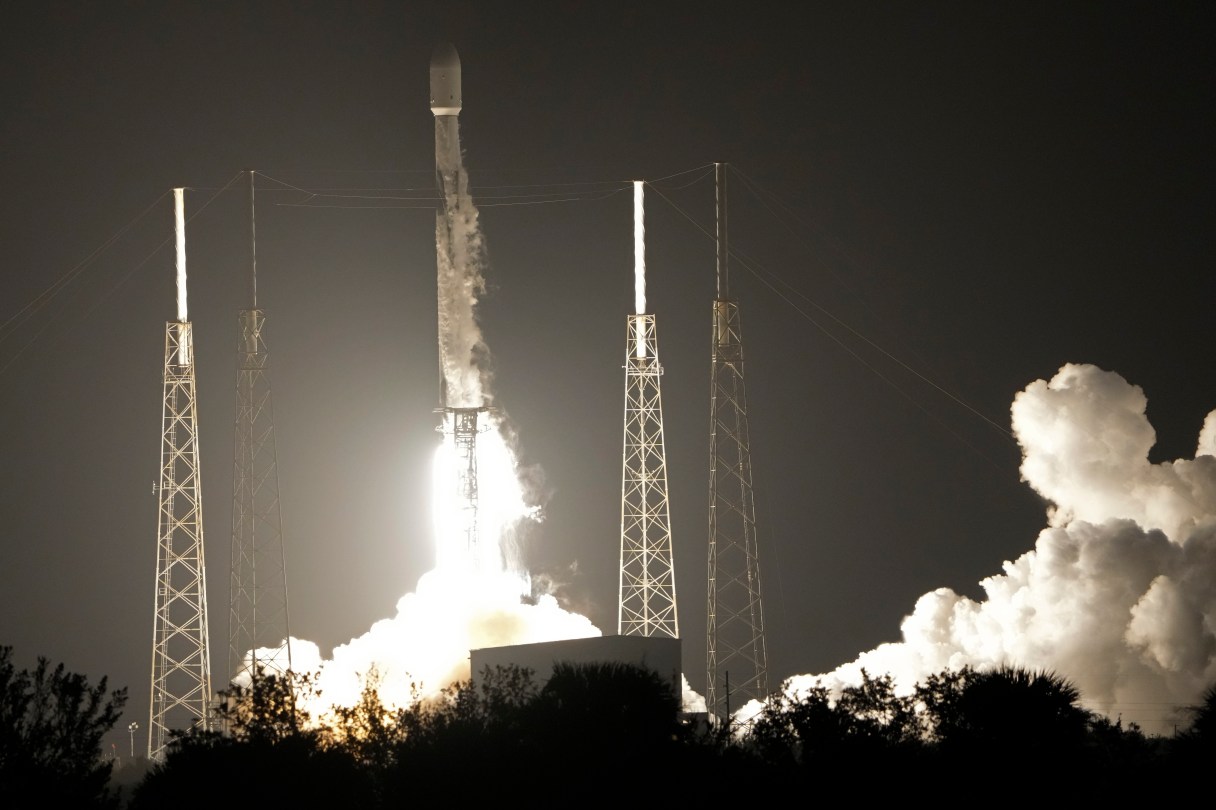
FILE - A SpaceX Falcon 9 rocket, with a payload including two lunar rovers from Japan and the United Arab Emirates, lifts off from Launch Complex 40 at the Cape Canaveral Space Force Station in Cape Canaveral, Fla., on Dec. 11, 2022. But later in April 2023, the spacecraft from a Japanese company apparently crashed while attempting to land on the moon. Japan now hopes to make the world's first "pinpoint landing" on the moon early Saturday, Jan. 20, 2024, joining a modern push for lunar contact with roots in the Cold War-era space race between the United States and the Soviet Union. (AP Photo/John Raoux, File)

TOKYO (AP) — Japan’s space agency said early Saturday that its unmanned spacecraft is on the moon, but is still “checking its status.” More details will be given at a news conference that is expected shortly.

The Smart Lander for Investigating Moon, or SLIM, came down onto the lunar surface at around 12:20 a.m. Tokyo time (1520 GMT).

THIS IS A BREAKING NEWS UPDATE. AP’s earlier story follows below.

TOKYO (AP) — As Japan’s space agency prepares for its first moon landing early Saturday, it’s aiming to hit a very small target.

The Smart Lander for Investigating Moon, or SLIM, is a lightweight spacecraft about the size of a passenger vehicle. It’s using “pinpoint landing” technology that promises far greater control than any previous moon landing.