
Tuesday, November 17, 2026Nov 17

Japan became the fifth country to reach the moon after its spacecraft landed on the lunar surface

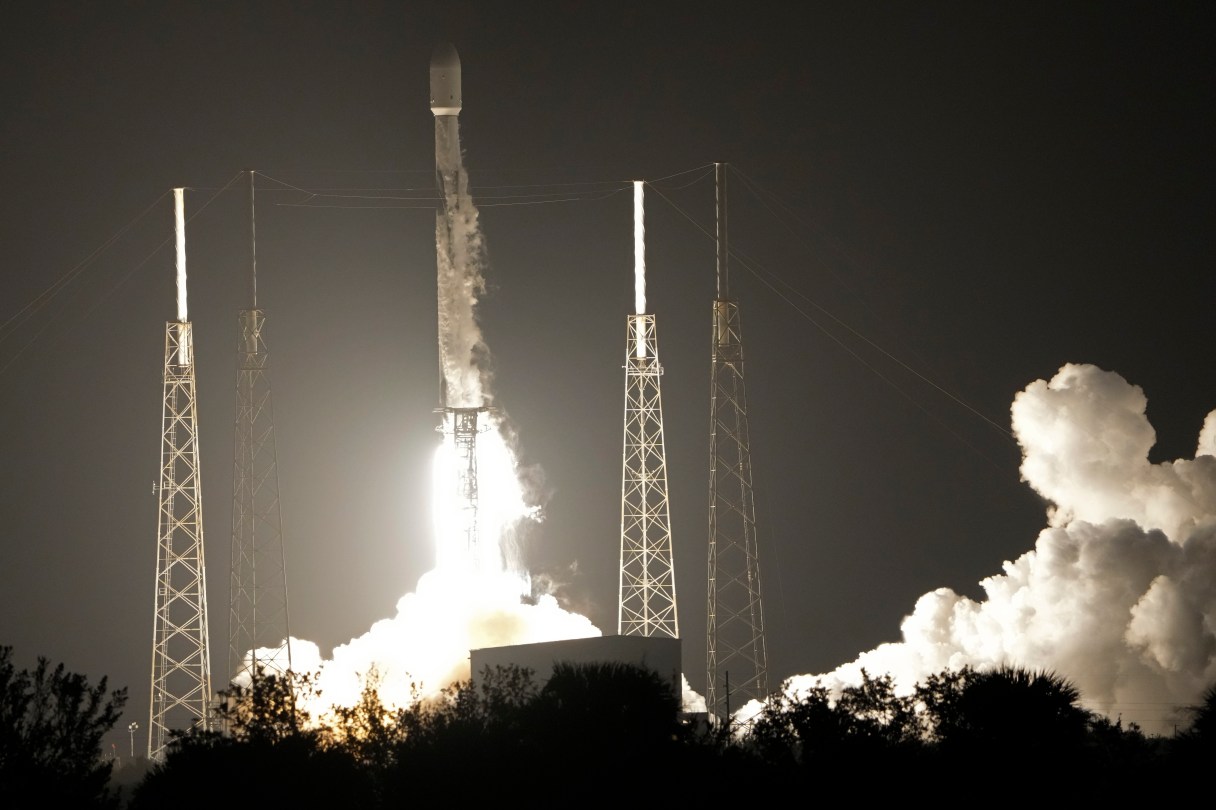
FILE - A SpaceX Falcon 9 rocket, with a payload including two lunar rovers from Japan and the United Arab Emirates, lifts off from Launch Complex 40 at the Cape Canaveral Space Force Station in Cape Canaveral, Fla., on Dec. 11, 2022. But later in April 2023, the spacecraft from a Japanese company apparently crashed while attempting to land on the moon. Japan now hopes to make the world's first "pinpoint landing" on the moon early Saturday, Jan. 20, 2024, joining a modern push for lunar contact with roots in the Cold War-era space race between the United States and the Soviet Union. (AP Photo/John Raoux, File)

TOKYO (AP) — Japan became the fifth country in history to reach the moon when its spacecraft landed on the lunar surface early Saturday, officials said.

But officials still were trying to determine whether they could classify the feat as a total success, because they needed more time to analyze whether the spacecraft, which wasn’t carrying astronauts, made a pinpoint landing. There could also be an issue with the power supply.

Hitoshi Kuninaka, head of the Institute of Space and Astronautical Science, said they believe that rovers were launched and data were being transmitted back to Earth. But the lander may have a problem with its solar power panels, and appears to be operating only on batteries for the moment.

Kuninaka said he believes they at least achieved “minimum” success.

The Smart Lander for Investigating Moon, or SLIM, landed at about 12:20 a.m. Tokyo time on Saturday (1520 GMT Friday).