
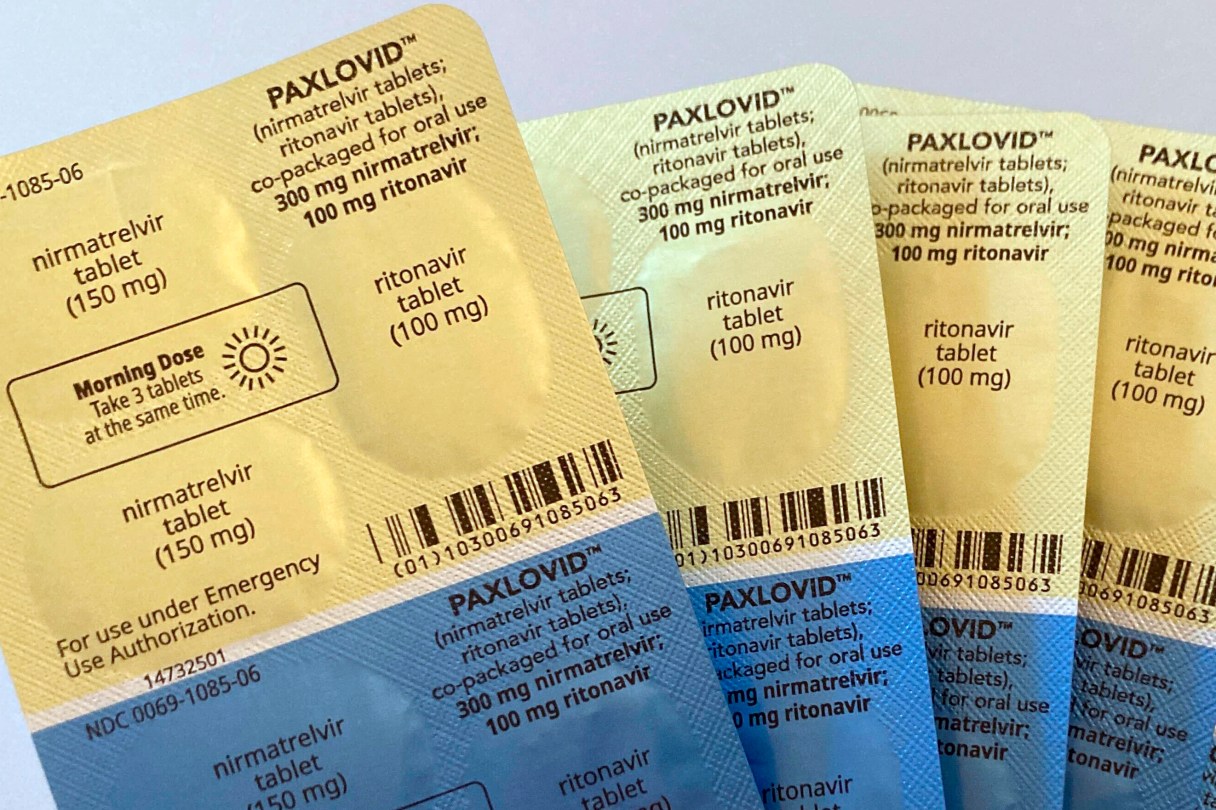
Tens of thousands of Americans are hospitalized with COVID-19 every week. Thousands die from it every month. And yet, an antiviral treatment proven to lessen the chances of severe outcomes is going underused.
The drug, Paxlovid, is lauded by experts as a powerful tool that can prevent hospitalization and death from COVID-19. But the high price and doctors’ hesitation to prescribe the pills mean the five-day treatment isn’t getting to everyone who would benefit from it.
“When you read in your local newspaper that in this hospital, they’ve got this many COVID patients, most of those are preventable hospitalizations,” said Dr. Amesh Adalja, a senior scholar at Johns Hopkins University who sees Paxlovid as a useful tool to treat COVID-19.
One Centers for Disease Control and Prevention study found that Paxlovid can decrease hospitalization risks among adults by 51%. The drug is recommended for older people and other adults with certain underlying conditions and can be prescribed for kids as young as 12.
When Paxlovid was first authorized for emergency use in the U.S. in December 2021, it was free for anyone who needed it. Once the government stopped funding the treatment, Pfizer set a list price of $1,390.