
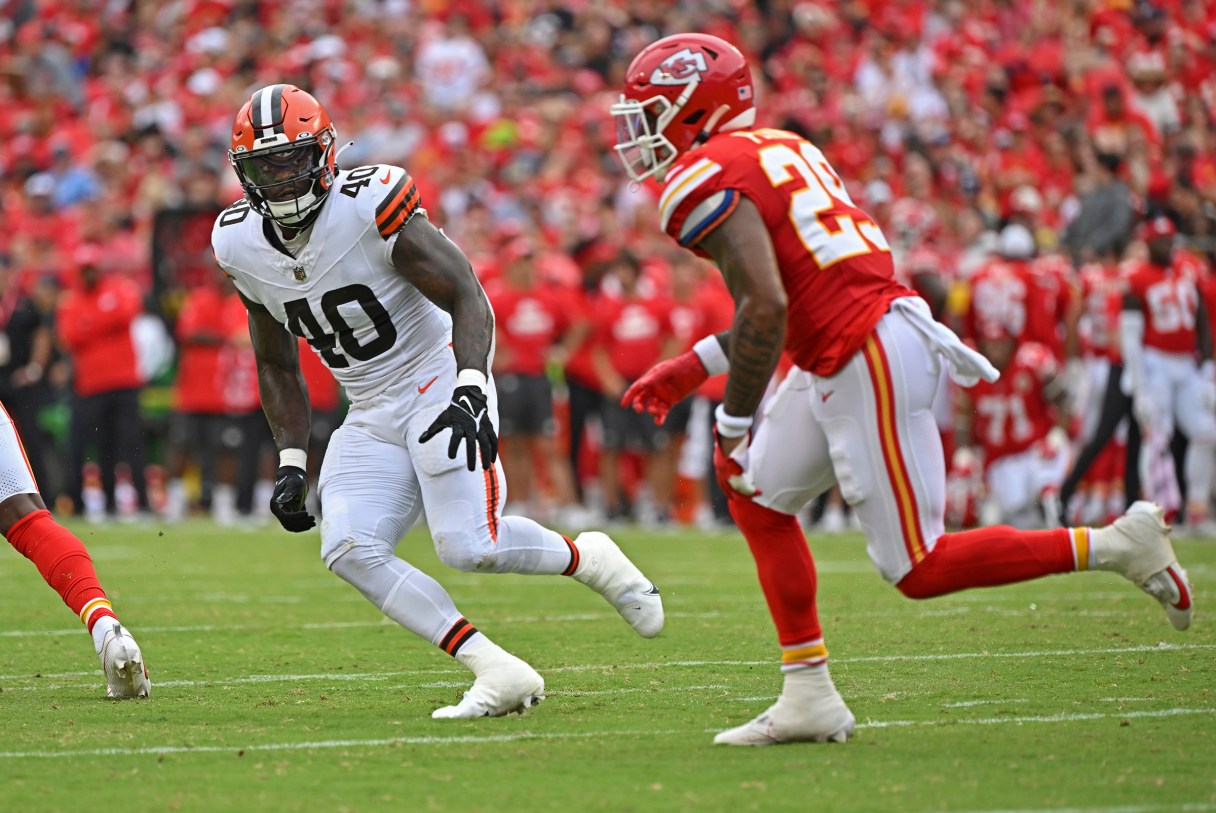
LAS VEGAS — When the Super Bowl was in the balance in the fourth quarter a year ago, coach Andy Reid’s Kansas City Chiefs put a twist on the motion they frequently use before snapping the ball.
The result? Two wide-open touchdown passes that helped them beat the Philadelphia Eagles 38-35 for Kansas City’s second NFL championship in a four-year span.
The Chiefs return to the big stage Sunday in Las Vegas, taking on the San Francisco 49ers at Super Bowl LVIII in a game that should feature players on the move at the snap at a staggering rate based on how Reid and counterpart Kyle Shanahan use motion to create mismatches for their offenses.
“I’m sure he’s going to have some wrinkles for us,” 49ers defensive end Nick Bosa said about Reid. “Hopefully we can anticipate some of them.”
Reid was able to catch the Eagles off guard a year ago with how he used motion on two key plays near the goal line in the fourth quarter with a concept the Chiefs called “corndog.”
On the first play from the Philadelphia 3, wide receiver Kadarius Toney was lined up on the right side and faked as if he was going to go in jet motion to the other side of the field. Eagles cornerback Darius Slay passed him off to a defender on the other side, but Toney quickly reversed field and was wide open in the right flat for the touchdown that gave Kansas City its first lead of the game.
On their next possession, the Chiefs scored on a similar play, this time with the pass to wide receiver Skyy Moore on the other side of the field. Although the Eagles rallied to tie, Kansas City went on to win with a short field goal in the final seconds.
The 49ers have the scars from past run-ins against Reid’s Chiefs, including the jet motions and sweeps they used repeatedly in a 44-23 regular-season win in 2022 for big runs around the perimeter.
Then there was a wrinkle lifted from Michigan’s 1948 Rose Bowl playbook that led to a key fourth-down conversion in the first Super Bowl matchup between these teams four years ago. Multiple players in the Kansas City backfield spun simultaneously, moving Mahomes away from the center and leading to a direct snap to running back Damien Williams for a first down.
“He gives you all different types of looks, funky looking plays, different misdirections,” 49ers All-Pro linebacker Fred Warner said. “Coach Reid is one of the best at creating different plays as there’s been in this league. So there’s going to be different things we’ve seen in the game that we’ve never seen before, but we’ve got to be able to just line up and play and get through the down.”
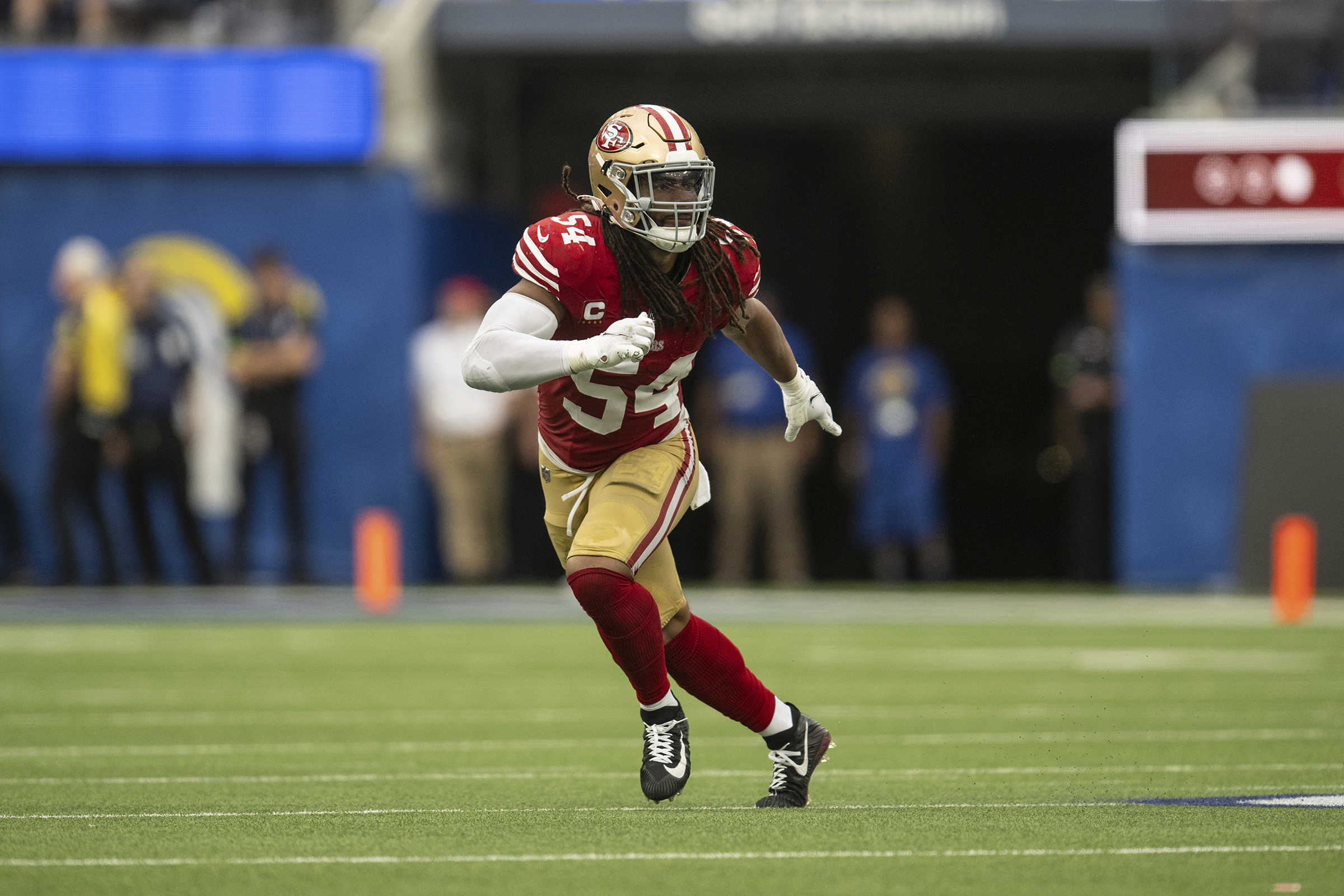 AP file photo by Kyusung Gong / San Francisco 49ers linebacker Fred Warner, pictured, said Kansas City Chiefs coach Andy Reid excels at confusing defenses with different looks, funky plays and misdirection. The 49ers face the Chiefs in the Super Bowl on Sunday in Las Vegas.
Reid even has history with some funky movement before the snap at Allegiant Stadium, the venue for Sunday’s showdown, using a play nicknamed “Snow Globe” last season against the Las Vegas Raiders when the entire huddle spun around in a circle before rushing up to the line for a quick snap to catch the defense off guard.
The key for the 49ers is to ignore the bells and whistles and try to defend against the play.
“They want to get you enamored with all of the motion,” San Francisco defensive coordinator Steve Wilks said, “and all of a sudden they run it down your throat.”
The use of motion before the snap has been on the rise throughout the NFL over the past decade, going from a usage rate of just 37.5% of plays in 2014 to 56.1% this season for the highest rate on record, according to Sportradar. The 49ers and Chiefs were among the most frequent users, with San Francisco ranking second at 76.4% and Kansas City fourth at 63.7%, according to game-charting data from Sports Info Solutions.
The 49ers were the most efficient offense with motion in terms of expected points added per play, according to SIS, with Kansas City ranking 10th despite a drop this season in overall offensive production.
Perhaps because of the familiarity of facing offenses in practice that are so proficient in the use of motion, both teams rank in the top 10 in defending against it, with the Chiefs fifth and the 49ers ninth, according to SIS.
Teams have long used motion to help the quarterback determine whether the defense is in man or zone coverage based on whether a defender follows the player across the formation.
The motion players often reset in those plays, but the 49ers have adopted the so-called “cheat” motion popularized by the Miami Dolphins this season that has a player sprinting to the side at the snap just a short distance instead of running across the field, in order to reach top speed even sooner than usual and put defenses on their heels.
Shanahan uses motion with his play-action concepts to generate big plays for San Francisco.
“They do a really good job of marrying their run plays to their pass plays,” Chiefs linebacker Drue Tranquill said. “Specifically at the linebacker position, it’s very hard to see the difference between a run play and then the same play-action off of that.”
While most teams are using motion at a high rate in today’s NFL, in the past quarterbacks such as Peyton Manning preferred static looks so he could see where the defense was lined up before the snap. With more defenses disguising coverages and switching after the snap, though, the motion can confuse defenses and create breakdowns in coverage.
“You have to kind of step back and say maybe we have to adjust how we’re doing this, that, or the other thing,” 49ers offensive line coach and run game coordinator Chris Foerster said.
“It’s all the nickel defense being played as the base now. There’s always a challenge as defenses evolve, and we evolve with the moving pieces. It’s a chess match always.”