
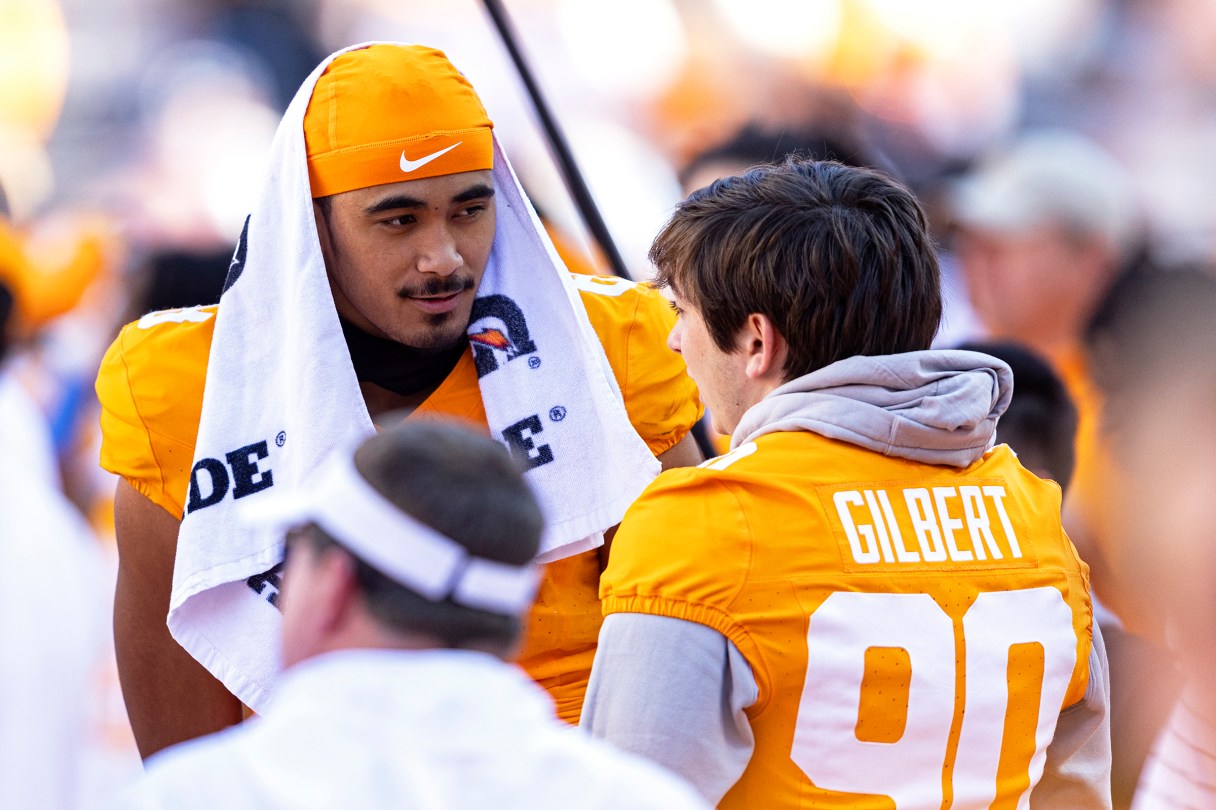
Forced into yet another courtroom to defend its amateur model of athletics, the NCAA insisted that shelving its rules against name, image and likeness compensation being offered to recruits would make a difficult situation across the country even more chaotic.
The NCAA lost that argument last week when a federal judge granted a preliminary injunction in a lawsuit brought by the state attorneys general of Tennessee and Virginia. The antitrust suit challenges NCAA rules against recruiting inducements, saying they inhibit athletes’ ability to cash in on their fame.
Those who work for and with the booster-funded collectives that handle NIL deals with college athletes said lifting the rules will bring more clarity and simply make permissible what was once against the rules.
“I mean, people were already inducing recruits before this ruling,” said Jim Cavale, founder of Athletes.org, a burgeoning association for college athletes. “That was already happening. The only difference now is when they’re doing it, if somebody says, ‘Hey, is this within the rules?’ They can say, ‘Yes, it is.'”
He added: “Really, that’s what NIL stands for: Now it’s legal.”
The NCAA still has some rules regarding NIL compensation, which has ballooned into the millions for thousands of athletes. The schools themselves can’t pay, and school employees such as coaches and athletic department administrators can’t be involved in the negotiation of NIL deals.
What exactly the ruling means is still being sorted out by the NCAA and its lawyers.
Charlie Baker, who took over as president of the NCAA last March, wrote in a letter to more than 1,100 member schools this week that the association planned to issue guidance soon. But the NCAA’s only jurisdiction over collectives were rules banning boosters from being involved in recruiting and from offering money or something of value to attend certain schools.
(READ MORE: NCAA overhaul not likely to end its legal headaches)
Even then it was a school that was at risk of being punished if a collective broke those rules. That’s what happened at the University of Tennessee, which drew scrutiny from the NCAA for NIL deals between athletes and The Vol Club, managed by Spyre Sports Group marketing agency.
“There remains ambiguity even in the wake of this ruling, quite a bit of ambiguity and questions surrounding what can and cannot be done,” said Darren Heitner, a Florida-based sports law attorney who works with college athletes, collectives and agents on NIL contracts.
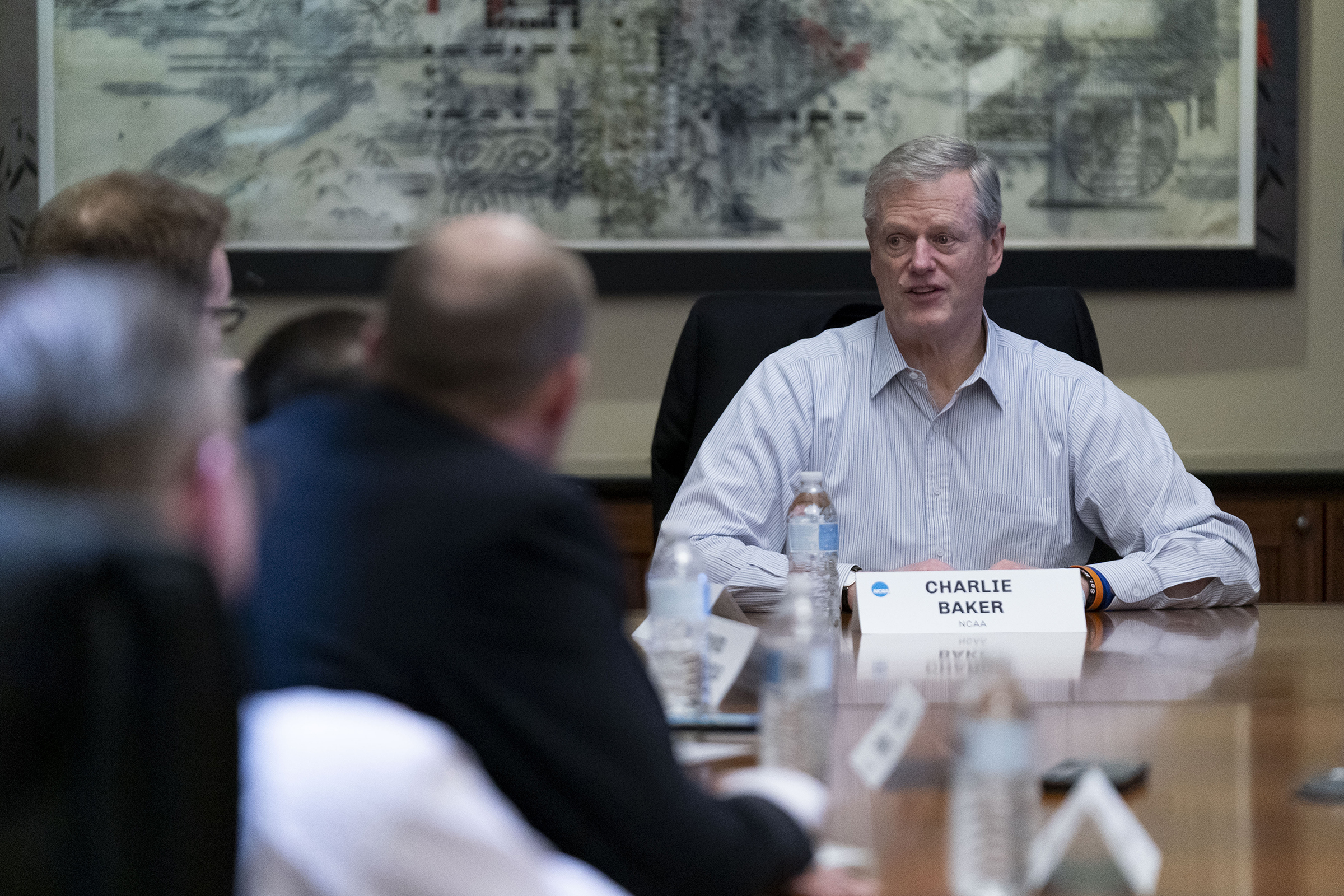 AP photo by Stephanie Scarborough / Charlie Baker speaks to reporters on Friday in Washington. Baker, who is approaching the end of his first year as president of the NCAA, has had an eventful tenure so far, with the association continuing to deal with legal challenges related to student-athletes’ rights.
It’s complicated
Faced with a wave of state laws clearing the way for college athletes to earn money based on their celebrity, the NCAA lifted its ban on endorsements and similar compensation in 2021 while making it clear that its approximately 500,000 athletes are still considered amateurs who cannot be paid to play. NIL wasn’t meant to be a stand-in for paying college athletes, but that’s what it has become, with collectives carrying the load while trying to navigate NCAA rules.
“Everybody was doing workarounds,” said Michael Caspino, a California-based attorney who has reviewed NIL contracts from collectives for dozens of athletes, including UT quarterback Nico Iamaleava, a freshman this past season who is set to start for the Volunteers this year.
Collective representatives have not been permitted to directly talk dollars with recruits, whether from the high school ranks or the NCAA transfer portal, or present them with contracts. Athletes were technically not allowed to sign contracts until after they enrolled.
“Now you don’t have to worry about that,” Caspino said. “That’s out the window. We can have as much direct negotiation and contact with anybody we’d like.”
Walker Jones, a former Ole Miss football player who is the executive director of the Grove Collective, said the NCAA’s “archaic enforcement structure” wasn’t keeping up with the times. Athletes and their families want as much information as possible about NIL opportunities before deciding where to attend college.
“I can’t tell you how many phone calls I got from a parent of a student-athlete or an agent going, ‘Hey, I need to see a contract. Hey, I need to know what the deal is.’ And, unfortunately, I had to tell them, ‘Sorry, I can’t send you a contract,'” he said.
Jones also said the rules put everybody involved at a disadvantage.
“The student-athlete would have to kind of take the coach’s word for it, or a third-party conversation that somebody had with somebody else to funnel third-party information,” he said “And then when they showed up at that place, it wasn’t exactly what they were told or it didn’t meet their expectations.”
 AP file photo by Michael Conroy / The NCAA still plans to issue guidance soon on NIL compensation despite a recent legal ruling that lifted most of the association’s rules regarding the process.
Still changing
Jason Belzer, the founder of Athlete NIL, which helps operate numerous collectives, said the removal of NCAA rules should make collectives more accountable.
“Now collectives have to potentially put things in writing,” Belzer said. “And what I can tell you is that the vast majority of collectives, the vast majority, do not have all of the money in the bank that they need to fund their rosters when they sign a kid, much less offer an athlete something.”
Blake Lawrence, CEO of Opendorse, which works with more than 40 collectives across the country, said the organizations and the athletes can now speak freely. He cited an observation from a friend with a collective at an Atlantic Coast Conference school.
“He was like, ‘In what world do you sign your agreement to go somewhere, and then find out how much you’ll get paid?'” Lawrence said. “Of course, NIL is different than employment, but in general, athletes deserve to know what they could earn in a certain market, and a collective has the most insight on what those numbers are.”
Russell White, the president of the newly formed Collective Association, said he doesn’t expect a huge surge in donations to collectives all over the country now that the NCAA is being forced to back off.
“I think that it’s not going to be this big, dramatic shift in the way money is spent or, for the most part, the budgets,” White said. “But I do think there will be less anxiety, less nervousness around, you know, am I in a safe space here or am I pushing that line?”
For now, the next move is up to the NCAA.
(READ MORE: As recruits, prep stars feel crunch of changes to college sports)
Helen Drew, a sports law professor at the University of Buffalo and director of the UB Center for the Advancement of Sport, said the speed of change across college athletics is dramatic.
“While it’s great for the students, the collegiate athletes, to have the opportunity to capitalize upon their own talents — people keep referring to this as the wild, wild West — I have personally seen and I expect to see deals where students will be taken advantage of because they aren’t sophisticated consumers and they don’t have protections built in,” she said.
“I do have some significant concerns for the collegiate athletes as this unfolds.”