
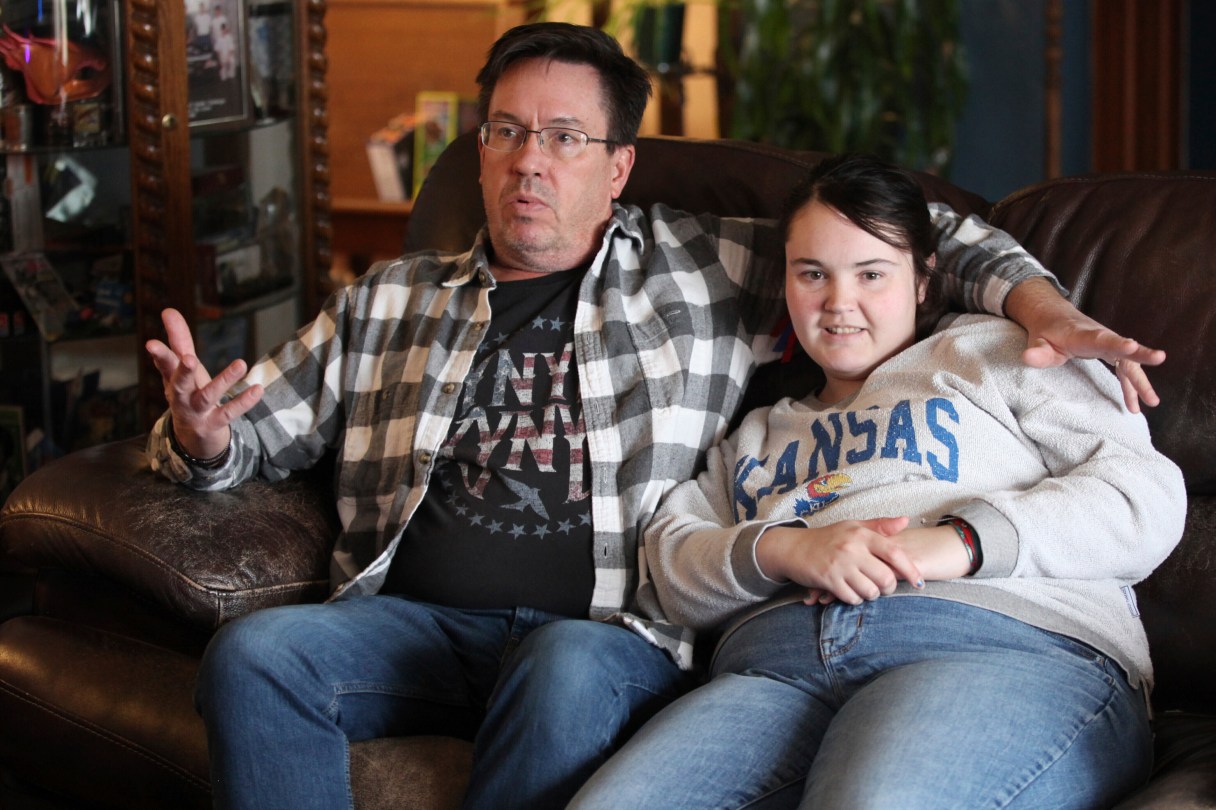
TOPEKA, Kan. (AP) — When Lilly Miller was in elementary school, teachers told her parents they needed to immediately sign up their youngest daughter, who has Down syndrome, for a wait list so the state would pay for a day program when she grew up. The teachers predicted a six-year wait.
The Millers have been waiting 10 years. Lilly is now 21 and has aged out of special education programs in the public schools in their hometown of Wichita, Kansas. Her parents, also teachers, have hired a home caregiver. A day program, where she would learn new job skills or flex existing ones while socializing, would cost between $1,500 and $2,000 a month, Marvin Miller said.
Across the U.S., hundreds of thousands of children, adolescents and young adults with physical or intellectual disabilities are waiting for state-covered services. In Kansas, a legislative committee approved higher funding Wednesday, and another is expected to consider it Thursday. But even with more funds, it could take years to eliminate the state’s waiting lists.
The services, which include day programs, employment assistance, and home care, are designed to foster independence and build work skills. Without them, Marvin Miller said, his youngest daughter isn’t getting enough social interaction. “We’ve actually seen her regress.”
“Someday, I won’t be around anymore, and that’s a parent’s greatest fear,” Miller said during an interview. “I want her to be at the place where, if something should happen in 15 years when I’m gone, she will still have a community of supports and friends and all the things that we take for granted when we work in jobs and and have neighbors.”