
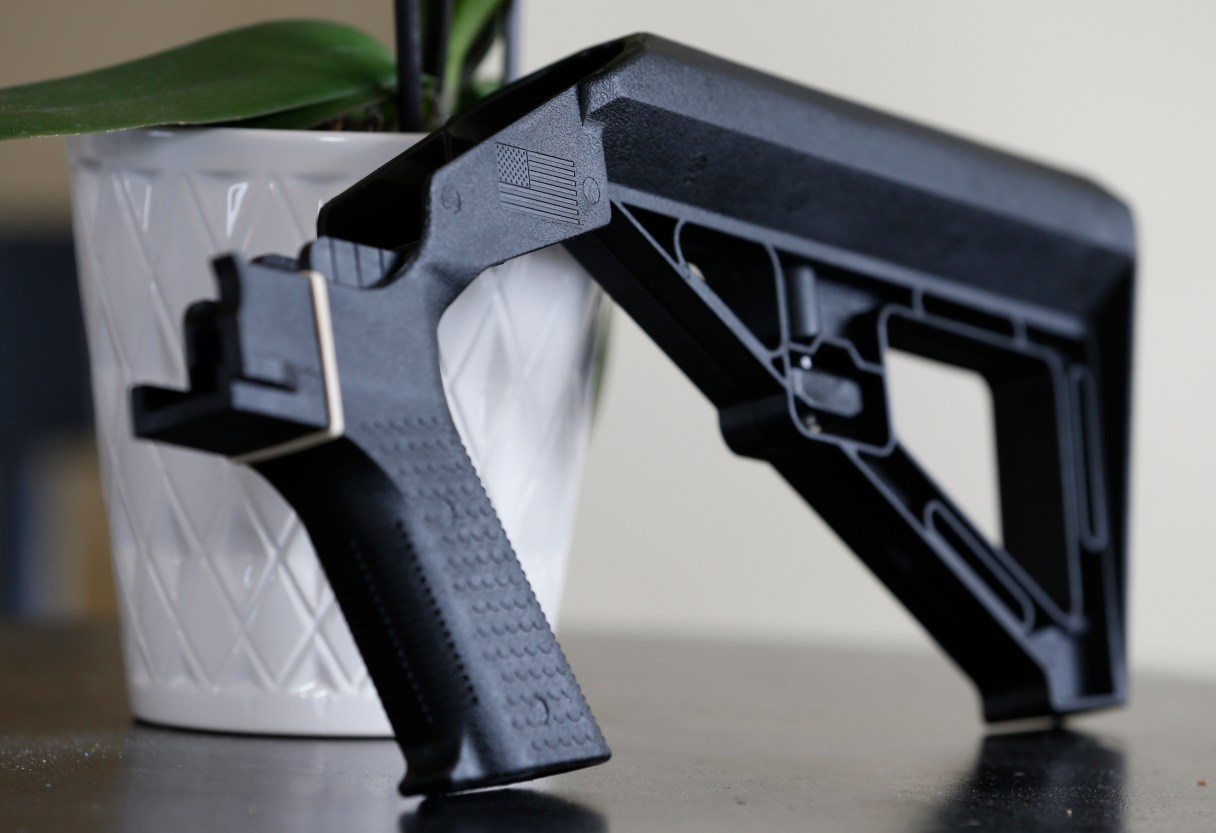
WASHINGTON (AP) — The Supreme Court appeared torn Wednesday about a challenge to a Trump-era ban on bump stocks, a gun accessory that allows semi-automatic weapons to fire rapidly like machine guns and was used in the deadliest mass shooting in modern U.S. history.
The high court is weighing whether the Trump administration followed federal law when it reversed course and banned bump stocks after a gunman in Las Vegas attacked a country music festival with assault-style rifles in 2017. Many of the weapons were equipped with bump stocks and high-capacity magazines. More than 1,000 rounds were fired into the crowd in 11 minutes, killing 60 people and injuring hundreds more.
The arguments largely focused on whether guns with a bump stock can be considered illegal machine guns under federal law. A Texas gun shop owner argues that bump stocks don’t change the core function of a semi-automatic weapon enough to make it illegal. The Biden administration says bump stocks fall firmly under the legal definition of machine gun.
It is the latest gun case to come before the justices and offers a fresh test for a court with a conservative supermajority to define the limits of gun restrictions in an era where mass shootings are exceedingly prevalent.
Conservative justices raised questions about whether machine-gun laws dating to the 1930s apply to bump stocks and about the Justice Department’s previous finding that the accessories were legal.