
Tuesday, November 17, 2026Nov 17

Few Americans want US more involved in current wars in Ukraine and Gaza, AP-NORC poll finds

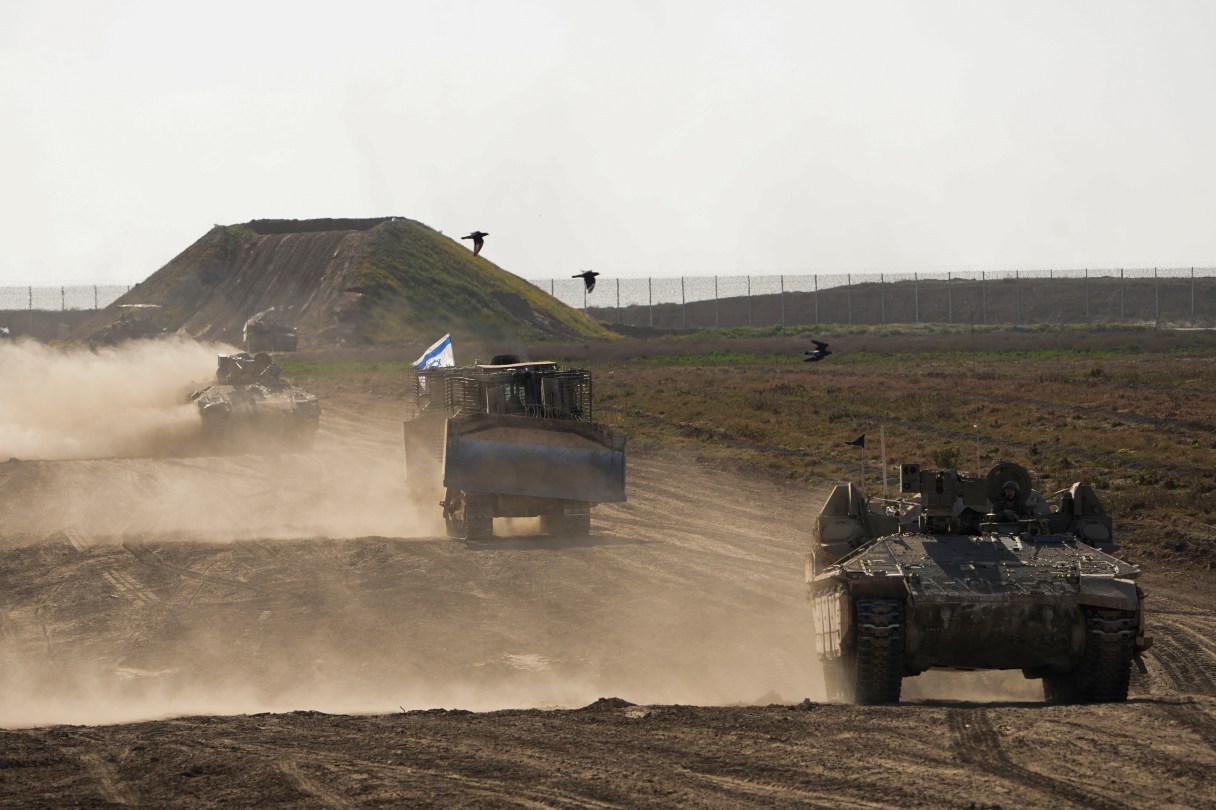
FILE - Israeli troops move near the Gaza Strip border in southern Israel, Monday, March 4, 2024. The army is battling Palestinian militants across Gaza in the war ignited by Hamas' Oct. 7 attack into Israel. Israel can either try to annihilate Hamas, which would mean almost certain death for the estimated 100 hostages still held in Gaza, or it can cut a deal that would allow the militants to claim a historic victory. Either outcome would be excruciating for Israelis. And either might be seen as acceptable by Hamas, which valorizes martyrdom. (AP Photo/Ohad Zwigenberg, File)


WASHINGTON (AP) — As the U.S. navigates involvement in the wars in Ukraine and Gaza, few Americans want the country to take a more active role in solving the world’s problems, according to a new poll from The Associated Press-NORC Center for Public Affairs Research.

While an American role as the “world’s policeman” has become an increasingly contentious partisan issue, a majority of both Democrats and Republicans agree that the U.S. should not get more involved than it currently is in the ongoing conflicts between Russia and Ukraine and Israel and Hamas.

The poll shows that 4 in 10 U.S. adults want America to broadly take a “less active” role in solving global conflicts. Only about one-quarter think the U.S. should take a more active role, and about one-third say its current role is about right.

The findings underscore the difficult dynamics that both President Joe Biden and the likely Republican presidential nominee, Donald Trump, face in the leadup to next November’s election. Significant swaths of the electorate are frustrated by the searing images of the growing humanitarian crisis in the five month war in Gaza and the hefty costs already incurred by the U.S in helping Ukraine fend off Russia’s invasion.