
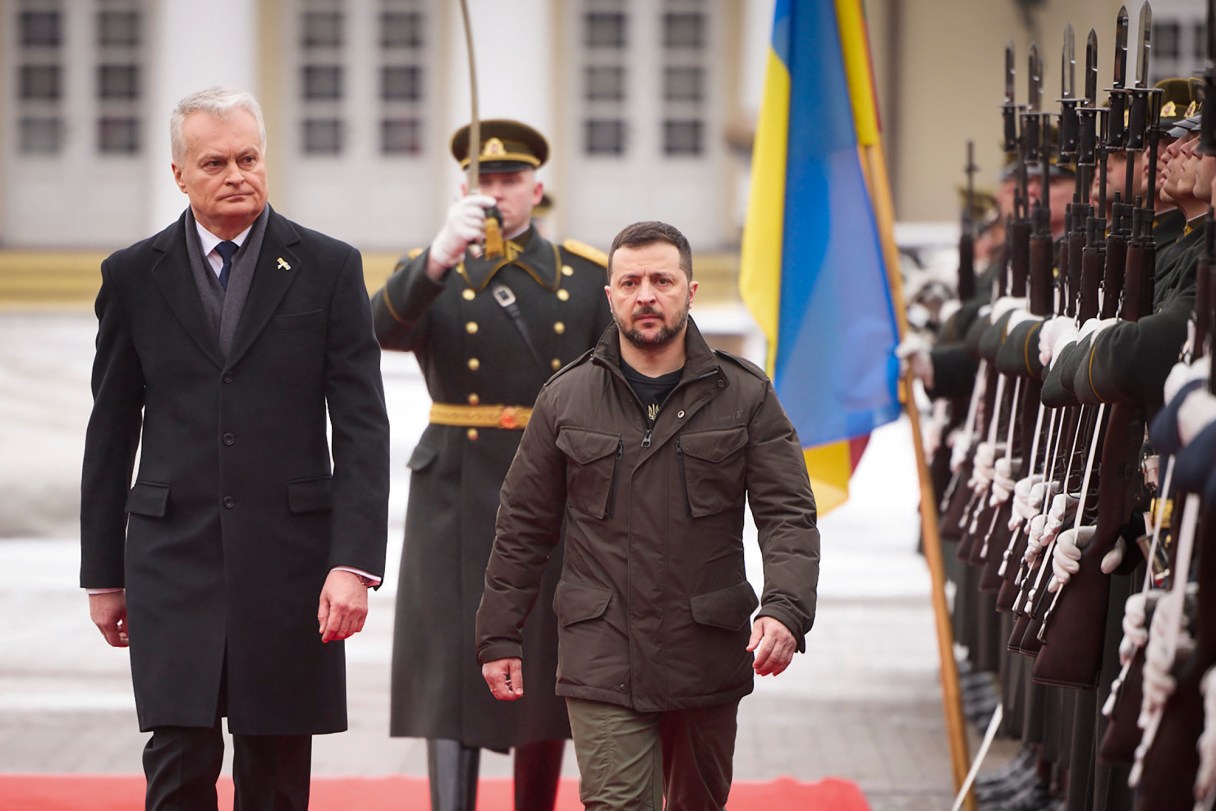
VILNIUS, Lithuania (AP) — Ukraine has shown the world that Russia’s military can be stopped, President Volodymyr Zelenskyy said Wednesday as he began a visit to the Baltic nations in search of more help for his country against the Kremlin’s larger and better-supplied forces in the 22-month-old invasion.
Speaking in the Lithuanian capital of Vilnius, Zelenskyy said Ukraine still must bolster its air defenses against Russia’s intensified missile and drone onslaughts and replenish its ammunition supplies as long-range strikes become the main feature of this winter’s fighting.
“We have proven that Russia can be stopped, that deterrence is possible,” he said after talks with Lithuanian President Gitanas Nauseda on his first foreign trip of the year.
The massive Russian barrages — more than 500 drones and missiles were fired between Dec. 29 and Jan. 2, according to officials in Kyiv — are using up Ukraine’s weapons stockpiles, however. The escalation is stretching Ukraine’s air defense resources and leaving the country vulnerable unless it can secure further weapons supplies.
“We lack modern air defense systems badly,” Zelenskyy said, noting that they are “what we need the most.”