
(Editor’s note: One in a series)
In looking forward to a new mental health facility in Chattanooga, we should all appreciate the hard work state Rep. Patsy Hazlewood and others performed in spurring on the project. Now it is time to find a suitable site where a modern facility can be built to serve our community for years to come.
Hazlewood has said she is concerned about any delay in beginning construction if a search for a facility location other than Moccasin Bend is required. Since the need is urgent, having the facility operational soon is critical.
Delay is one of the most important reasons the hospital should not be built on Moccasin Bend.
Consultation with federally recognized American Indian tribes in decisions about Moccasin Bend will take time and human resources. It is my understanding that some Native American tribes wish to join the location consensus as positively inclined stakeholders.
According to a September 2017 Times Free Press report “Plan for Moccasin Bend Archaeological District finalized,” the plan was the result of “a collaboration among the public, government agencies and nearly two dozen American Indian tribes that have historical ties to the land.”
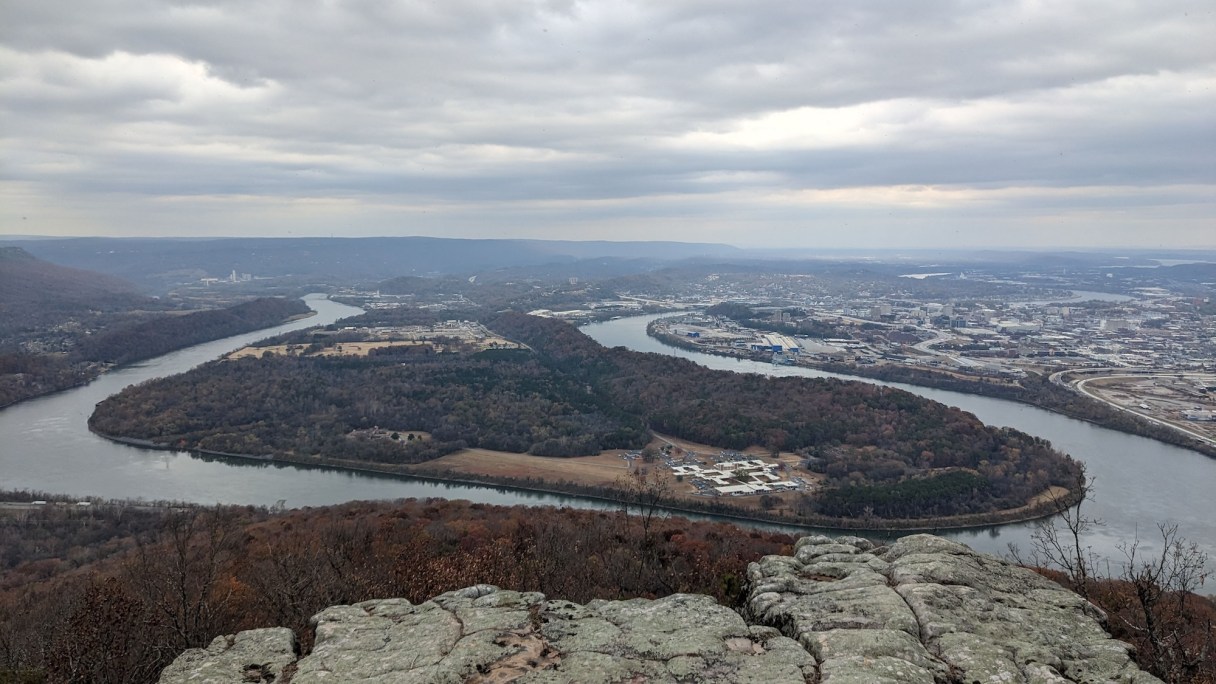
The Urban Land Institute study of Moccasin Bend recommended Chattanooga and Hamilton County let a citizen-led task force decide the fate of the Bend. When Native Americans voiced concern over sacred land on the peninsula, fearing it would be violated by future development, the task force proposed a national park to protect the space.
The federal government through the National Park Service subsequently made an agreement with the tribes. Does the state of Tennessee wish to spend time and resources trying to overturn this agreement?
Considering the spiritual aspects of the land, should the state of Tennessee get embroiled in a no-win confrontation over religious matters? When Moccasin Bend National Archeological District became a unit of Chickamauga and Chattanooga National Military Park, the general mission of the park unit was to “preserve, protect, and interpret for the benefit of the public the nationally significant archeological and historic resources located on the peninsula known as Moccasin Bend, Tennessee,” according to federal park documents.
The 2014 Moccasin Bend Cultural Landscape Report states: “Significance statements for this park unit describe what sets the national historic landmark apart on a regional and national level … Moccasin Bend retains profound spiritual importance for many contemporary American Indian tribes with ancestral ties to the area.”
Recommendations in this report responded to issues raised during tribal consultation in the development concept plan/environmental assessment process.
“Several tribal representatives expressed concern that Moccasin Bend (and particularly the village locations with associated human burials) be treated with respect as sacred ground. The extensive past disturbance and looting of the burial sites have heightened sensitivities regarding the treatment and protection of these areas. Input received from ongoing consultation with affiliated tribal members and others concerning visitor use issues will be factored into the NPS decision making process.”
“[Federal] Agencies are required to consult throughout the planning process of an undertaking, beginning with identification and evaluation of property of religious and cultural significance to the Tribe.”
The law requires compliance with several acts, including the National Historic Preservation Act, the National Environmental Policy Act, the Archaeological Resources Protection Act, and the Native American Graves Protection and Repatriation Act. “These acts require discussion with tribes in all ground-disturbing projects within tribal areas when any Indian tribe ‘attaches religious or cultural significance to the historic property’,” according to park service documents.
Protests and lawsuits over the plan to excavate the important Pleistocene levy area for construction of a parking garage on the Winston site are likely, will delay construction and will be very costly to fight.
Native Americans have the resources to resist hospital relocation on the current site. Kevin Gover, director of the Museum of the American Indian, told Andrew Council of The New York Times, “Tribes have begun to have resources they never had before — disposable income.”
Cherokees’ fortunes, for example, have been transformed, thanks in large part to gaming, which has generated “hundreds of millions of dollars that have allowed the tribe to build new schools and hospitals, reacquire tribal lands that were once lost and preserve their culture and heritage,” according to an Nov. 20, 2020, NC Online article.
Does the state of Tennessee prefer to spend resources and time on a legal tussle or on constructing a top-quality mental health facility?
Karen Stone, a resident of Walden, Tenn., served on the board of Friends of Mocassin Bend National Park. Contact her at karenstone@waldenhouse.com.