
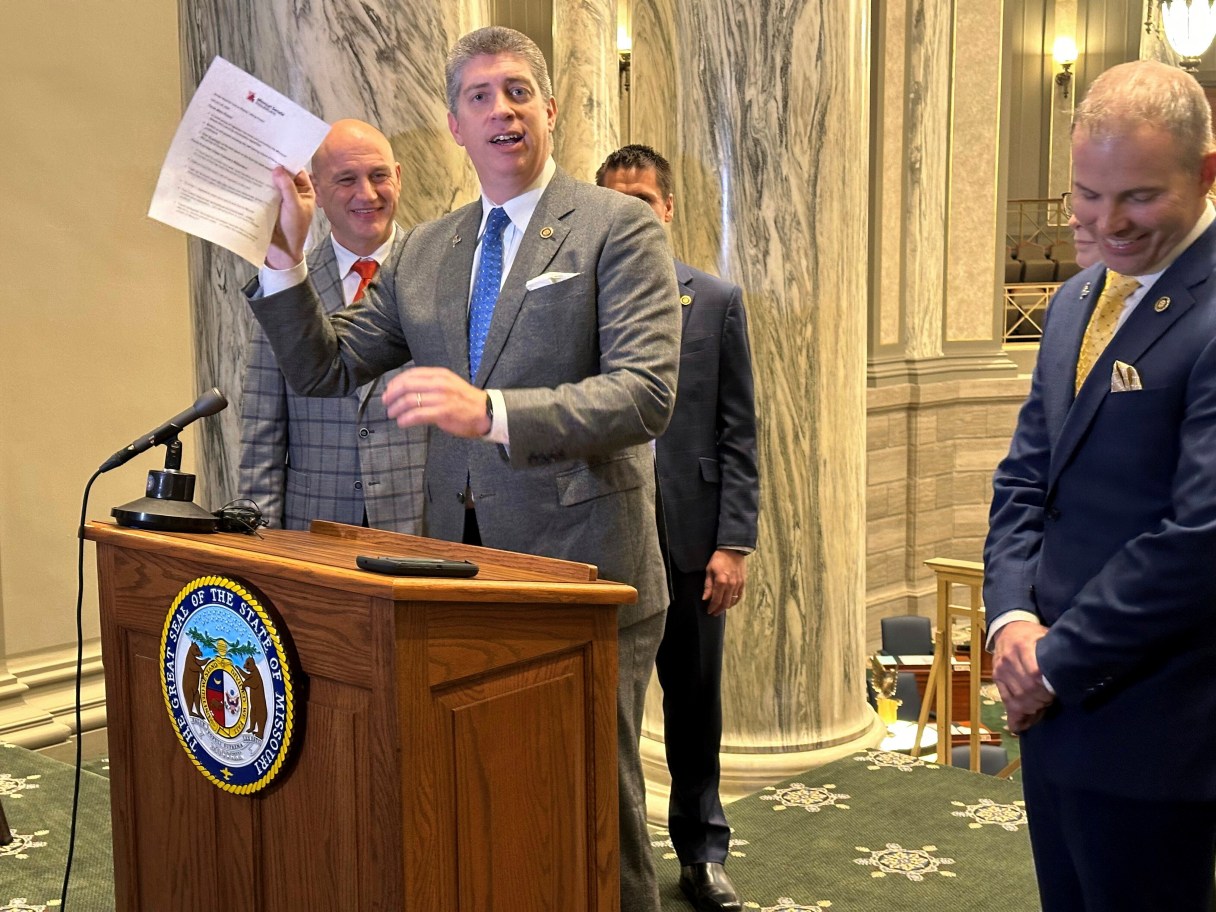
JEFFERSON CITY, Mo. (AP) — On the first day of Missouri’s new legislative session, Senate President Pro Tem Caleb Rowden tried to cajole colleagues into congeniality with a rhetorical question: “Will we focus on principled progress or political pandemonium?”
Progress was intended. But pandemonium ensued.
Within days, a newly formed Freedom Caucus — modeled after one in Washington, D.C. — ground the chamber to a halt with demands that Republican leaders act faster on GOP priorities. Tempers flared. Insults flew. And Rowden penalized prominent Freedom Caucus members by stripping them of their committee chairmanships and prime Capitol parking spots.
In state capitols around the country, Republican legislative leaders are pushing back against a growing network of conservative lawmakers attempting to pull the party further to the right with aggressive tactics aimed not at Democrats but at members of their own party. The infighting has put a spotlight on Republican fissures heading into the November elections, even as former President Donald Trump has been consolidating party support.
The conservative Freedom Caucus gained attention in the fall — when some of its members helped topple U.S. House Speaker Kevin McCarthy — but it’s been active in the U.S. House since 2015.