
POMPANO BEACH, Fla. (AP) — Retired Army Col. Farrell Patrick taught computer science at West Point during the 1970s and then at two private universities through the 1990s, so he isn’t surprised by the progress technology has made over the decades.
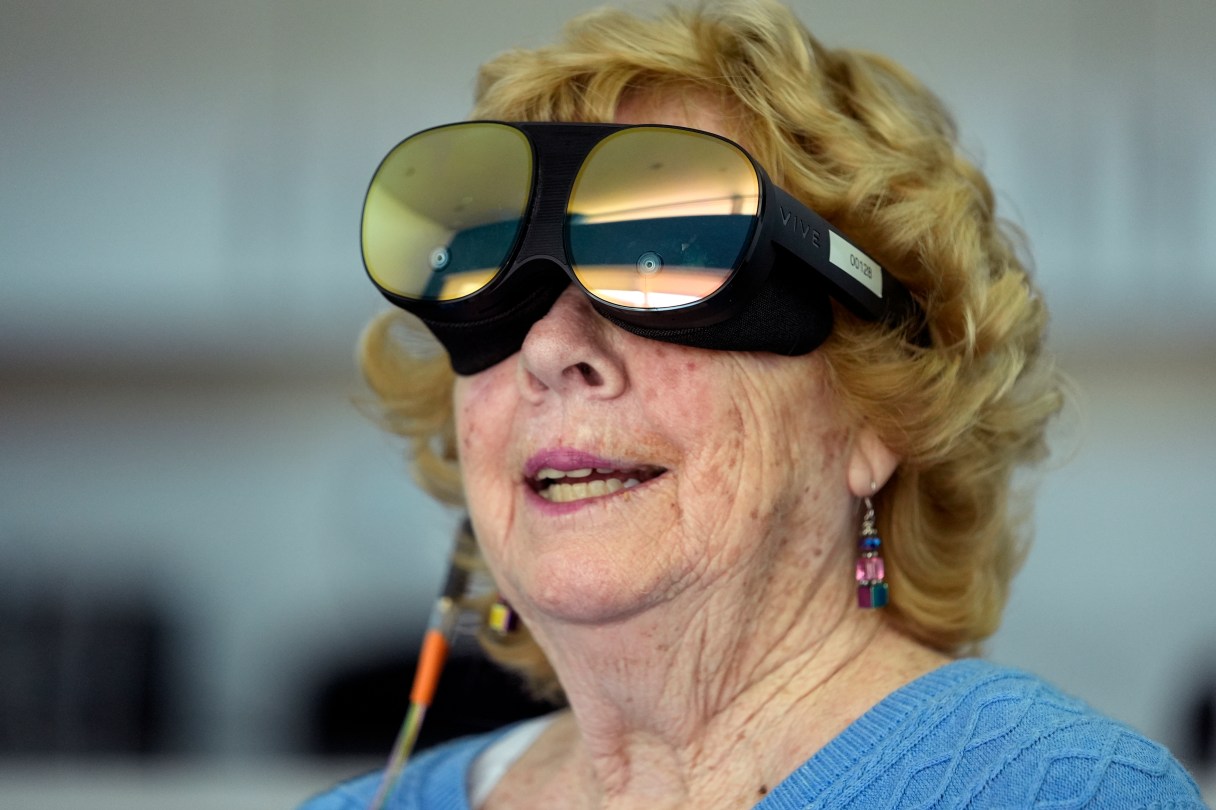
But when the 91-year-old got his first virtual reality experience recently, he was stunned. Sitting in a conference room at John Knox Village, a suburban Fort Lauderdale, Florida, retirement community, Patrick sat up straight as his eyes and ears experienced what it would be like to be in a Navy fighter jet flying off the Florida coast.
“Oh my God, that’s beautiful,” he blurted before the VR program brought the jet in for a landing on an aircraft carrier.
John Knox Village was one of 17 senior communities around the country that participated in a recently published Stanford University study that found that large majorities of 245 participants between 65 and 103 years old enjoyed virtual reality, improving both their emotions and their interactions with staff.
The study is part of a larger effort to adapt VR so it can be beneficial to seniors’ health and emotional well-being and help lessen the impact dementia has on some of them.