
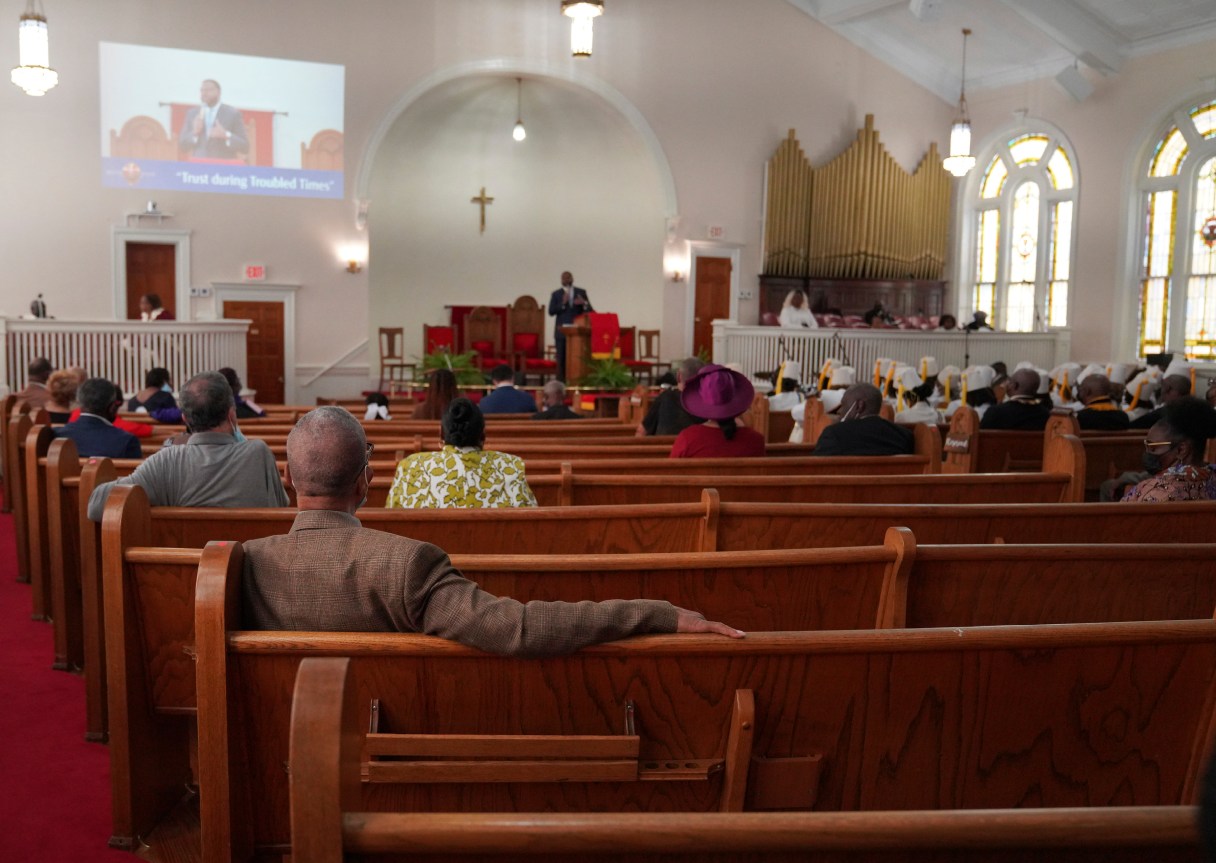
For years, the Pew Research Center listed Black Americans as having the highest levels of religiosity and faith. The Rev. Martin Luther King Jr., in fact, was known as “the moral conscience of America” by many Americans, irrespective of race.
King was not exceptional in this regard. Black people’s relationship with faith and spirituality has been essential to their survival in a society that has sanctioned, tacitly or explicitly, the brutalization and subjugation of Black bodies, historically and up to the present day.
With nowhere to turn but God, Black people developed a big-picture vision of life that allowed them to conceptualize freedom and victory beyond their individual lifetimes. They had to believe in a future they could not see, find redemption in their suffering, be willing to extend charity with half-full stomachs, and see no one in need as a stranger.
If we view Black value through the lens of production and invention, it’s an easy task. We can just point to the many unheralded innovators, scientists, doctors and other professionals who have been purposely ignored. The greater the invention, the more impressive the person. And while the sharing of these achievements has been a source of inspiration and pride for many Black Americans, it is the unseen achievement of millions of Black people who held on to their humanity, despite such grossly inhumane conditions, that should be celebrated with equal vigor — if not more.
It would be reasonable to expect the fruits of the great experiment of the United States’ self-professed democratic government to be rotten, but that is not the case. Bruised? Yes. Malformed? In some instances. But on the whole, the same people who were denied their humanity called America to reclaim its own. It is these people whose inventions and contributions we celebrate during Black History Month — but who, more often than not, were kept from reaping the rewards of their brilliance and ingenuity.