
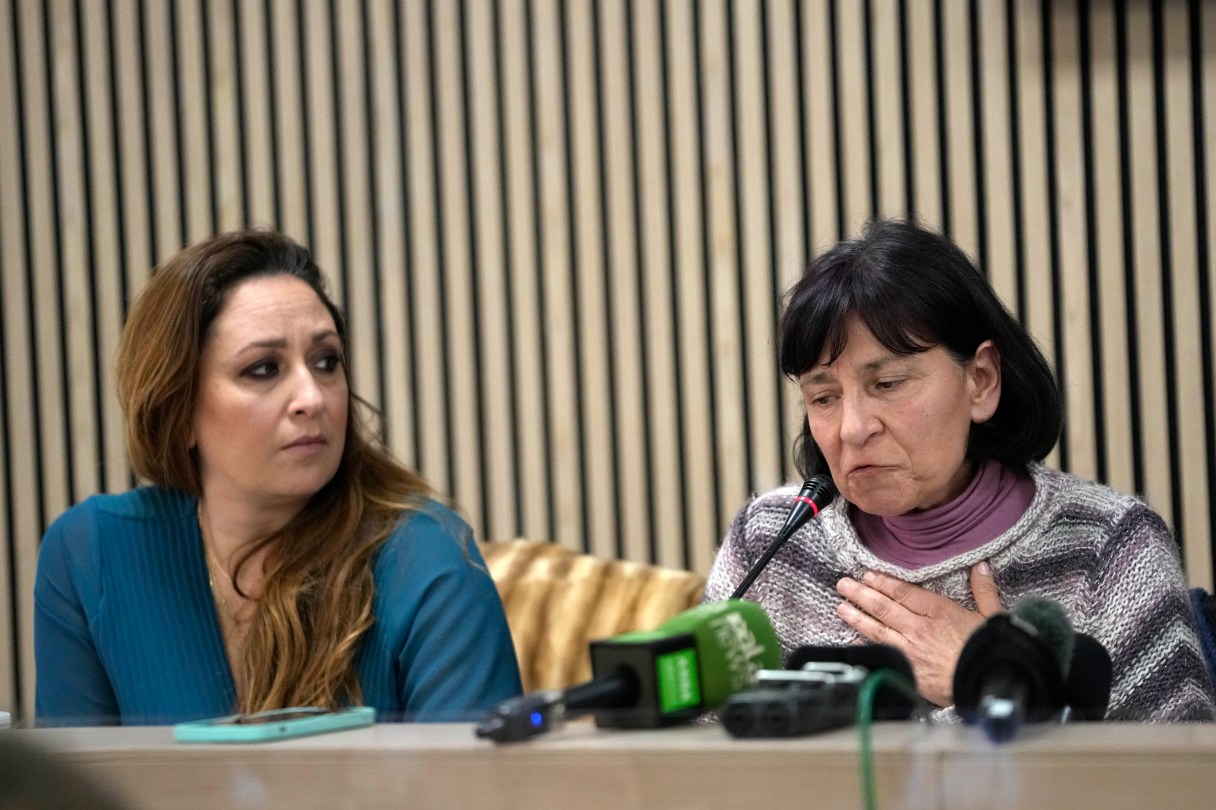
ROME (AP) — One of the first women who accused a once-exalted Jesuit artist of spiritual, psychological and sexual abuse went public Wednesday to demand transparency from the Vatican and a full accounting of the hierarchs who covered for him for 30 years.
Gloria Branciani, 59, appeared at a news conference with one of the most prominent Vatican-accredited lawyers in Rome, Laura Sgro, to tell her story in public for the first time. She detailed the alleged abuses of the Rev. Marko Rupnik, including his fondness for three-way sex “in the image of the Trinity” that, if confirmed, would constitute such a grave perversion of Catholic doctrine as to be considered false mysticism.
Rupnik has not commented publicly about the allegations, but his Rome art studio has said the allegations were unproven and media reports about the case a defamatory “lynching.”
Rupnik’s mosaics decorate churches and basilicas around the world, including at the Catholic shrine in Lourdes, France, the forthcoming cathedral in Aparecida, Brazil, and the Redemptoris Mater chapel of the Apostolic Palace.
The Jesuits kicked him out of the order last year after he refused to respond to allegations of spiritual, psychological and sexual abuses by about 20 women, most of whom, like Branciani, were members of a Jesuit-inspired religious community he co-founded in his native Slovenia that has since been suppressed.