
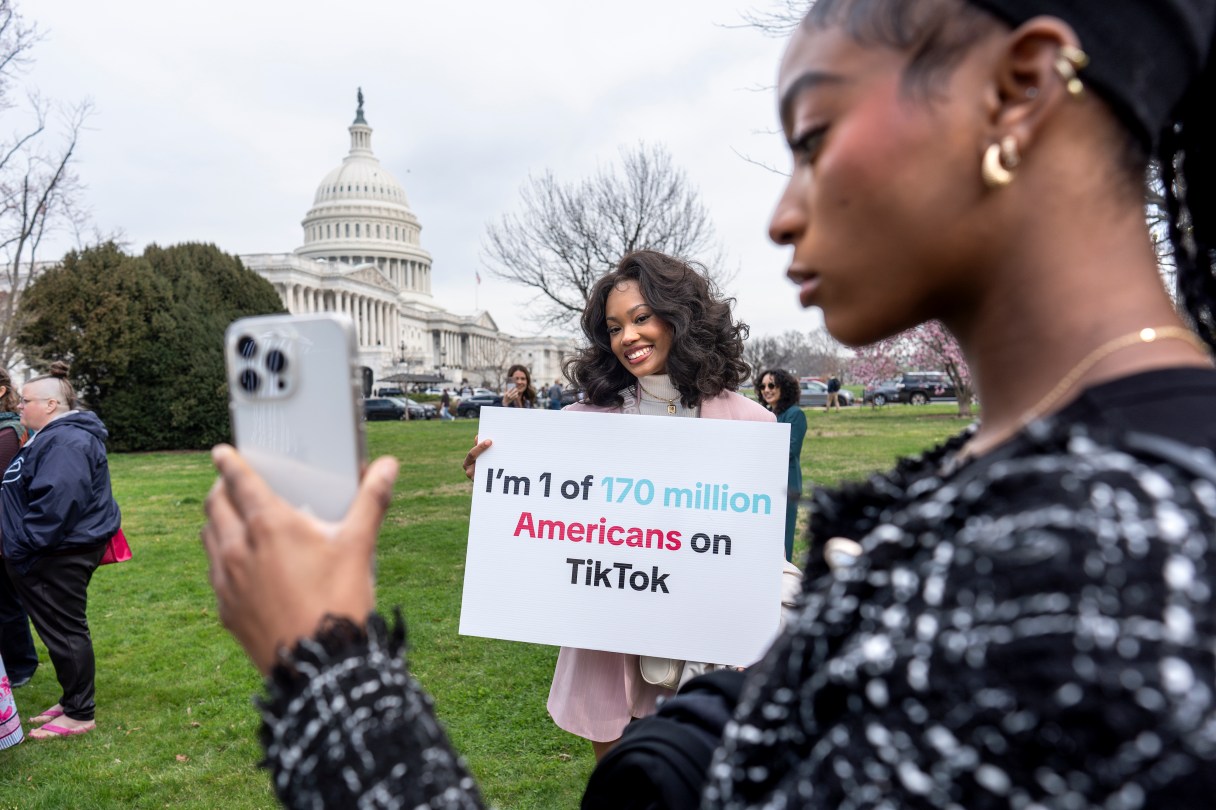
WASHINGTON (AP) — If some U.S. lawmakers have their way, the United States and China could end up with something in common: TikTok might not be available in either country.
The House on Wednesday approved a bill requiring the Beijing-based company ByteDance to sell its subsidiary TikTok or face a nationwide ban. It’s unclear if the bill will ever become law, but it reflects lawmakers’ fears that the social media platform could expose Americans to Beijing’s malign influences and data security risks.
But while U.S. lawmakers associate TikTok with China, the company, headquartered outside China, has strategically kept its distance from its homeland.
Since its inception, the TikTok platform has been intended for non-Chinese markets and is unavailable in mainland China. It pulled out of Hong Kong in 2020 when Beijing imposed a national security law on the territory to curtail speech. As data security concerns started to rise in the U.S., TikTok sought to reassure lawmakers that data gathered on U.S. users stays in the country and is inaccessible to ByteDance employees in Beijing.
TikTok’s parent company is following the same playbook as many other Chinese companies with global ambitions: To win customers and trust in the United States and other Western countries, they are playing down their Chinese roots and connections. Some have insisted they be called “global companies” instead of “Chinese companies.”