
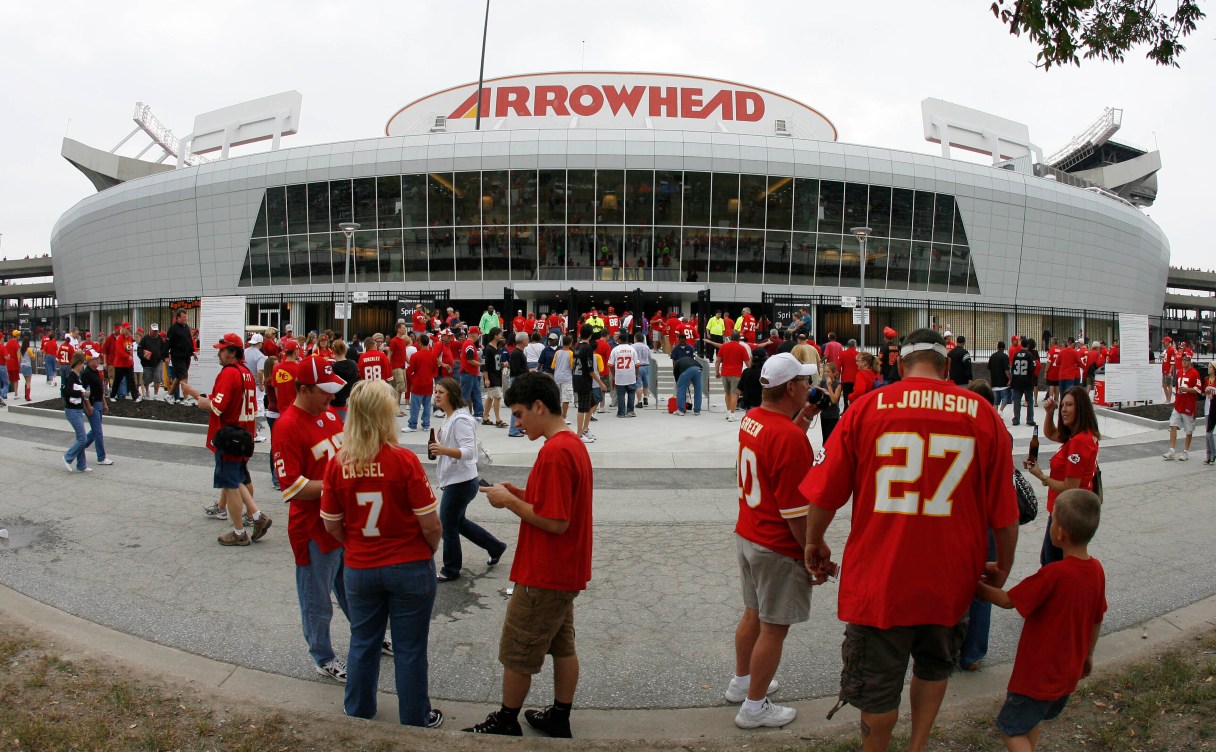
JEFFERSON CITY, Mo. (AP) — Like a loss in the playoffs, voter rejection of a stadium tax plan will force the Kansas City Royals and Chiefs to reevaluate their approach.
The defeat Tuesday of a three-eighths cent sales tax to fund a new downtown Royals ballpark and renovate the Chiefs’ Arrowhead Stadium was almost assuredly not the end of the matter. Other teams and cities have faced similar setbacks, and that hasn’t slowed a wave of stadium construction underway across the U.S.
“The next page in the playbook, if they lose this referendum, would be to threaten to move,” said Brad Humphreys, an economics professor at West Virginia University, who researches sports stadiums.
But that doesn’t mean relocation is imminent, or even likely.
Moving to a new stadium within the same region or another state is just one of several options. Teams could tweak their plans and ask voters again. They could build or renovate stadiums without public funds. Or they could avoid a referendum by seeking approval for public subsidies directly from a legislative body such as a city council, county commission or state legislature.