
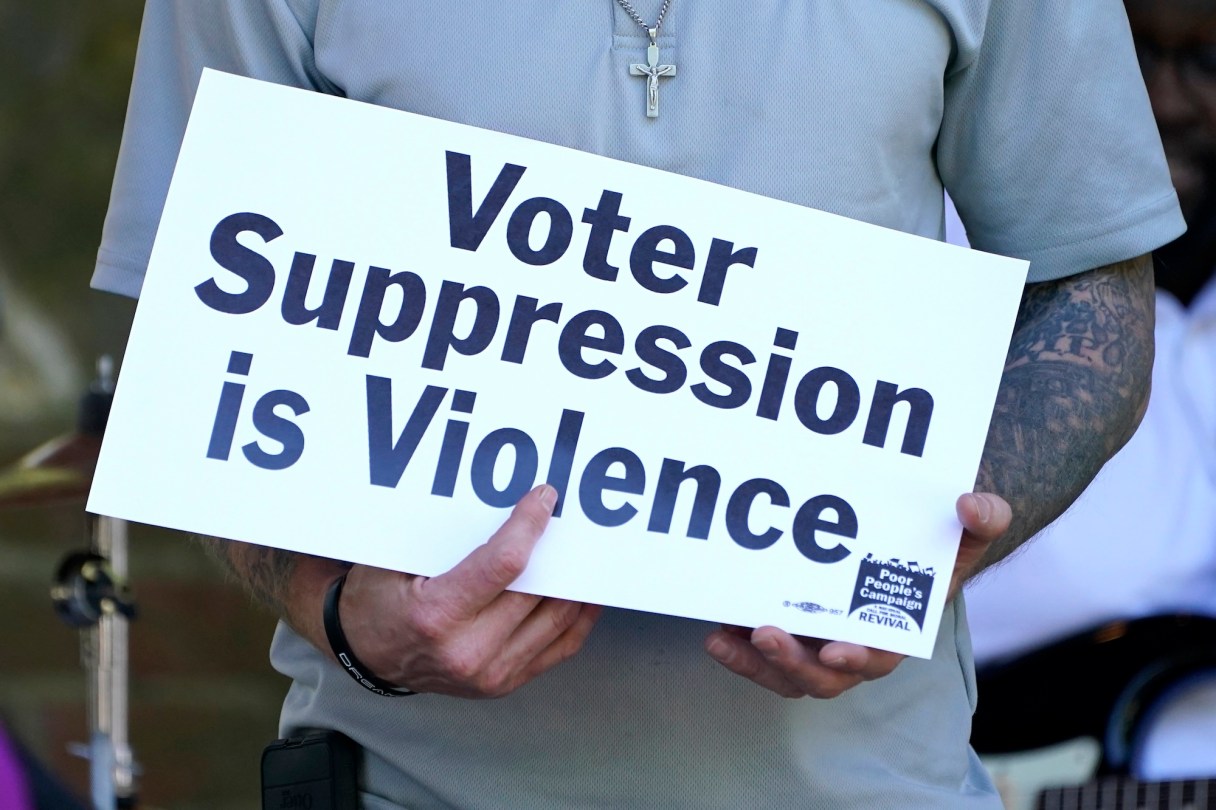
The racial turnout gap — the difference in voter participation between white Americans and Americans of color — nearly closed in 2008. This was part of a 40-year trend that began with the civil rights revolution of the 1960s, including the passage of the 1965 Voting Rights Act. And the closing gap was an encouraging measure of progress.
Unfortunately, this progress is now reversing. A landmark Brennan Center report shows that, for the last decade, the racial turnout gap has been widening.
Many factors contribute to voter participation, but the data shows that a 2013 Supreme Court decision has played a major role in exacerbating the racial turnout gap.
In Shelby County v. Holder, the Supreme Court suspended a key provision of the Voting Rights Act. Section 5 required jurisdictions with a history of racial discrimination to obtain federal approval before changing their voting rules. It was perhaps the nation’s most important check on voter suppression.
Justice Ruth Bader Ginsburg memorably summarized the absurdity of Shelby County’s logic this way: “Throwing out preclearance when it has worked and is continuing to work to stop discriminatory changes is like throwing away your umbrella in a rainstorm because you are not getting wet.”