
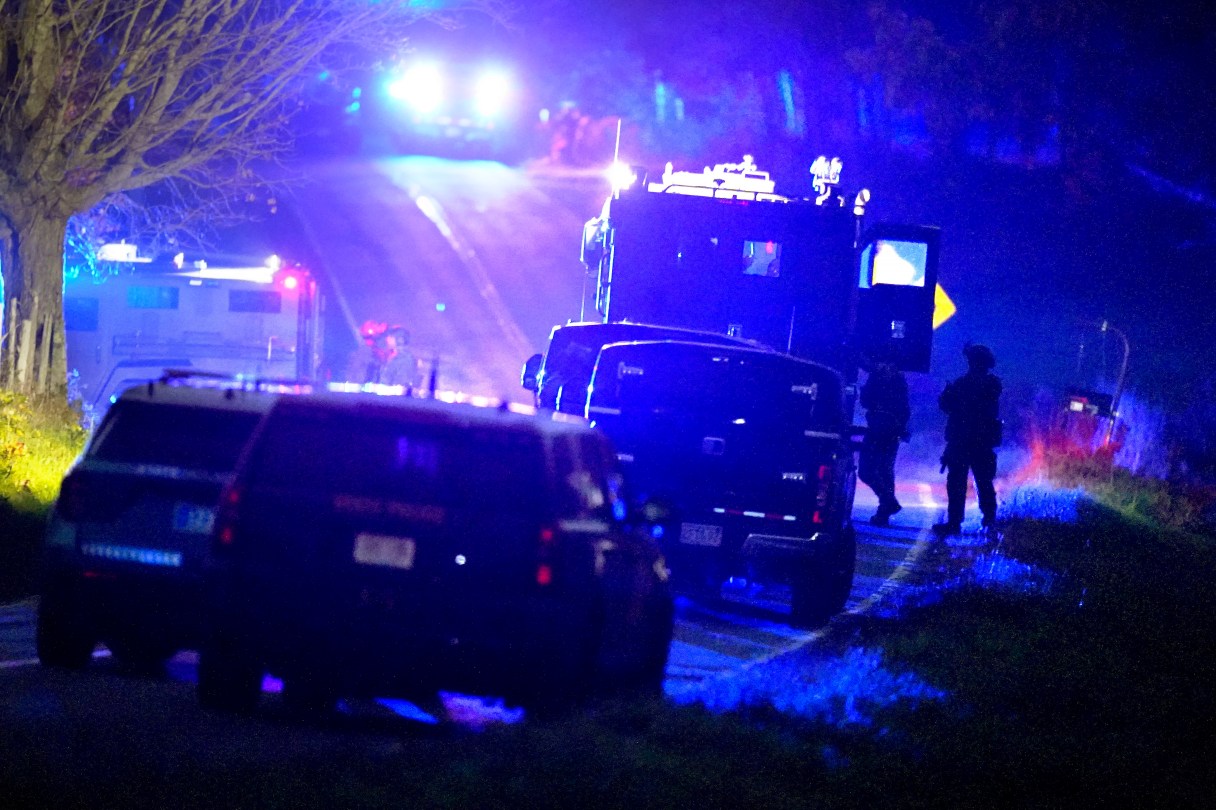
PORTLAND, Maine (AP) — Law enforcement should have seized a man’s guns and put him in protective custody weeks before he committed Maine’s deadliest mass shooting, a report found Friday.
An independent commission has been reviewing the events that led up to Army reservist Robert Card killing 18 people at a bowling alley and a bar in Lewiston on Oct. 25, as well as the subsequent response.
The commission criticized Sgt. Aaron Skolfield, who responded to a report five weeks before the shooting that Card was suffering from some sort of mental health crisis after he’d previously assaulted a friend and threatened to shoot up the Saco Armory.
The commission found Skolfield, of the Sagadahoc County Sheriff’s Office, should have realized he had probable cause to start a so-called “yellow flag” process, which allows a judge to temporarily remove somebody’s guns during a psychiatric health crisis.
Leroy Walker, whose son Joseph was killed in the shootings, said the commission’s finding that the yellow flag law could have been implemented but wasn’t reflected what victims’ families have known all along.