
Tuesday, November 17, 2026Nov 17

What to know about the Supreme Court case about immunity for former President Trump

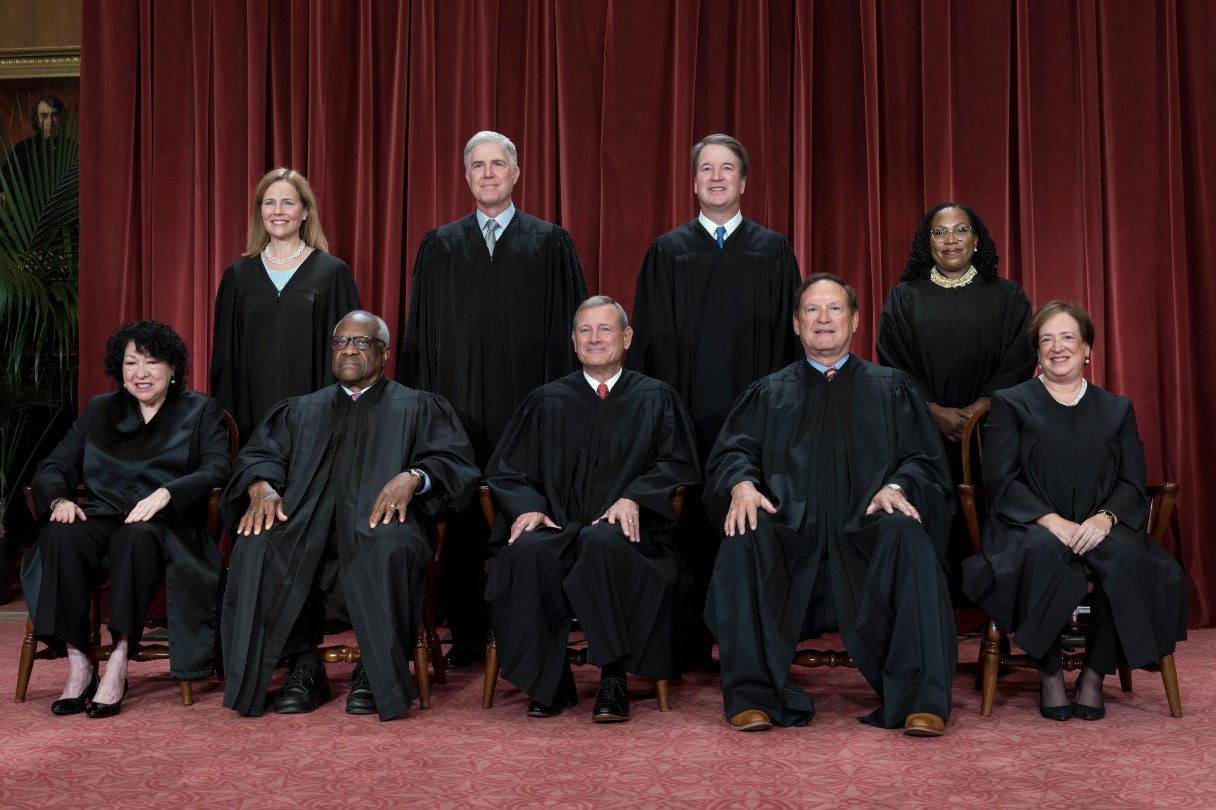
FILE - Members of the Supreme Court sit for a new group portrait following the addition of Associate Justice Ketanji Brown Jackson, at the Supreme Court building in Washington, on Oct. 7, 2022. Bottom row, from left, Associate Justice Sonia Sotomayor, Associate Justice Clarence Thomas, Chief Justice of the United States John Roberts, Associate Justice Samuel Alito, and Associate Justice Elena Kagan. Top row, from left, Associate Justice Amy Coney Barrett, Associate Justice Neil Gorsuch, Associate Justice Brett Kavanaugh, and Associate Justice Ketanji Brown Jackson. The core issue being debated before the Supreme Court on April 25, 2024, boils down to this: Whether a former president is immune from prosecution for actions taken while in office — and, if so, what is the extent of the immunity? (AP Photo/J. Scott Applewhite)

WASHINGTON (AP) — The Supreme Court has scheduled a special session to hear arguments over whether former President Donald Trump can be prosecuted over his efforts to undo his 2020 election loss to President Joe Biden.

The case, to be argued Thursday, stems from Trump’s attempts to have charges against him dismissed. Lower courts have found he cannot claim for actions that, prosecutors say, illegally sought to interfere with the election results.

Trump has been charged in federal court in Washington with conspiring to overturn the 2020 election, one of four criminal cases he is facing. A trial has begun in New York over hush money payments to a porn star to cover up an alleged sexual encounter.

The Supreme Court is moving faster than usual in taking up the case, though not as quickly as special counsel Jack Smith wanted, raising questions about whether there will be time to hold a trial before the November election, if the justices agree with lower courts that Trump can be prosecuted.

The justices ruled earlier this term in another case that arose from Trump’s actions following the election, culminating in the Jan. 6, 2021, attack on the U.S. Capitol. The court unanimously held that states could not invoke a provision of the 14th Amendment known as the insurrection clause to prevent Trump from appearing on presidential ballots.