
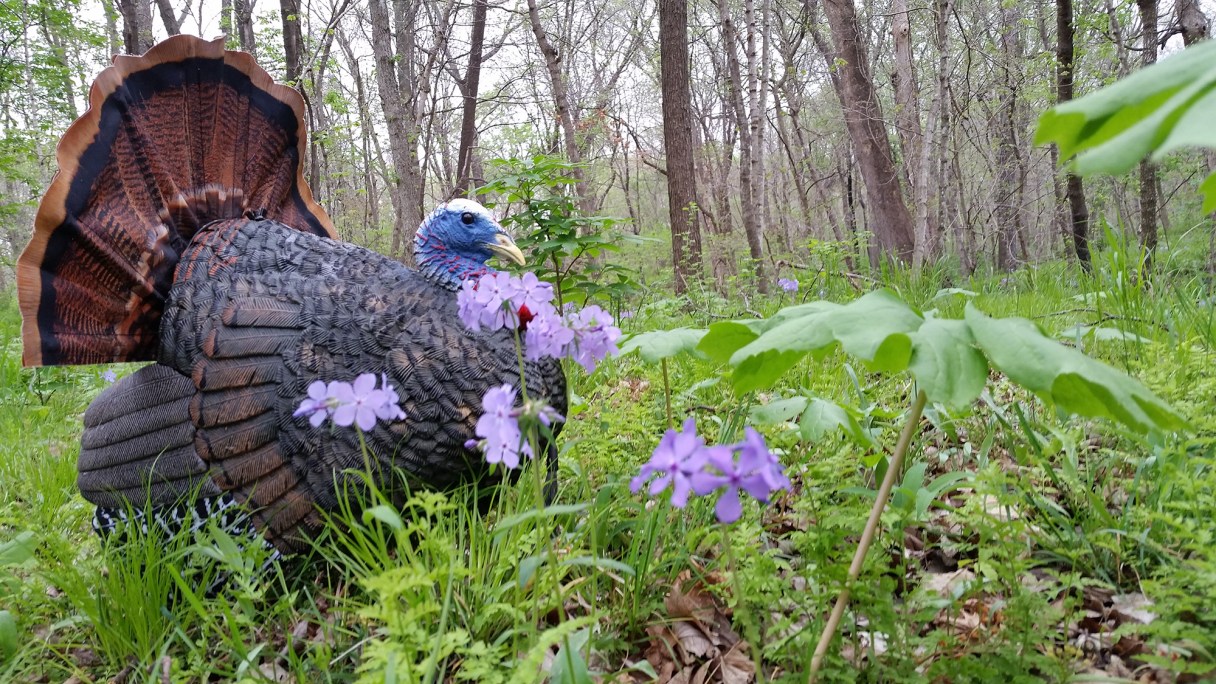
We are deep into the second week of the spring turkey hunting season in my home state of West Virginia, and I am tired. No, I have not hunted every day like I said I would, but I am tired just the same.
For reasons I cannot really explain, things are not like they used to be. I know, I know, you may not want to hear people who are not so young anymore go on about that, but bear with me, OK?
Get a refill on your coffee, and let’s talk a little about this.
(READ MORE: Walk down memory lane shows things just ain’t the same)
By the way, the turkeys in my area have really been acting snooty. Even though my memory is about as fragile as a politician’s promise, I seem to recall going through this last year (and maybe the one before that): long stretches in the season where the gobblers in your area come down with lockjaw and act like they owe you money. In other words, they are mostly silent and seem to have no interest in answering your calls and coming in where they may be decently shot.
Now before you say anything, I know some of you out there are finding turkeys that gobble a hundred times on the roost and then that many times again as they strut over to you in the classic fashion before you pull the trigger. I am happy for you, and I kinda sorta remember what that is like. (I just wish you wouldn’t gloat about it so much.) Just remember that after any stretch when you kill a few birds and begin to think of yourself as some sort of turkey oracle, there is a great reckoning coming.
If you remember some of our sessions in the past, we have established this: “Turkeys are the great equalizers of all mankind.” (This is Case’s Theorem of the Outdoors No. 27.) Quite often when you are on a streak where you seemingly can do no wrong when calling turkeys, the bottom falls out. About the time you are offering your services as a guide, thinking about doing turkey calling seminars and maybe writing a book on the subject, the hand of fate deals you a terrible blow.
You find yourself unable to hear a turkey, much less call one in. The gobblers seemingly overnight have all received the same memo and will not talk to you, no matter how you plead.
(READ MORE: You don’t have to lose sleep to catch the 9:30 a.m. gobbler)
In my experience with such things, you have a couple of options on what to do. One is you can simply quit for the season and sleep in, rest, catch up on chores around the house, and in general try to go back to being a somewhat normal human being. (This is hard for most turkey hunters.)
The next thing you can do is humble yourself and ask to go along with a hunter you figured was not nearly on your scale as a turkey assassin. You hunt with this person, let them take the lead in the woods, even let them do all the calling. (This will sufficiently bruise your overinflated ego.) After this little exercise, the turkey fortune gremlins may have mercy on you and allow you a somewhat normal season — or not.
Back there near the beginning, I started down that “things ain’t like they used to be” road. I could hear the groans from here, but most of us who have spent more years in the turkey woods than some of the current crop of turkey chasers have been alive know this is true. This is not the first time I have said this maybe even this year, but I know the following phenomena in the turkey woods are true.
Turkeys do not gobble like they used to, as in not as much, on the limb or the roost. They just don’t. (Insert your reasons as to why that is here.) I would also add that they do not gobble as early in the day (I mean in the slap dark) as they did years ago, which made it easier to get into their areas of operation.
For years, I was sure that I was seeing a lack of other hunters in the woods, especially after the first couple days or the first week of the season. Now I am not so sure; there may be more.
What do you think?
Well, thanks for listening about the current slump I may be in. I think I may be able to pull out of it, and we still have a lot of season left to go. I’m not ready to take a half-box of TSS loads and start crawling on field turkeys — yet.
By the end of the fourth week of the season, though, all bets are off.
“Guns & Cornbread” is written by Larry Case, who lives in Fayette County, W.Va. You can write to him at larryocase3@gmail.com.