
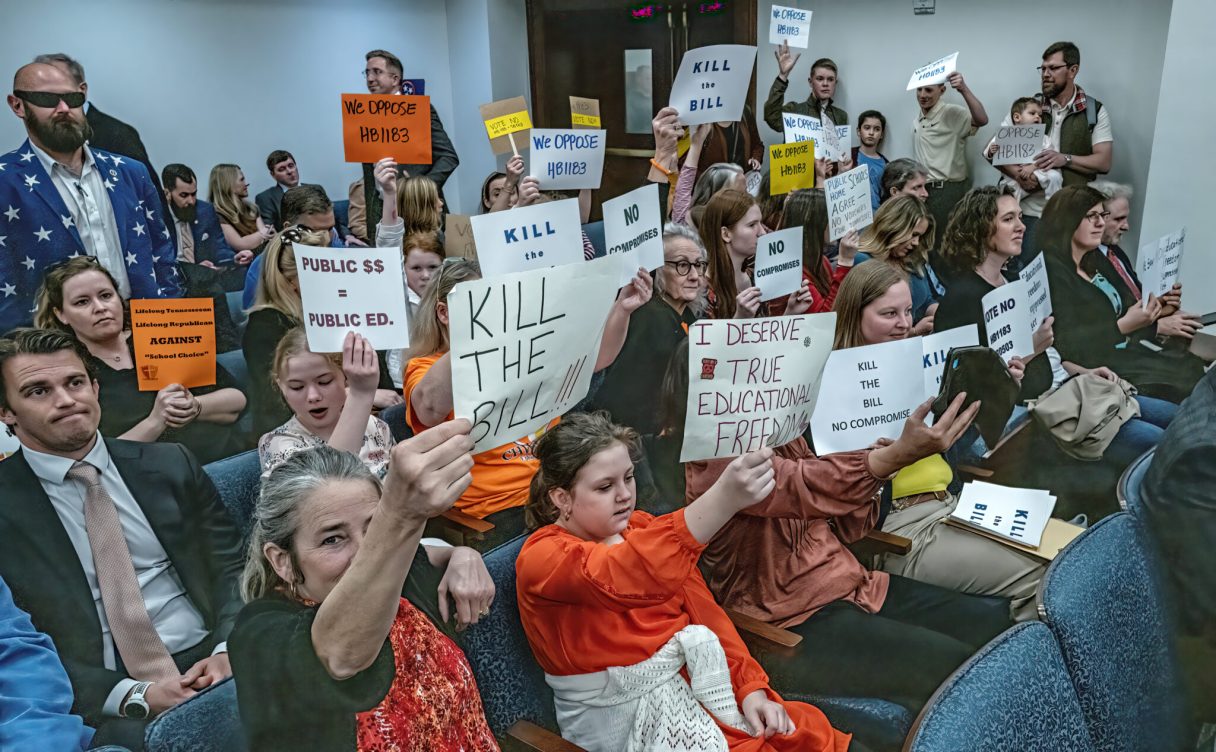
From health care for immigrants in California to universal school vouchers in Tennessee, states are being forced to rethink expensive projects as tax revenues decline and federal pandemic aid ends.
State tax revenue fell last year by 4%, according to a Stateline analysis of U.S. Census Bureau estimates released this month. Revenue is still up since 2019 by about 28%, though, higher than the inflation rate of about 18% in that time.
California and New York bore a disproportionate share of the loss, even accounting for their large populations. Those states lost a combined $56 billion in state tax revenue, the bulk of the $66 billion national loss.
California Democratic Gov. Gavin Newsom, confronting a budget deficit that has ballooned to $73 billion, called on lawmakers to reopen the state budget for changes, including a proposed $1.5 billion increase in taxes on health insurers to maintain an expansion of state health insurance for low-income people regardless of immigration status.
Republican Assemblymember Bill Essayli called the expansion, which would include $4 billion in state funds, “money we don’t have” for “illegal immigrants” in a March 14 budget committee meeting ahead of an Assembly vote. Democratic Assemblymember Akilah Weber, who is also a San Diego physician, said the expansion would mean “we can keep on doing our work and helping patients without having to cut services.”