
Monday, November 16, 2026Nov 16

‘Duty to warn’ guided US advance warning of the Moscow attack. Adversaries don’t always listen

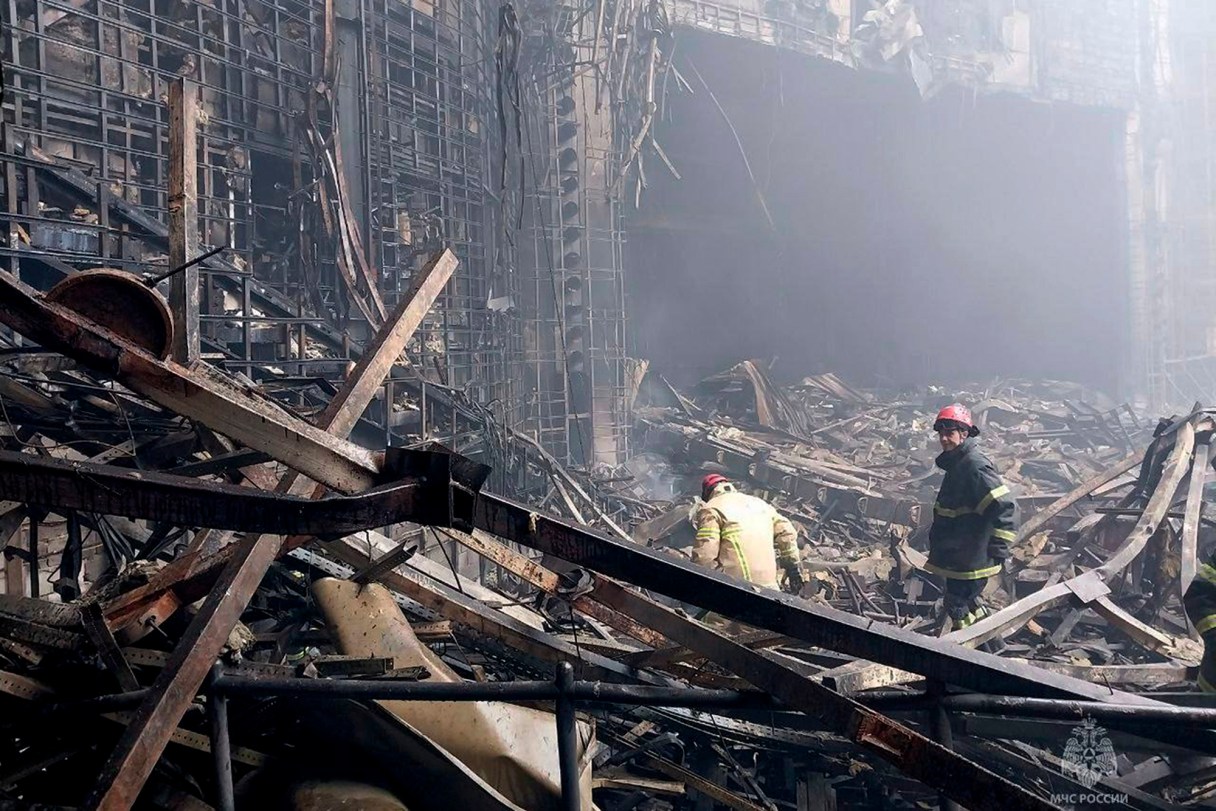
In this photo released by Russian Emergency Ministry Press Service on March 23, 2024, firefighters work in the burned concert hall after an attack on the building of the Crocus City Hall on the western edge of Moscow, Russia. A little-known U.S. intelligence principle called the "duty to warn" came into play ahead of the deadly attack on Moscow's outskirts. U.S. officials invoked that duty when warning Russian officials a full two weeks before Friday's attack. Just three days before the attack, Russian President Vladimir Putin dismissed such Western warnings as provocations. (Russian Emergency Ministry Press Service via AP)

WASHINGTON (AP) — The U.S. warning to Russia couldn’t have been plainer: Two weeks before the deadliest attack in Russia in years, Americans had publicly and privately advised President Vladimir Putin’s government that “extremists” had “imminent plans” for just such slaughter.

The United States shared those advance intelligence indications under a tenet of the U.S. intelligence community called the “duty to warn,” which obliges U.S. intelligence officials to lean toward sharing knowledge of a dire threat if conditions allow. That holds whether the targets are allies, adversaries or somewhere in between.

There’s little sign Russia acted to try to head off Friday’s attack at a concert hall on Moscow’s edge, which killed more than 130 people. The Islamic State’s affiliate in Afghanistan claimed responsibility, and the U.S. said it has information backing up the extremist group’s claim.

John Kirby, the Biden administration’s national security spokesman, made clear that the warning shouldn’t be seen as a breakthrough in U.S.-Russian relations or intelligence-sharing. “Yeah, look, there’s not going to be security assistance with Russia and the United States,” Kirby told reporters Monday.

“We had a duty to warn them of information that we had, clearly that they didn’t have. We did that,” Kirby said.