
(Editor’s note: Second of two parts)
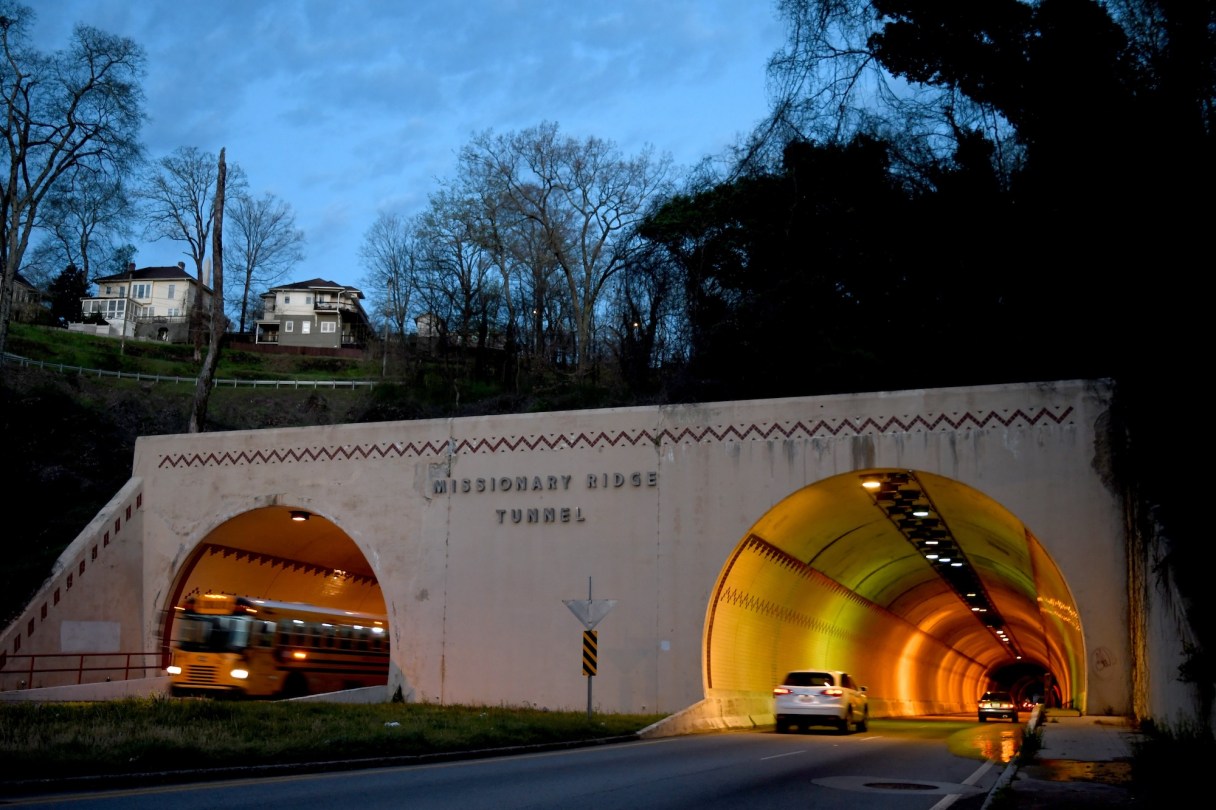
What had begun as Judge Seth Walker’s campaign promise to “unite the people of Hamilton County” by constructing tunnels through Stringer’s Ridge and Missionary Ridge hit a snag. The Stringer’s Ridge tunnel opened to great fanfare, as it significantly cut travel time between Chattanooga and the valley and mountains to the west. The Missionary Ridge tunnel construction, however, proved more challenging.
As work began, the engineers and laborers encountered increasingly unstable conditions. Continually shoring with timbers and machinery did little to lessen the landslides that threatened to halt the project. With the increased labor and material costs, the initial contractor demanded a “cost overrun” factor, noting that neither W.L. Dodds, the Hamilton County engineer, nor the company’s team had predicted the instability of the ridge’s core. A standoff over costs and performance halted the project. The original contract was terminated, and new bids to complete the project were requested.
On Oct. 14, 1911, the Chattanooga Daily News announced that bids were opened during a meeting of the Missionary Ridge Tunnel Commission, held in Dodds’ office. After considering the problems encountered to that date, none of the three bids showed “a flat sum for the doing of the work.” Instead, different bidders included a cost for labor coupled with a materials cost that included an “as required” clause. Concrete costs were specified as a “figure per yard with lumber supports by the thousand feet.”
The Hamilton County Court instructed Dodds to carefully examine each bid, create a cost comparison for each line item, and then report to the tunnel commission and ultimately to the court members for bid approval. Dodds spent days assembling the comparisons. At the same time, one member of the commission met individually with the engineer to suggest that the county not “let a contract” but instead do the work itself. Commission members ordered the Chattanooga Railway and Light Company to clean out the “cave-in on the east end of the tunnel” so work could commence once a contract was signed. The pressure was on.