
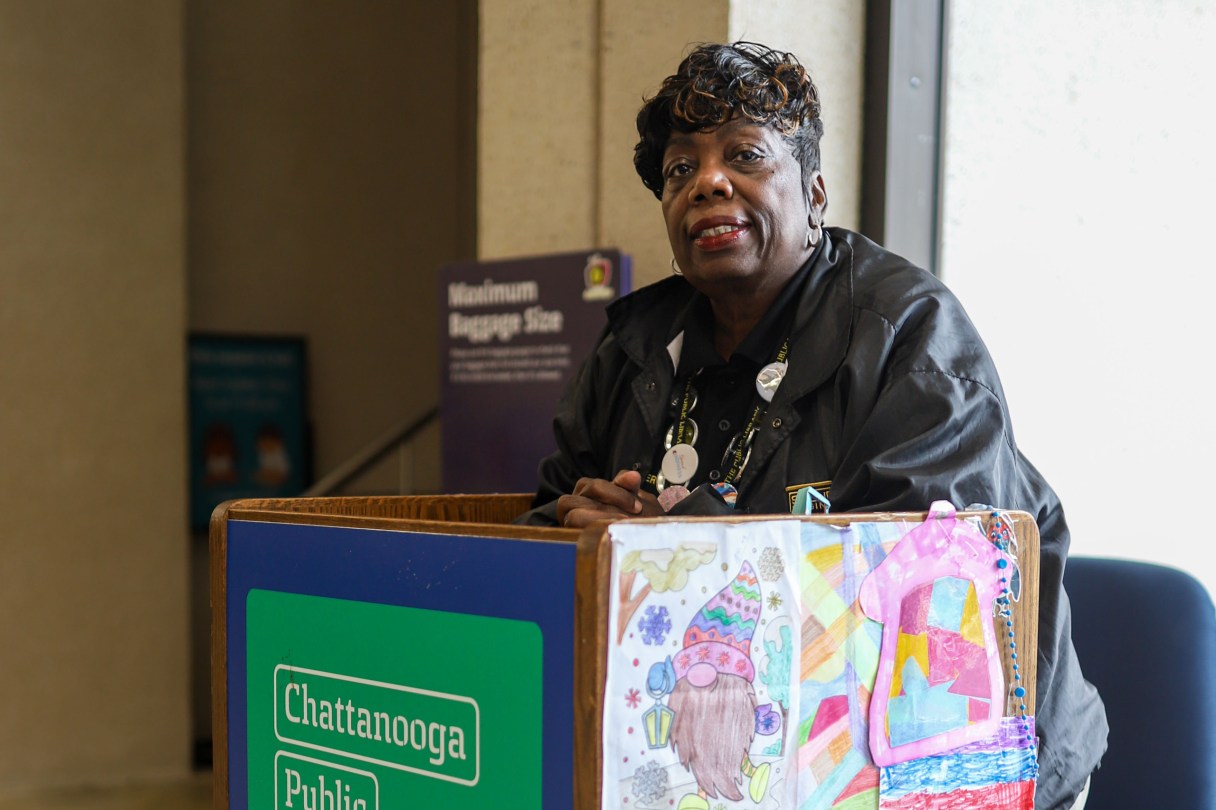
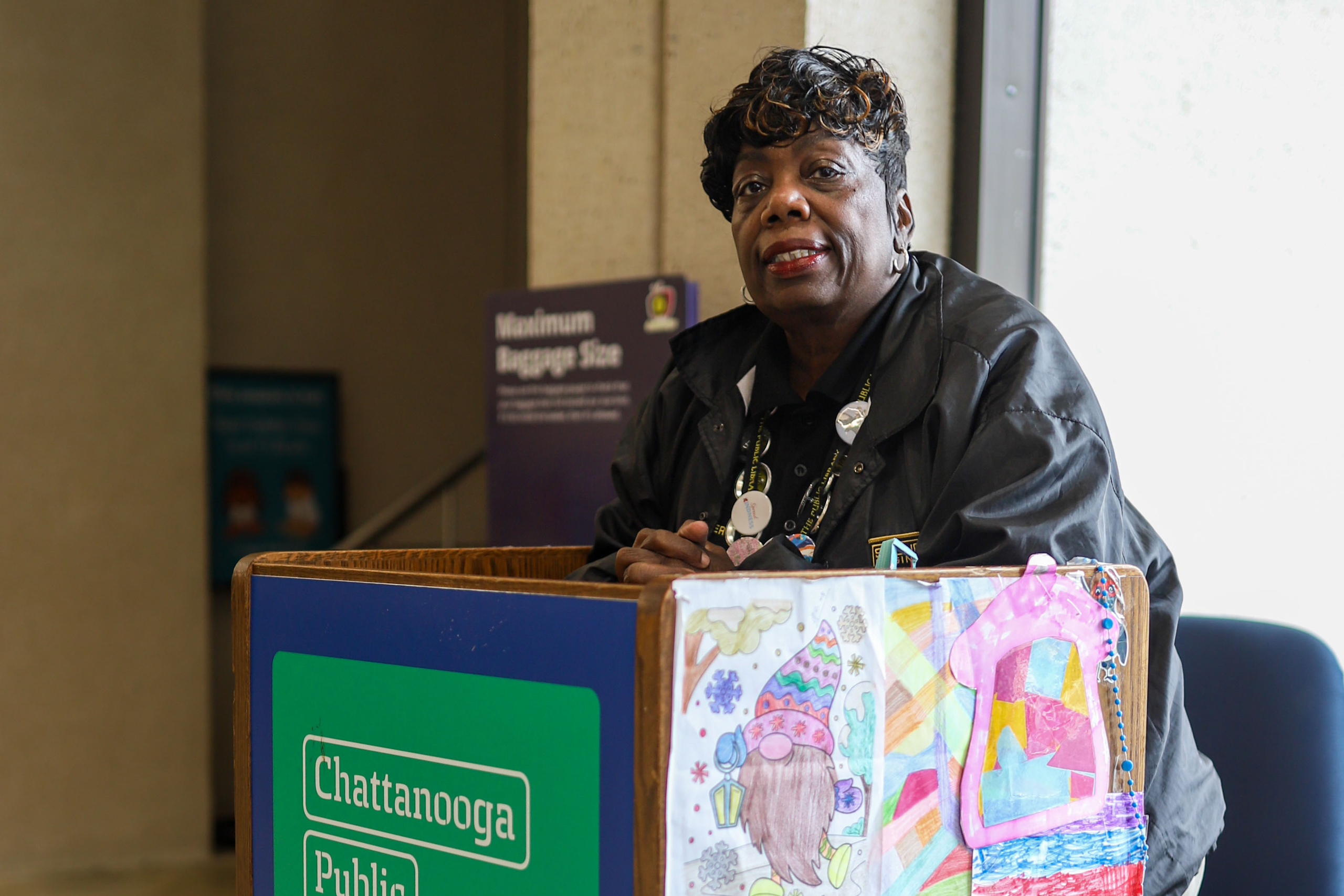
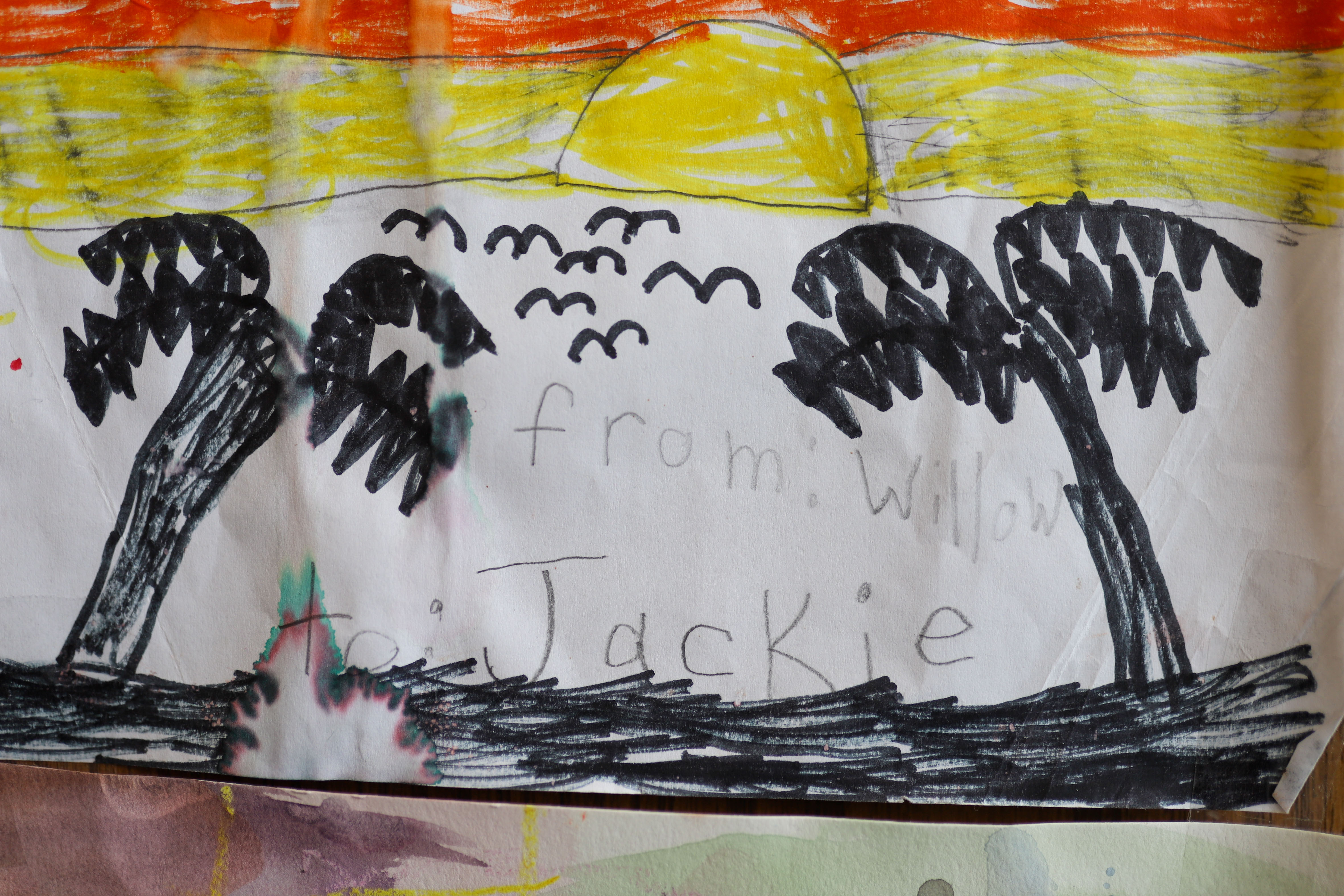
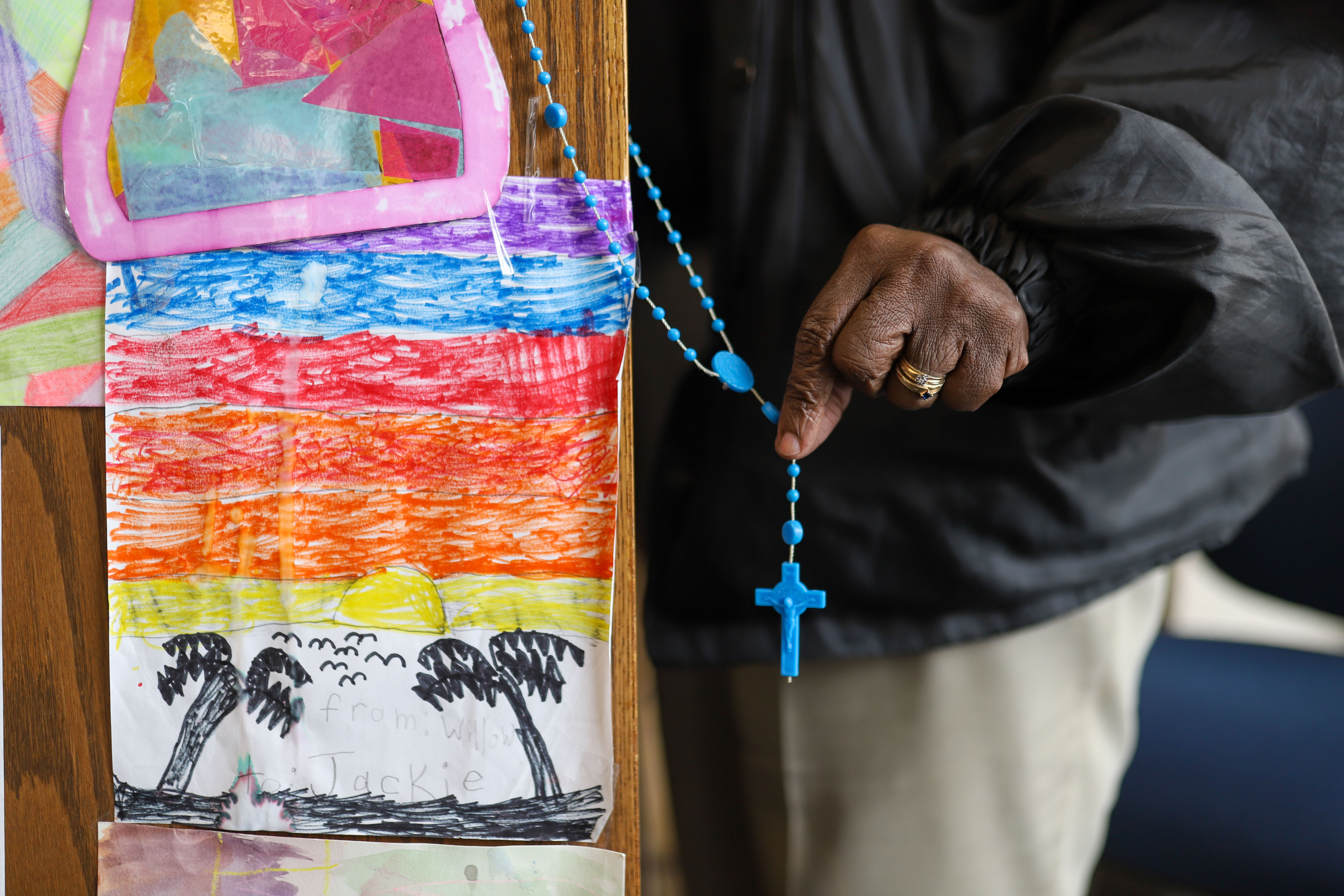
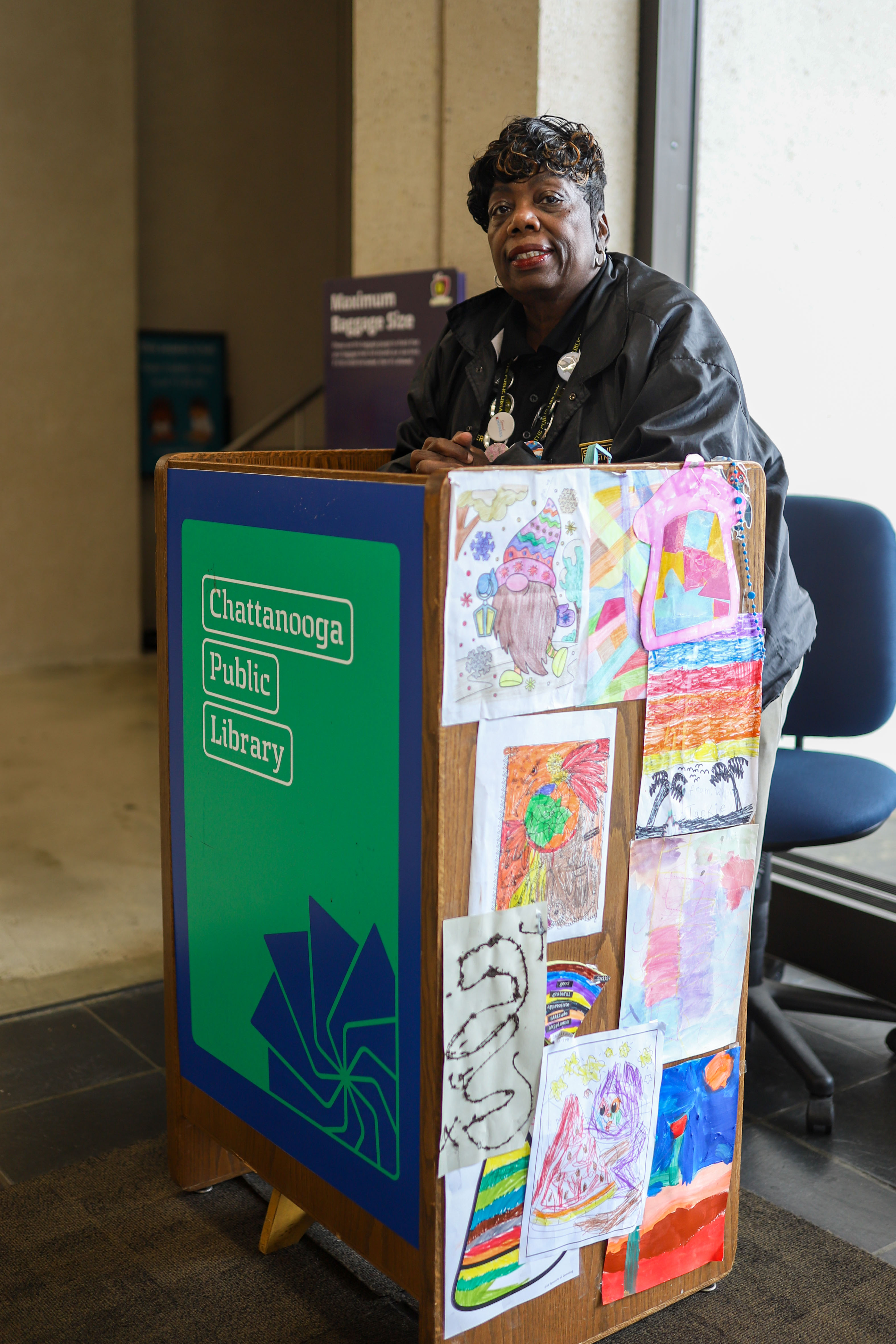
By 11 a.m. most days, Jackie Strickland is at her lectern in the lobby of the Chattanooga Public Library, a monument of adoration decorated with scribbled artwork drawn by knee-high admirers; recognition of the protector in the windbreaker with big yellow letters stitched to the back that read “security.”
But nobody calls her by anything so formal as a title or her last name. From the unhoused and wayward, to the little children who draw her pictures, she’s simply Ms. Jackie. And when she hears it, a smile often follows, accompanied by a flash of long brightly colored fingernails she flutters in greeting.
The warmth and the sternness imbued in her observe-and-report duties are key tools in the new tasks demanded of library staff nationwide. Ms. Jackie, along with the librarians, has adapted into a sort of front-line worker for the mental health and homelessness crises, not by any edict or proclamation made by some far away decision-maker, but by circumstance.
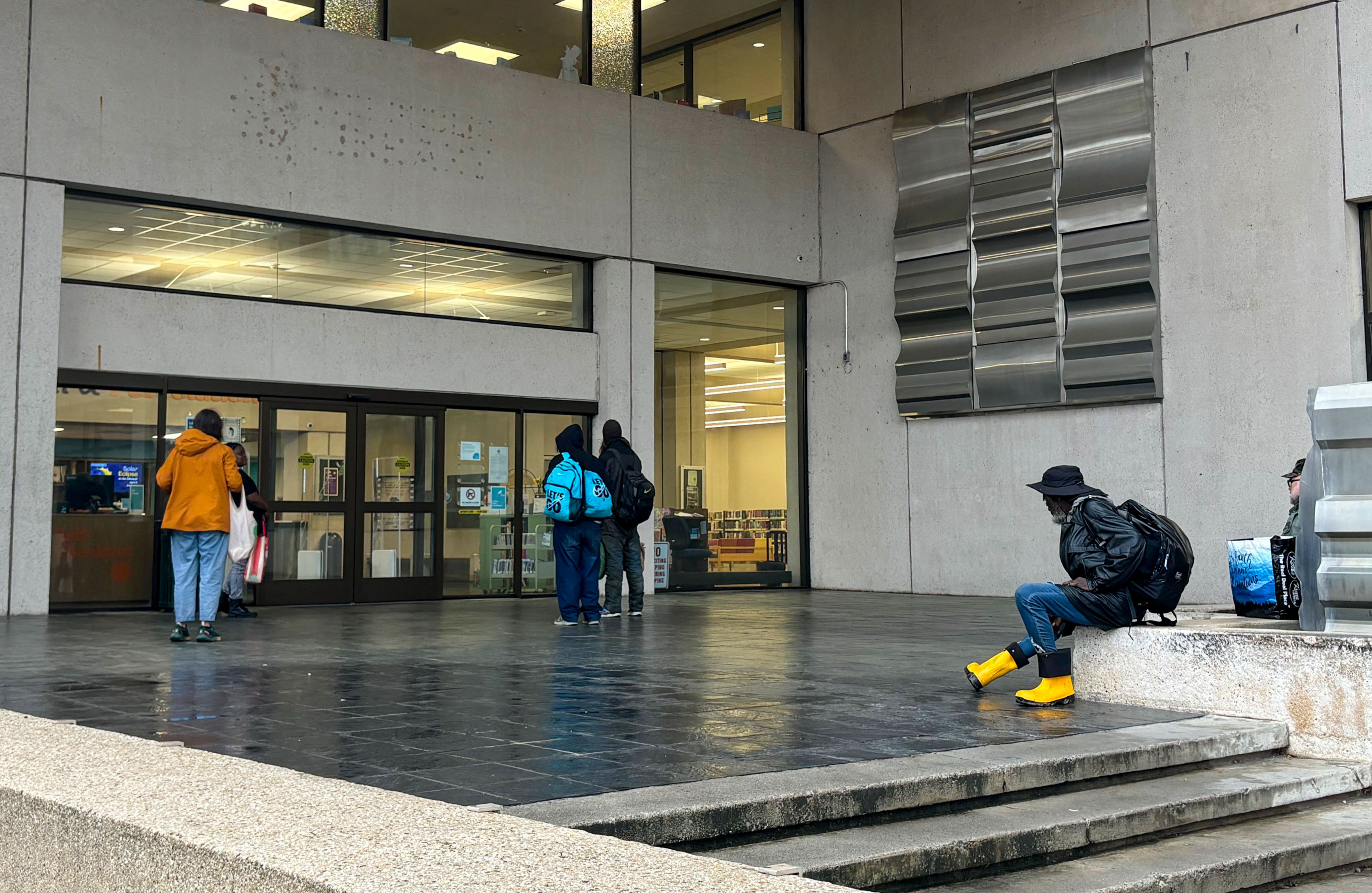
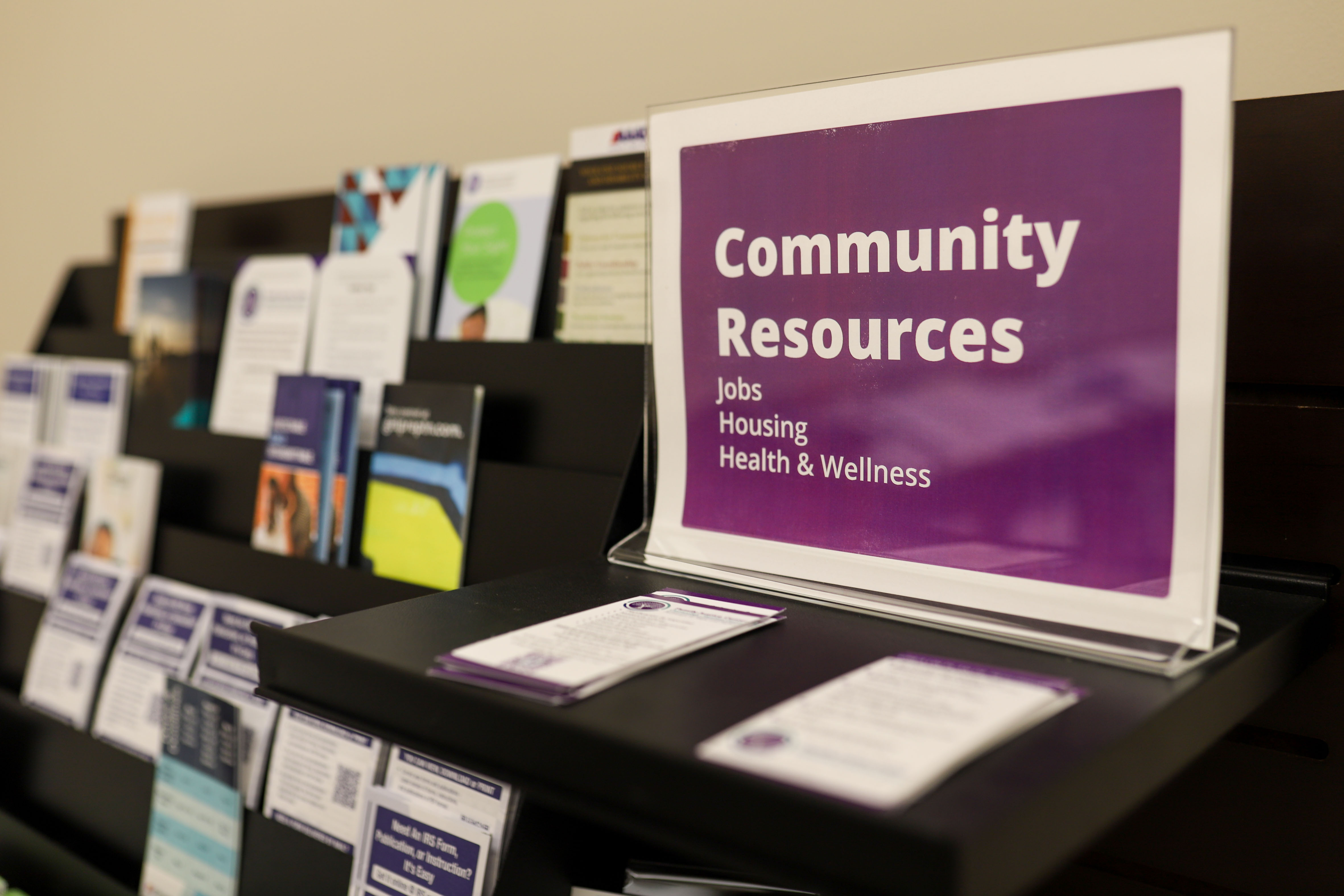
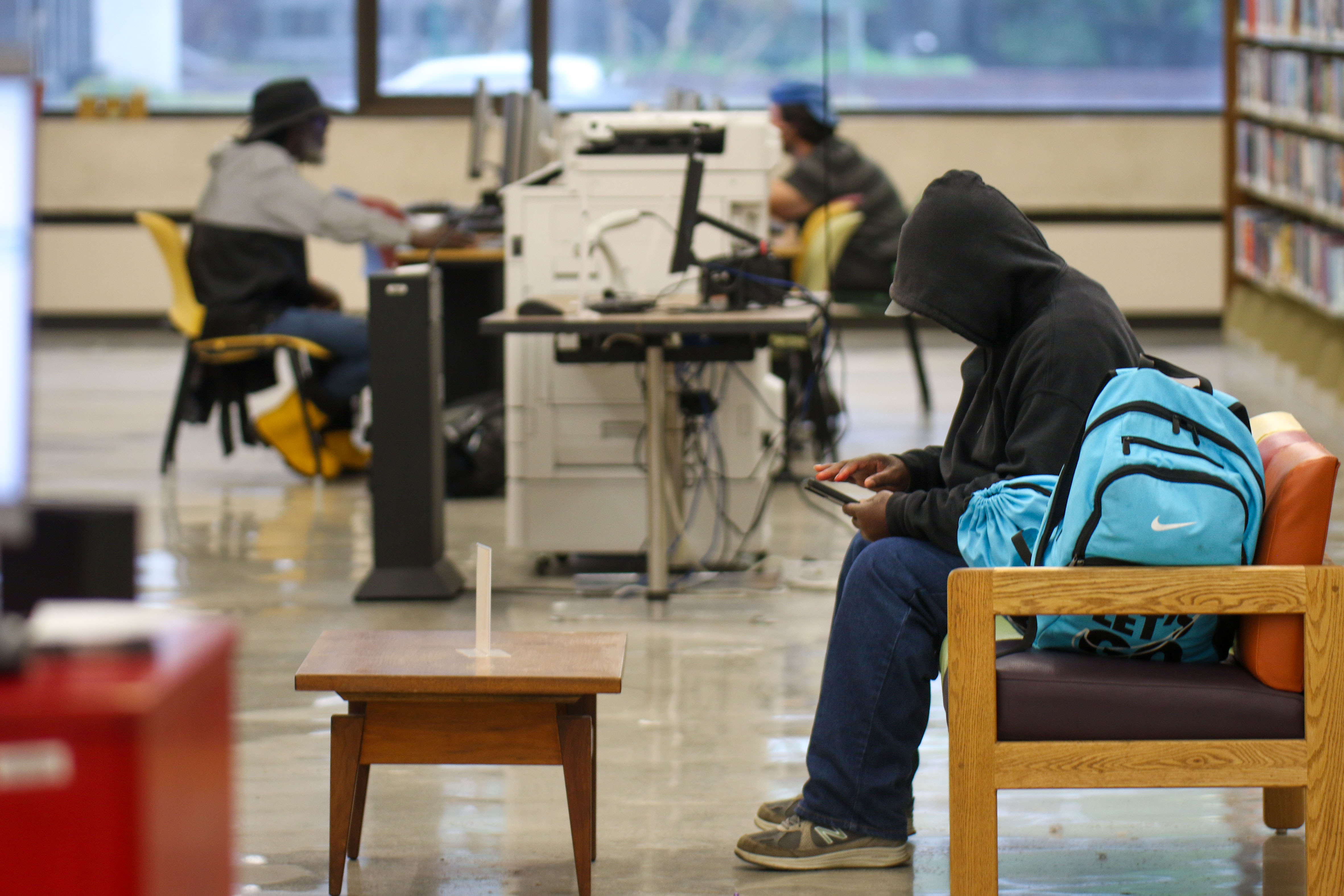
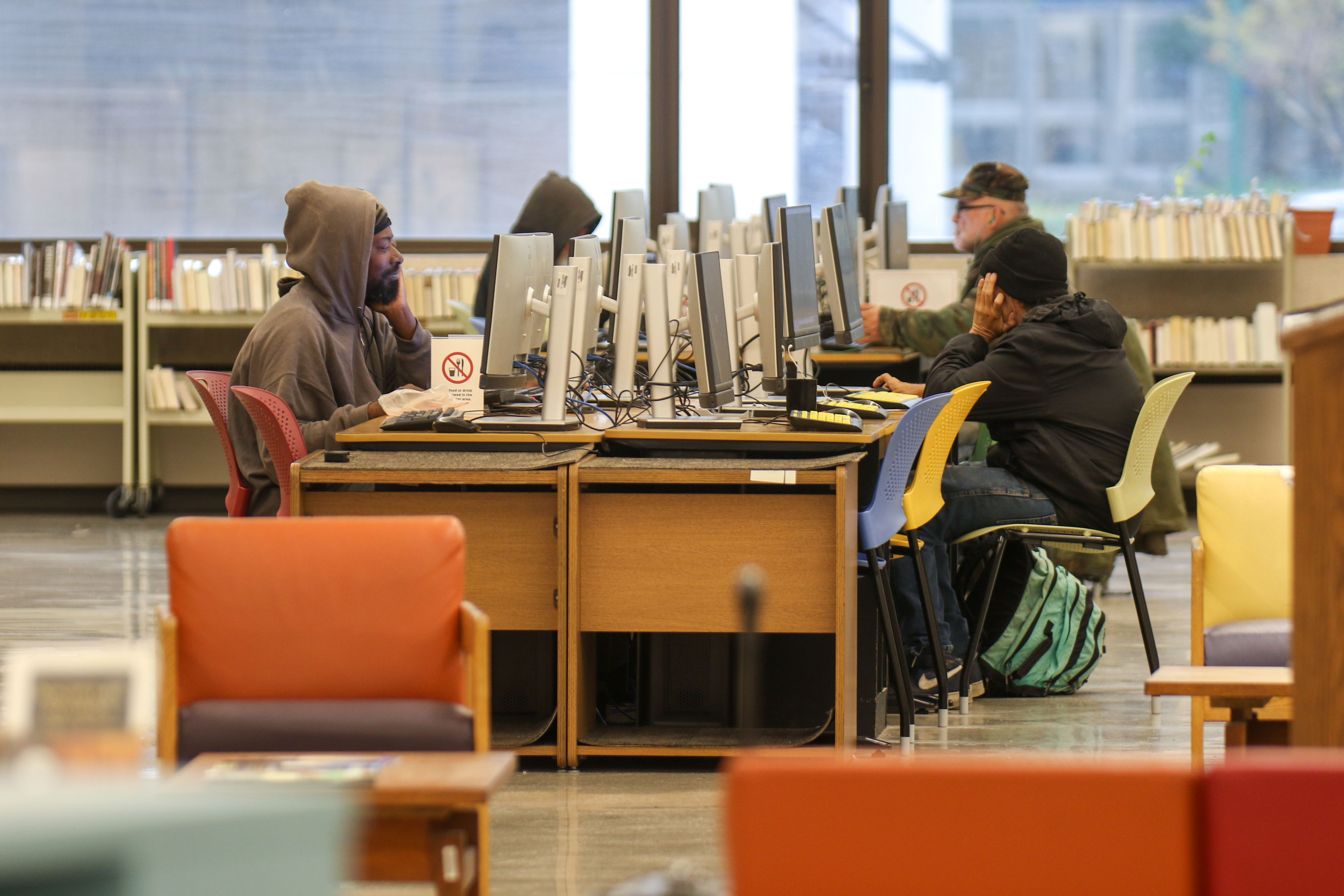
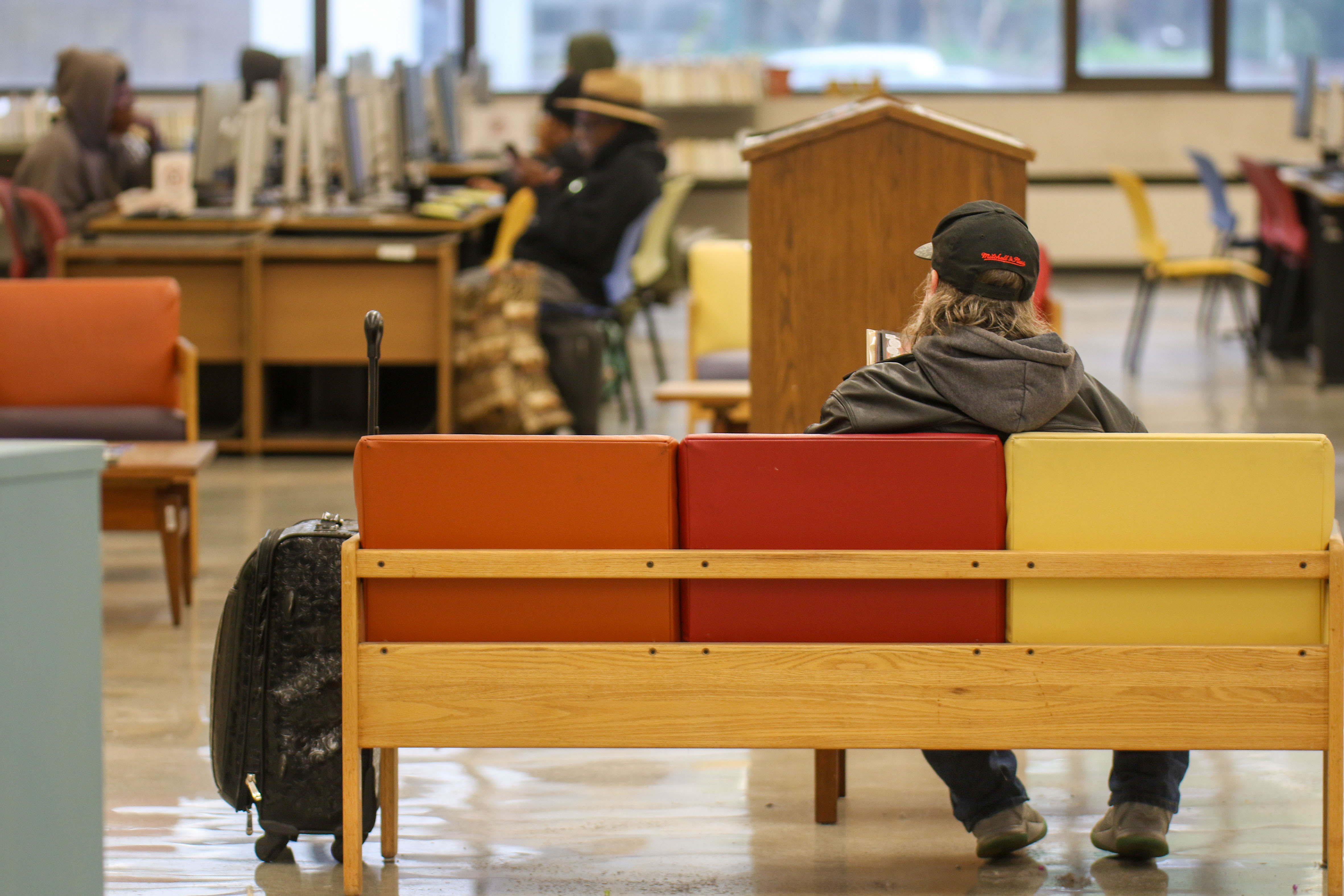
She’ll tell you it’s nothing new. So will librarian Ali Banks, from her spot at the reference desk a few dozen yards away, or the floor supervisor, Thomas Anderson, who faces Ms. Jackie from behind the check-out desk just a few feet away. None of them studied social work or clinical psychology. All help the homeless, some in varying states of mental or emotional distress, with the basics of life that can mean so much.