
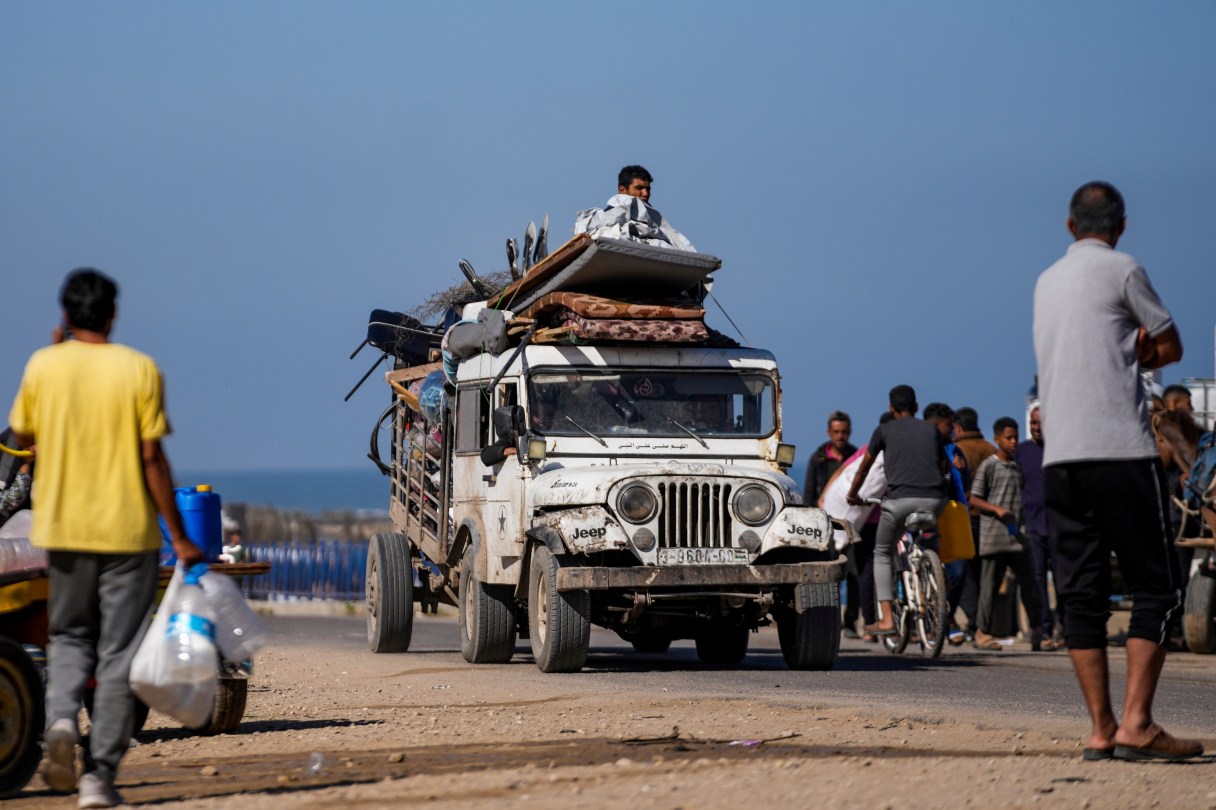
JERUSALEM (AP) — The Israeli military said Wednesday that it has reopened its Kerem Shalom crossing into Gaza after days of closure, but the U.N. said no humanitarian aid has yet entered and there is no one to receive it on the Palestinian side after workers fled during Israel’s military incursion in the area.
The Kerem Shalom crossing between Gaza and Israel was closed over the weekend after a Hamas rocket attack killed four Israeli soldiers nearby, and on Tuesday, an Israeli tank brigade seized the nearby Rafah crossing between Gaza and Egypt, forcing its closure. The two facilities are the main terminals for entry of food, medicine and other supplies essential for the survival of Gaza’s population of 2.3 million Palestinians.
The Israeli foray did not appear to be the start of the full-scale invasion of the city of Rafah that Israel has repeatedly promised. But aid officials warn that the prolonged closure of the two crossings could cause the collapse of aid operations, worsening the humanitarian crisis in Gaza, where the U.N. says a “full-blown famine” is already underway in the north.
The United States paused a shipment of bombs to Israel last week over concerns that Israel was approaching a decision on launching a full-scale assault on Rafah, in a further widening of divisions between the two close allies. And on Wednesday, President Joe Biden said he would not supply offensive weapons that Israel could use to launch a full-scale assault on Rafah.
Biden, in an interview with CNN, said the U.S. was still committed to Israel’s defense and would supply Iron Dome rocket interceptors and other defensive arms, but that if Israel goes into Rafah, “we’re not going to supply the weapons and artillery shells used, that have been used.”