
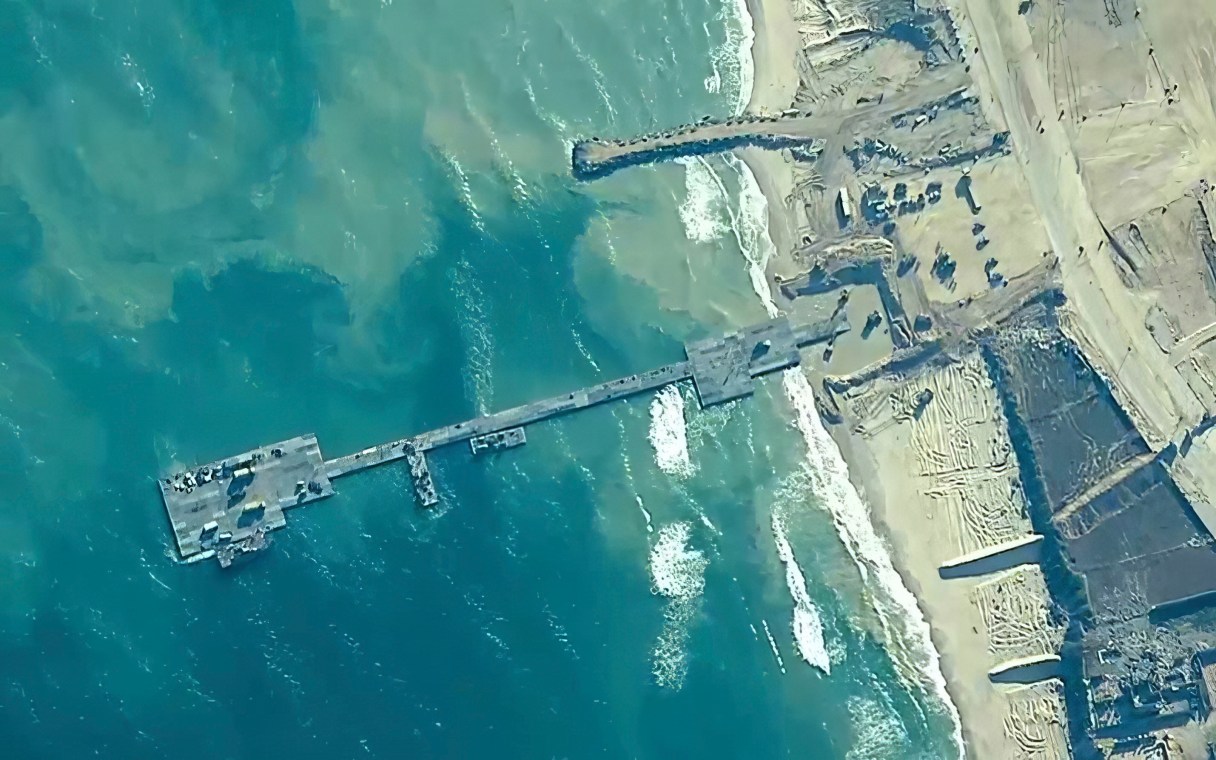
WASHINGTON (AP) — Trucks carrying badly needed aid for the Gaza Strip rolled across a newly built U.S. pier and into the besieged enclave for the first time Friday as Israeli restrictions on border crossings and heavy fighting hindered the delivery of food and other supplies.
The shipment is the first in an operation that American military officials anticipate could scale up to 150 truckloads a day, all while Israel presses in on the southern city of Rafah in its 7-month offensive against Hamas.
But the U.S. and aid groups warn that the floating pier project is not a substitute for land deliveries that could bring in all the food, water and fuel needed in Gaza. Before the war, more than 500 truckloads entered the territory on an average day.
The operation’s success also remains tenuous because of the risk of militant attack, logistical hurdles and a growing shortage of fuel for the trucks to run due to the Israeli blockade of Gaza since Hamas’ Oct. 7 attack. Militants killed 1,200 people and took 250 others hostage in that assault on southern Israel. The Israeli offensive since has killed more than 35,000 Palestinians in Gaza, local health officials say, while hundreds more have been killed in the West Bank.
Aid agencies say they are running out of food in southern Gaza and fuel is dwindling, while the U.S. Agency for International Development and the U.N. World Food Program say famine has already taken hold in Gaza’s north.