
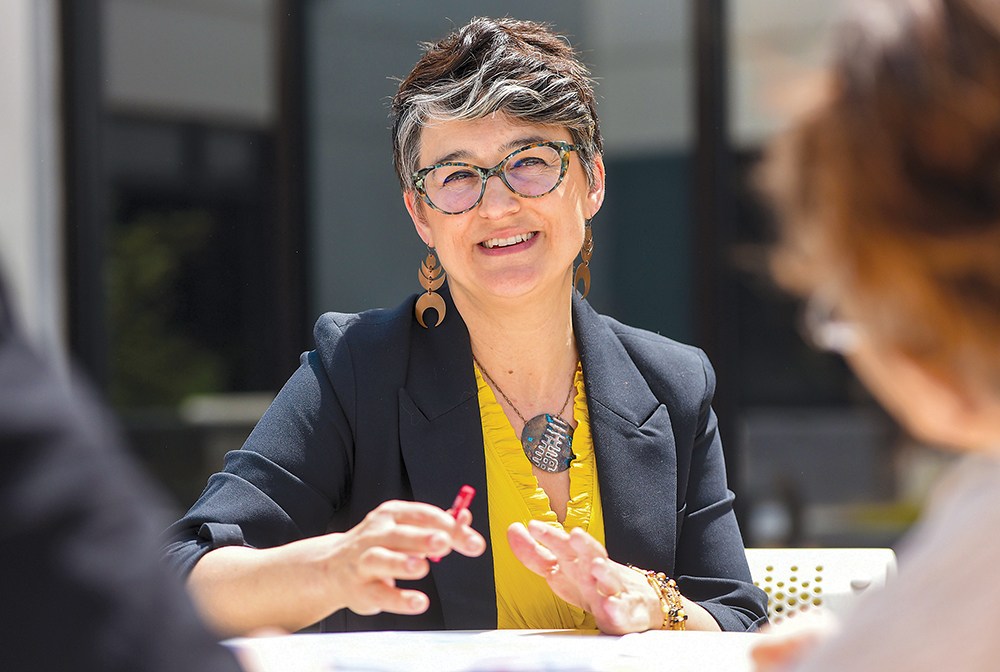
It is extremely important to take care of your health, both emotionally and physically. Participating in therapy can be a big step towards becoming the healthiest version of yourself, leading you to not just reduce pain and improve physical ailments, but also to resolve feelings, change behaviors, improve relationships and increase overall well-being.
Creative arts therapies use active art-making and the creative process as a form of therapy. This is a licensed mental health field that utilizes various artistic practices, such as music, dance, movement, drama, art and poetry to assist in achieving mental and physical health goals.
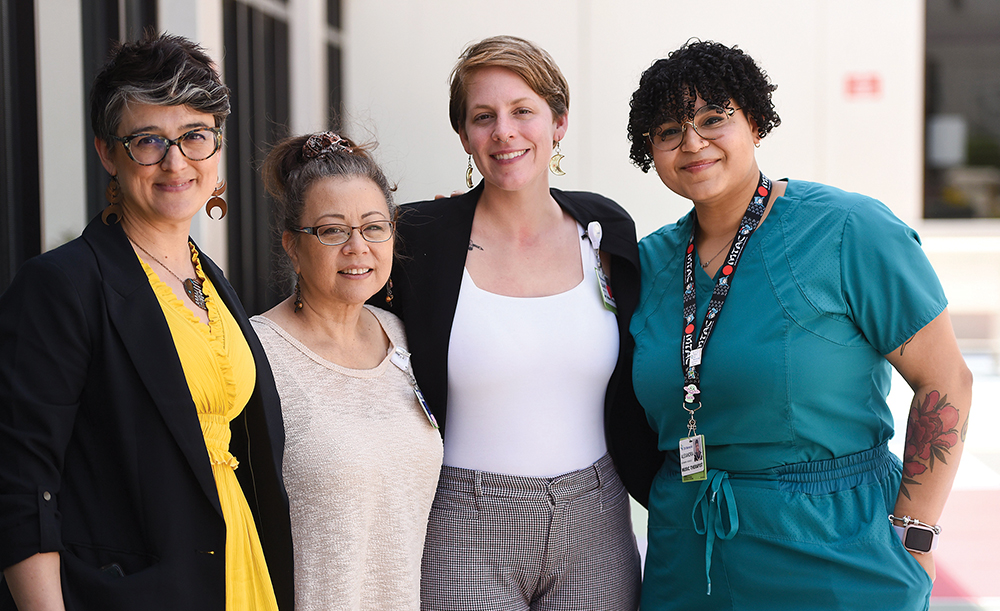
According to the Manager of Arts Therapies and Well-Being at CHI Memorial hospital, Chyela Rowe, creative arts therapies are a real benefit and asset to the community.
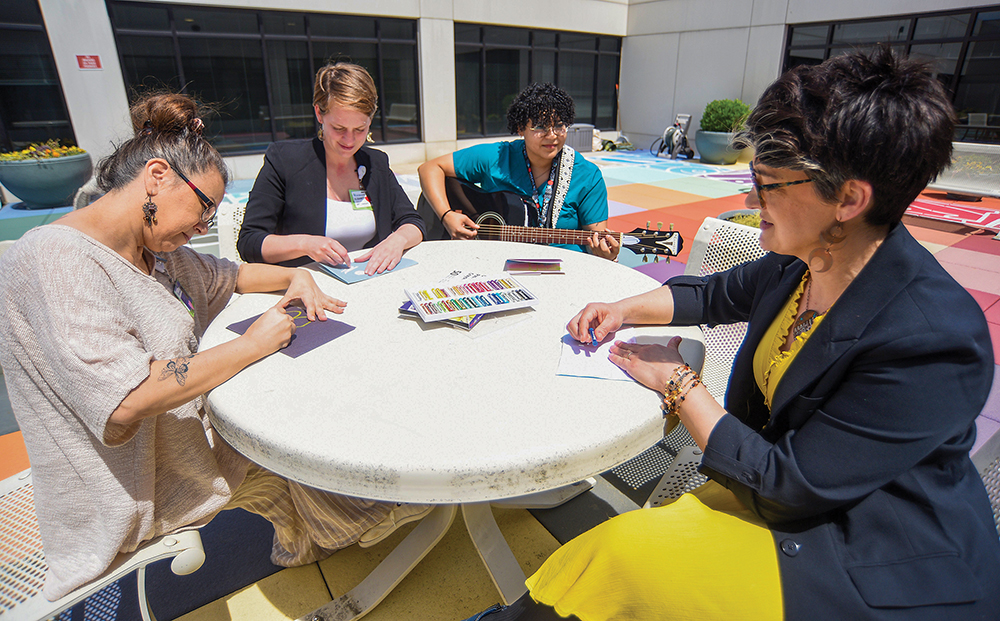
“The arts are like languages. They’re another way for us to tap into those complex thoughts and feelings that are hard to put into words,” Rowe says. “If you’re dealing with a trauma or something that you don’t want to talk about, doing something sensory-oriented can be very healing without feeling like you’re disclosing all of the pieces inside. Or maybe you just don’t have words for it yet.”
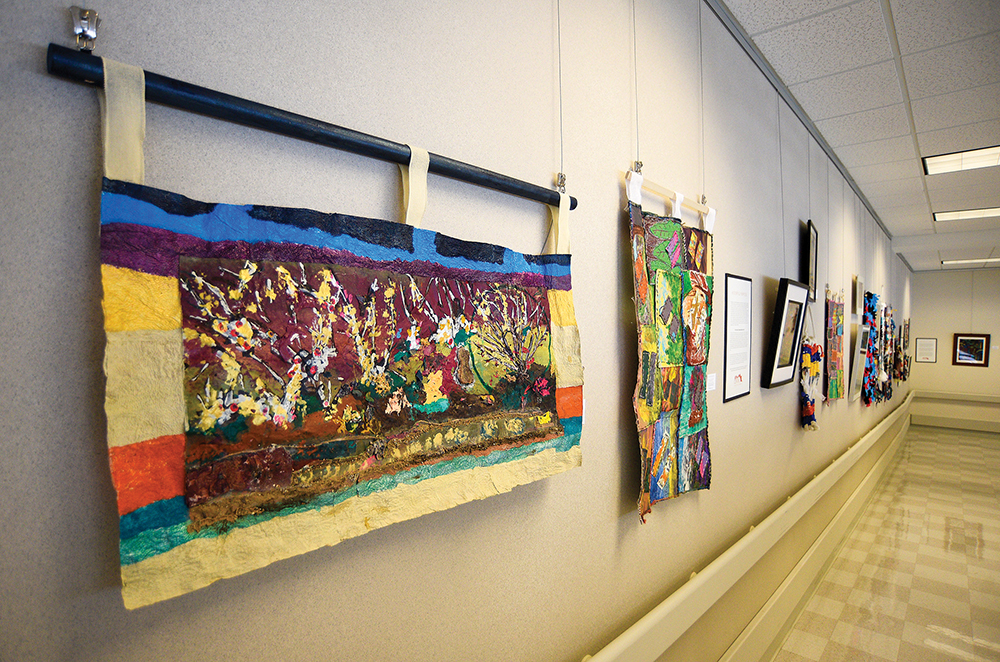
Since joining CHI Memorial in 2019, Rowe has collaborated with many people to create and use her platform as a resource for the community. She has worked with and helped educate local artists who wanted to support community health and well-being. She’s curated art for exhibits within CHI Memorial and created a recharge suite for employees to use on their breaks or if they are experiencing burnout.
Although the primary focus for patients is to get care from their physicians, nurses or other health care providers who are coming in and doing consults with them, Rowe says that outcomes are likely to improve if a person’s emotional or mental state is good. If a patient is very anxious, depressed or fearful in some way, then there are a lot of times when their recovery isn’t as quick. That’s where creative arts therapists can support a patient who might need help with grief processing, for instance, which could help them have less anxiety or less depression and improve their outcome.
“The short explanation for using creative arts therapies would be using music for non-musical goals,” Rowe explains. “A musical goal would be ‘I’m going to learn to play the guitar because I want to learn to play an instrument.’ A non-musical goal would be ‘I’ve had a stroke; I don’t have good function in my right hand, and I’m going to use musical cues and musical playing to help strengthen mobility, grip or action, whatever it might be.'”
She adds that listening to music can provide many benefits due its effects on our neurological system.
Other creative arts therapies, such as drama therapy, can be used to help and support others. “The process in embodying, storytelling and acting can help people who might need to have some support,” Rowe says.
She highlights some of the benefits of arts therapies as “being able to regulate emotions or maybe tap into conscious thoughts around experiences or feelings, being able to create some language or deeper understanding or even connecting with other people around an idea that is stigmatized.”
People often come in to a session with the assumption that they can’t talk about their feelings, due to some sort of stigma or shame around feeling those emotions. But when they get together in a group and start enacting or embodying different kinds of things, they realize that others share the same emotions.
“It’s not that those conversations can’t happen just in conversation, but they often don’t. Whereas when we start expressing by making a sculpture or taking on a shape or form in our bodies, it kind of opens up the conversation,” says Rowe. “The arts create a little bit of distance from that real emotion, which might just be the opening that they needed to be able to engage with something and make change. Art is a medicine unlike anything else.”