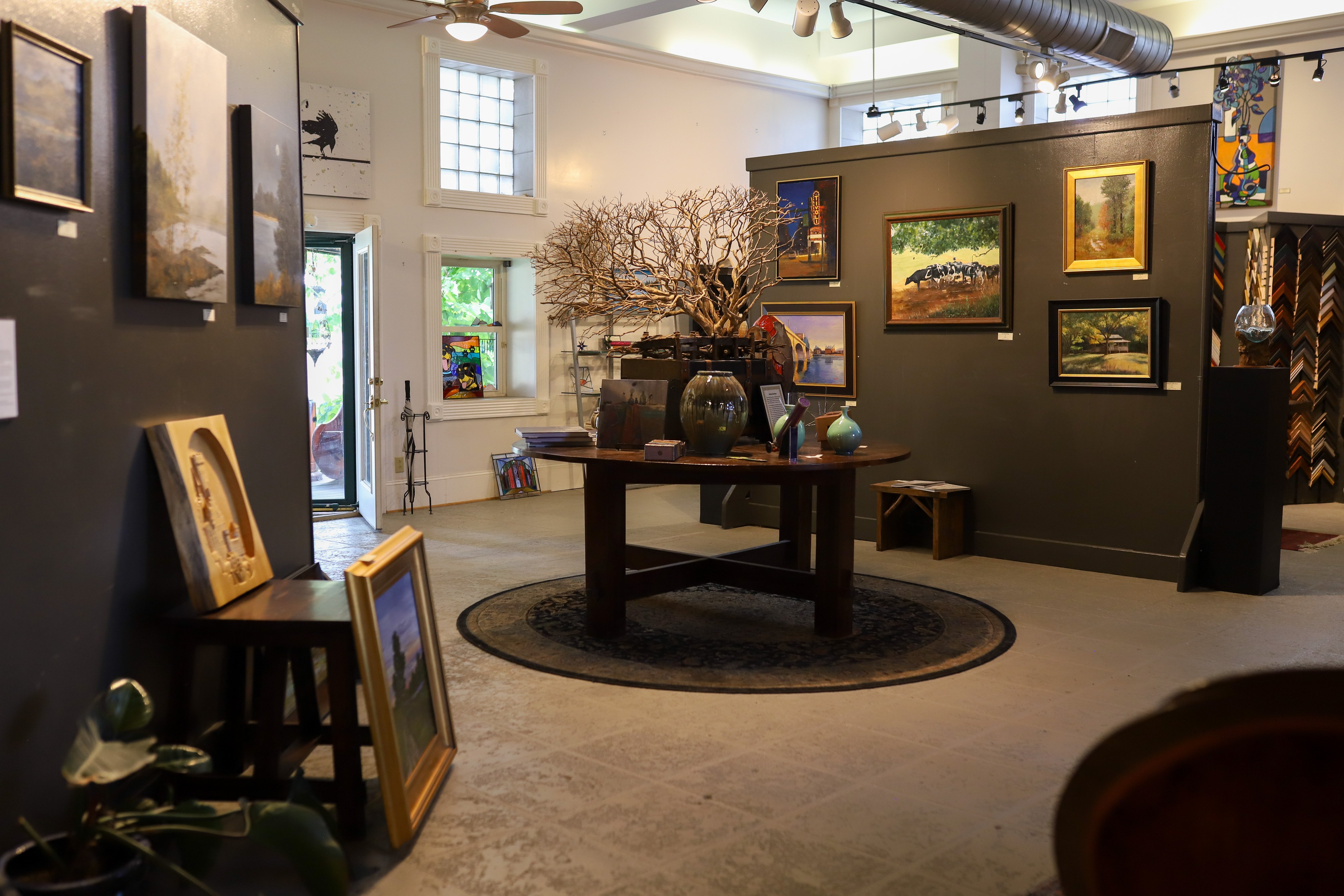
Most people drift through an art gallery or museum looking only at the pieces on display. That’s the normal and expected practice, of course — unless you’re a curator. A curator notices not just the artwork but how its colors contrast with the wall, how the scale of the piece fits the space, how its placement draws the eye toward other pieces around the room.
But the scrutiny may be even more granular than that.
“I’m always getting up close to see how they attach the labels to the wall,” says Lauren Nye, associate curator at Chattanooga’s Hunter Museum of American Art about her visits to other museums. “Once you start to notice [how everything comes together], you can’t not notice it.”
Just as there are guidelines for designing the interior spaces of a home, there are tricks of the trade that curators use to showcase the various artworks they accumulate. Paint, placement and lighting play prominent roles in how a piece of art is experienced, whether individually or as part of a grouping. Ideally, those decisions are incorporated so seamlessly that they go unnoticed by the viewer.