
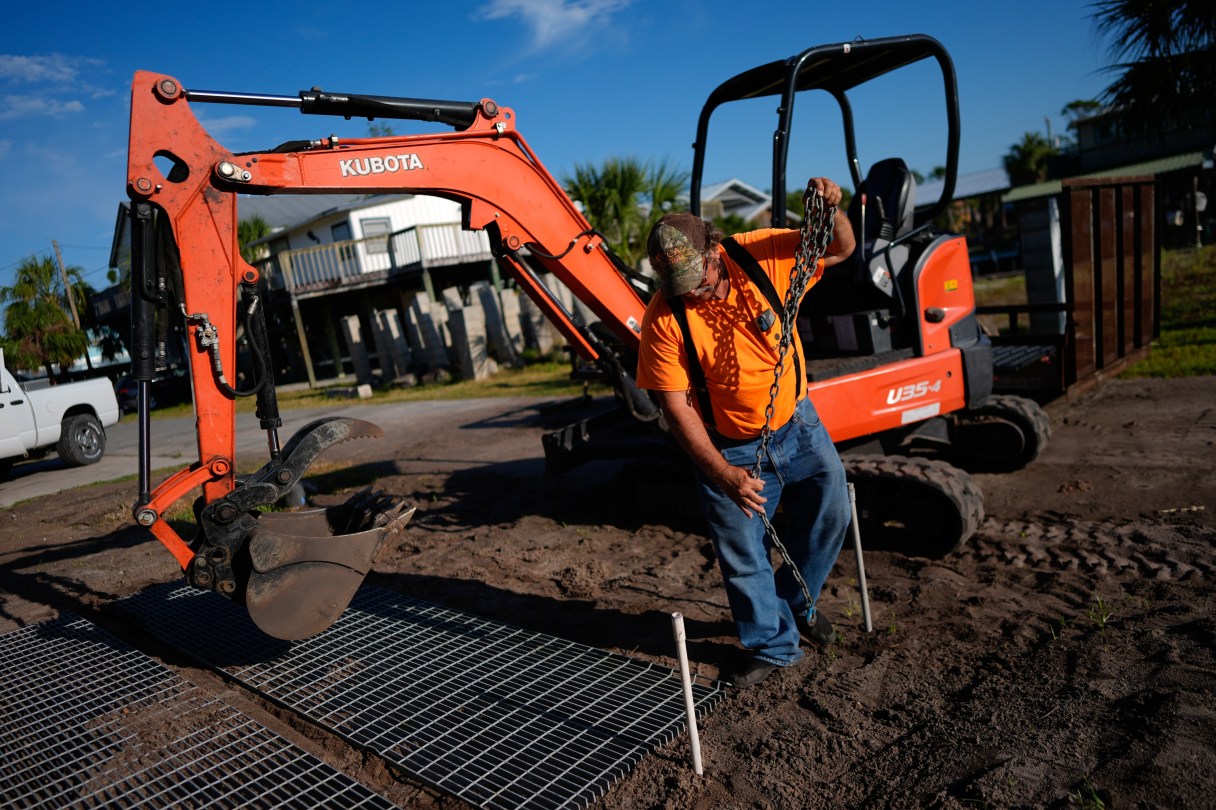
HORSESHOE BEACH, Fla. (AP) — Before Hurricane Idalia smashed into a small fishing village in northwestern Florida, Charles Long, 68, was fixing up a two-bedroom house for him and his wife. After the August storm, he found remnants of it in a nearby canal and on a neighbor’s property.
To rebuild a new home elevated on stilts, as code requires, would cost $450,000, according to one estimate he got. He can’t afford that. Instead, he’s building a pole barn in Horseshoe Beach for a recreational vehicle he is saving to buy.
“I’m going to roll everything out of here” if another hurricane comes this year, Long said with a nervous chuckle, his face glistening with sweat.
For people like Long, rebuilding after extreme weather disasters can be a long and expensive process. The U.S. government has poured billions of dollars into projects to help build resiliency. But as the impacts of climate change increasingly threaten coastal communities, experts say protecting them is getting harder and more complex.
The tens of thousands of dollars it can cost to perch a new home on stilts, plus the hundreds of thousands more to build the house, is cost prohibitive for many people. So are the rising rates of insurance. Resiliency plans also must address the compounding impacts of flooding, erosion, intensifying storms and sea level rise.