
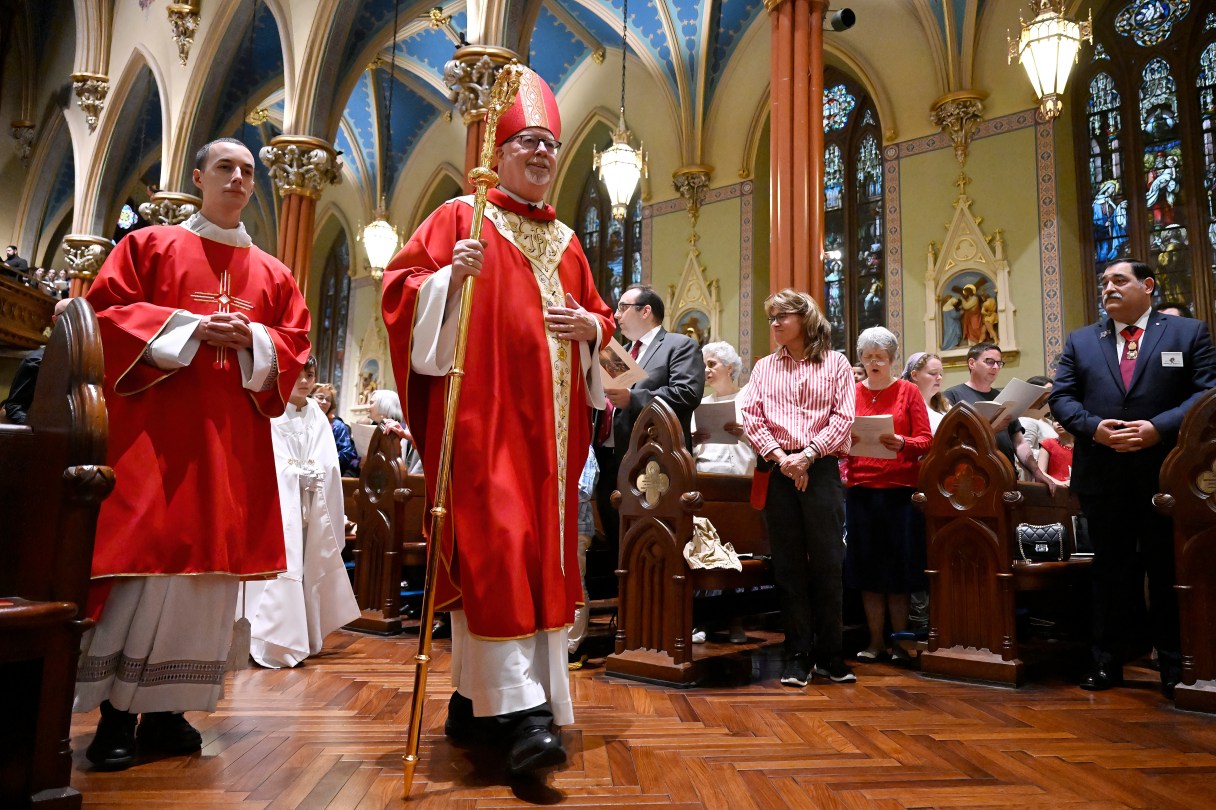
A long-planned series of Catholic pilgrimages has begun across the United States this weekend, with pilgrims embarking on four routes before converging on Indianapolis in two months for a major gathering focusing on Eucharistic rites and devotions.
The National Eucharistic Pilgrimage is beginning with Masses and other events in California, Connecticut, Minnesota and Texas. A small group of pilgrims plan to walk entire routes, but most participants are expected to take part for smaller segments. Each route goes along country roads and through city centers, with multiple stops at parishes, shrines and other sites.
Although it was forged amid a recent debate among bishops over whether to refuse Communion to U.S. politicians who don’t oppose abortion, the pilgrimage is a revival of a historic Catholic tradition that faded by the mid-20th century.
Each procession is being led by a priest holding a monstrance — typically a sunburst-patterned vessel that displays the host, or bread wafer consecrated by a priest at Mass.