
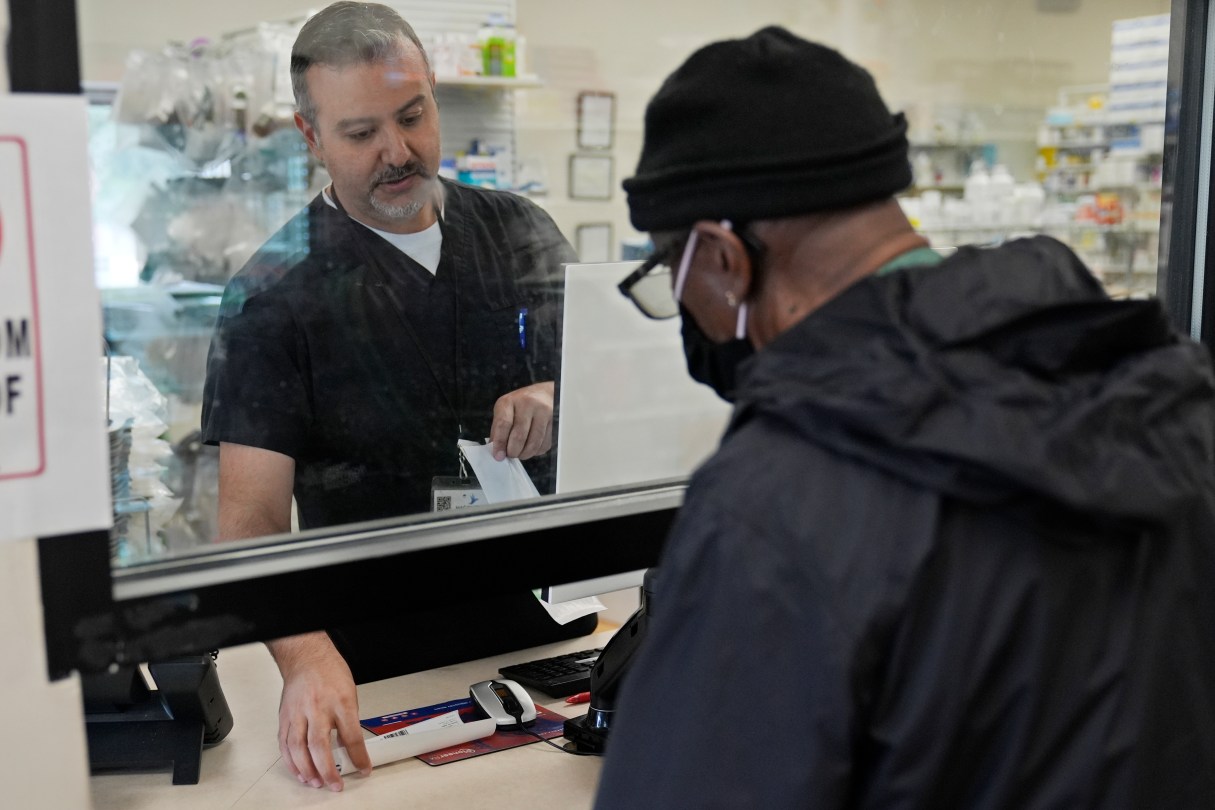
MONTGOMERY, Ala. (AP) — Parts of the north side of Montgomery are defined by what it has lost: restaurants, grocery stores and a convenient pharmacy, the latter of which closed five years ago.
People who still live in the historically Black neighborhood of Newtown, like Sharon Harris, are frustrated. She goes to a different location of the same pharmacy chain, which is four miles from her home.
“You have to come back sometimes,” she said, “and then they wait so long to fill the prescription.”
In cities across the U.S., major retail pharmacies have closed hundreds of stores over the past few years and independents can’t always afford to stay open. That can leave residents of color without easy access to a business that provides not only prescriptions but also fundamental public health services like vaccinations, over-the-counter medicines and even food.
Closures create “a situation where there’s not just (a lack of) investment in terms of pharmacy development and expansion, but there’s no incentive to stay in those neighborhoods,” said Dima Qato, a professor of clinical pharmacy at the University of Southern California who has studied pharmacy access.