
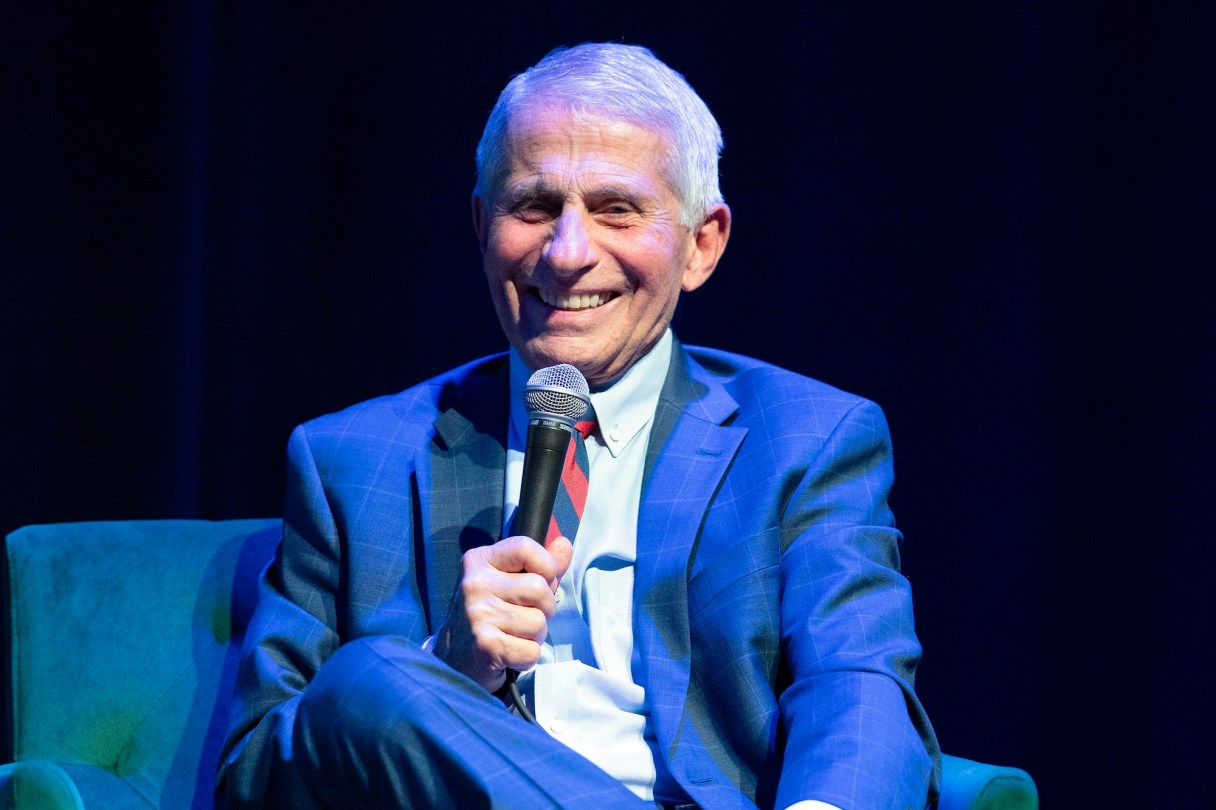
Over his half-century career, Anthony Fauci learned what it was like to be both loved and loathed.
As director of the National Institute of Allergy and Infectious Diseases, he was at the red hot center of the HIV/AIDS crisis, working exhaustively first to identify the agent that was killing so many young gay men and then to develop treatments to keep them alive.
As the public face of the government’s response, he was vilified by activists such as the playwright Larry Kramer, the founder of the radical group ACT UP, and accused of having blood on his hands. They wanted him to allow people dying of AIDS to be treated with promising but still experimental drugs.
Finally, and without warning other officials, Fauci publicly called for a change in policy to provide access to drugs while they were in trials. Then-President George H.W. Bush’s chief of staff, John Sununu, called Fauci to find out “what the hell is going on,” the 83-year-old physician recounts in his new memoir, “On Call.”
Later, at a government hearing on the new policy, Kramer, who was famous for his outbursts, yelled from the back of the room, “Tony, I have called you a murderer in the past, but you are now my hero.”