
Monday, November 16, 2026Nov 16

The Supreme Court rejects a nationwide opioid settlement with OxyContin maker Purdue Pharma

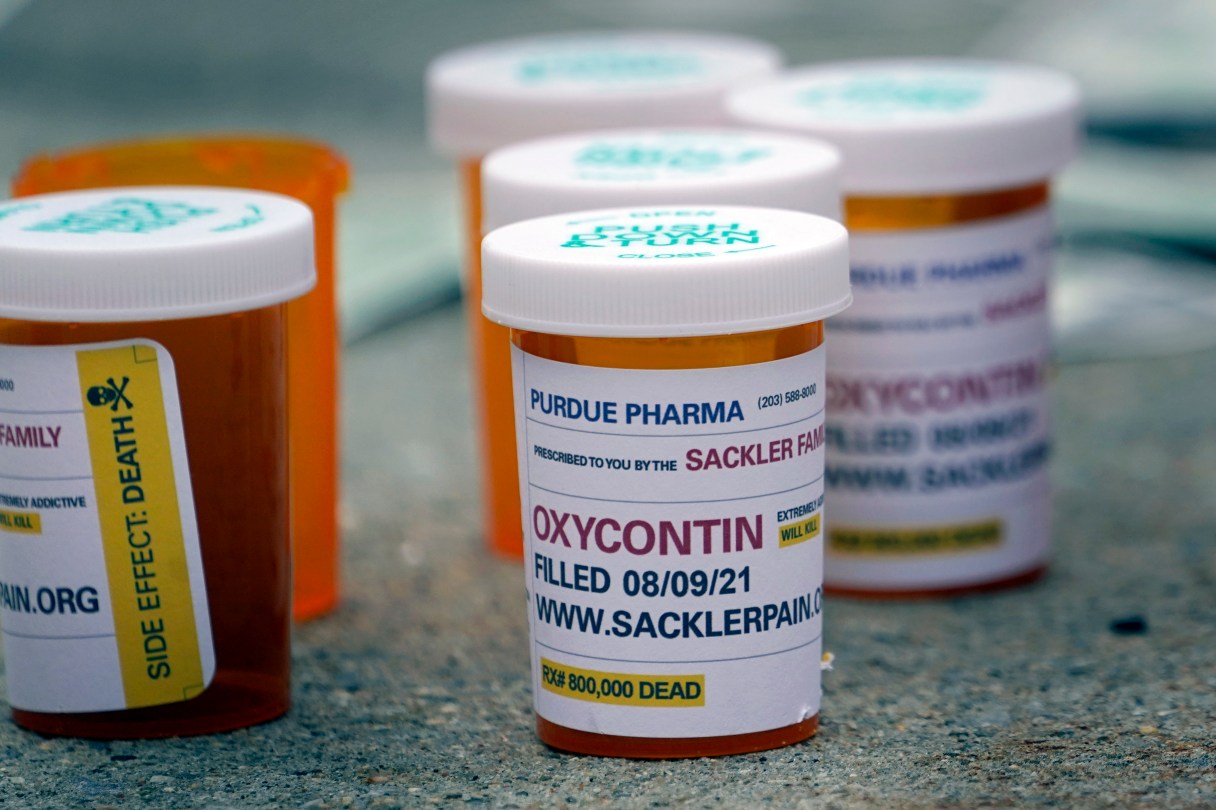
FILE - Fake pill bottles with messages about Purdue Pharma are displayed during a protest outside the courthouse where the bankruptcy of the company is taking place in White Plains, N.Y., Monday, Aug. 9, 2021. The Supreme Court on Thursday, June 27, 2024, rejected a nationwide settlement with OxyContin maker Purdue Pharma that would have shielded members of the Sackler family who own the company from civil lawsuits over the toll of opioids but also would have provided billions of dollars to combat the opioid epidemic.  (AP Photo/Seth Wenig, File)
FILE - Fake pill bottles with messages about Purdue Pharma are displayed during a protest outside the courthouse where the bankruptcy of the company is taking place in White Plains, N.Y., Monday, Aug. 9, 2021. The Supreme Court on Thursday, June 27, 2024, rejected a nationwide settlement with OxyContin maker Purdue Pharma that would have shielded members of the Sackler family who own the company from civil lawsuits over the toll of opioids but also would have provided billions of dollars to combat the opioid epidemic. (AP Photo/Seth Wenig, File)

WASHINGTON (AP) — The Supreme Court on Thursday rejected a nationwide settlement with OxyContin maker Purdue Pharma that would have shielded members of the Sackler family who own the company from civil lawsuits over the toll of opioids but also would have provided billions of dollars to combat the opioid epidemic.

The decision also could affect other major bankruptcies, including the $2.4 billion bankruptcy plan for the Boy Scouts of America that has been approved by a federal judge, lawyers said.

After deliberating more than six months, the justices in a 5-4 vote blocked an agreement hammered out with state and local governments and victims. The Sacklers would have contributed up to $6 billion and given up ownership of the company but retained billions more. The agreement provided that the company would emerge from bankruptcy as a different entity, with its profits used for treatment and prevention.

Justice Neil Gorsuch, writing for the majority, said “nothing in present law authorizes the Sackler discharge.”

Chief Justice John Roberts and Justices Brett Kavanaugh, Elena Kagan and Sonia Sotomayor dissented.