
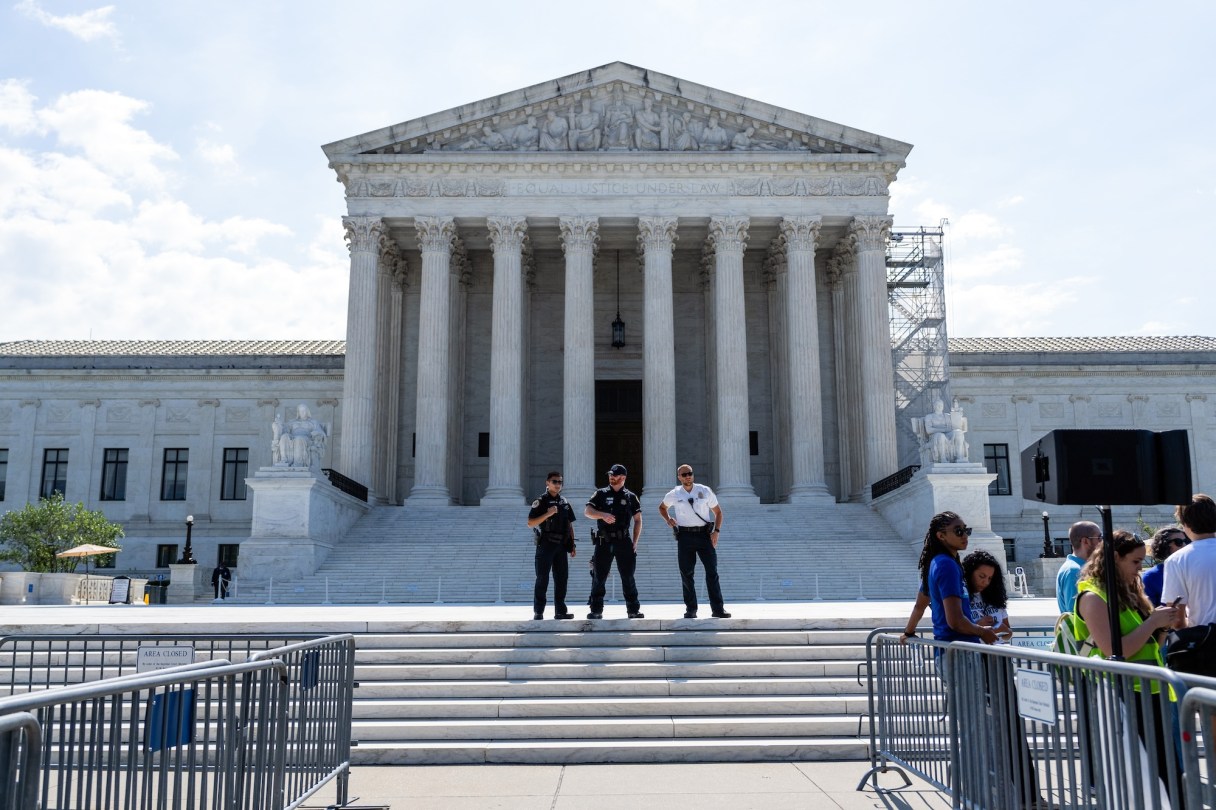
The U.S. Supreme Court has overruled the Chevron decision, a basic building block of administrative law, thereby striking a blow against the power and authority of all federal agencies, including the Environmental Protection Agency. The ruling, in the cases of Loper Bright Enterprises v. Raimondo and Relentless v. Department of Commerce, marks the culmination of the conservative revolution at the court, joining recent landmark decisions overturning abortion rights, barring affirmative action, expanding gun rights and more.
Overturning the 40-year-old Chevron precedent will have profound consequences for the legal system and the whole apparatus of government through regulation.
The basic idea of the Chevron principle was that, when a federal statute is ambiguous, the agency charged by Congress with applying the statute should take a first crack at interpreting the law. Courts would then defer to the agency’s interpretation, so long as it was reasonable. The intent and effect of Chevron was to treat agencies as what they are: experts in the substantive area Congress assigns them.
From the start, the legal difficulty with Chevron was that it made agencies, not courts, into the most important interpreters of law. As a general matter, courts don’t like to give away their authority to interpret the law. Marbury v. Madison, the famous early Supreme Court decision that is the basis for all modern judicial review, says that “it is emphatically the province and duty of the judiciary to say what the law is.” Agencies are part of the executive branch, not the judicial branch.
So it was always a little anomalous for courts to defer to agencies’ statutory interpretations under Chevron, rather than deciding legal cases for themselves. But the modern administrative state is complex. Applying Congress’s vague directives can be a highly technical task, perhaps better done by subject-matter experts than judges. Seen in that context, Chevron was one of the greatest statements of modesty in the history of U.S. law.